Minnesota Farmers Get Solar-Powered Fertilizer Plant
Two Minnesota facilities will turn excess wind power into affordable fertilizer for over 100,000 acres of farmland. The innovation solves two problems at once: high fertilizer costs and wasted renewable energy.
📺 Watch the full story above
American farmers just got a breakthrough solution to rising fertilizer costs, and it helps the environment too.
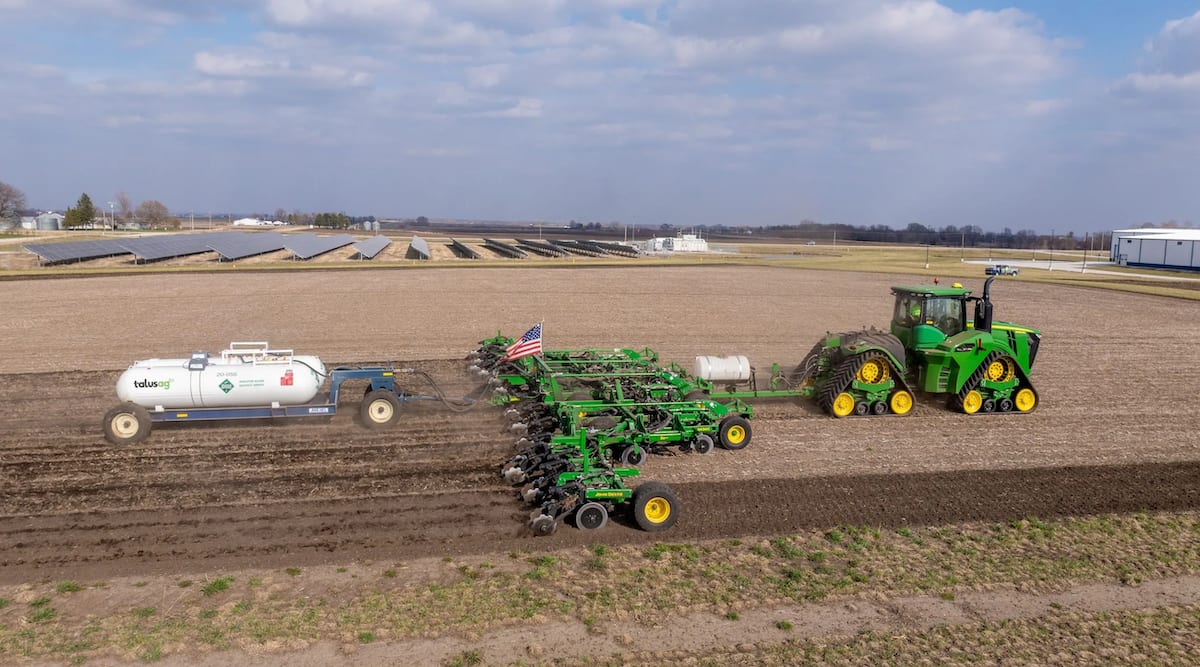
Minnesota startup TalusAg announced plans to build two full-scale green ammonia production facilities that will supply fertilizer to more than 4,500 farmers across Minnesota and northern Iowa. Each plant will produce up to 20 tons of ammonia fertilizer daily using electricity to split water into hydrogen, which then gets converted into ammonia.
The timing couldn't be better. Fertilizer prices in the United States recently jumped from $516 per metric ton to $683 at major import hubs as global supply chains tightened. American farmers produce some fertilizer domestically but still rely heavily on imports from overseas producers.
The new facilities partner with Central Farm Service, an agricultural cooperative, to provide locally made fertilizer that will cover more than two-thirds of their yearly ammonia needs. That means 100,000 acres of farmland will soon get fertilizer made right in their own state instead of shipped from abroad.
The first pilot project launched last year in Boone, Iowa, proving the technology works at commercial scale. Now Minnesota is scaling up with two plants that can run on wind power from the local grid.
The Ripple Effect
This innovation does more than help farmers save money on fertilizer. It solves a costly problem for Minnesota taxpayers too.
Wind turbines in Minnesota pay property taxes based on how much electricity they produce. When the grid can't handle all that wind power during low-demand periods, turbines get shut down in what's called curtailment. That means lost tax revenue for rural counties.
Murray County saw property tax revenue from wind turbines drop 34% between 2020 and 2022 because of curtailments. The fertilizer plants can soak up that excess wind power during off-peak hours, keeping turbines running and tax dollars flowing to local communities.
The potential reaches far beyond Minnesota. The entire MISO grid territory currently wastes 8 million megawatt-hours of wind power annually through curtailments. That number could more than double to 15 million by 2035 without solutions like local fertilizer production.
For farmers who export crops internationally, there's another bonus. Using green ammonia fertilizer gives them access to overseas carbon markets that reward low-emission agriculture, potentially opening new revenue streams.
Minnesota legislators are expected to approve funding from the state's Renewable Development Account to help launch the facilities. The combination of lower fertilizer costs, saved tax revenue, and reduced waste makes a strong case for supporting homegrown innovation that keeps rural dollars local.
More Images
Based on reporting by CleanTechnica
This story was written by BrightWire based on verified news reports.
Spread the positivity!
Share this good news with someone who needs it