MIT Firebrick Battery Powers Holcim Cement Plant With Clean Heat
A cement factory just installed electric heating that reaches 1800°C without burning fossil fuels, solving one of climate action's toughest challenges. The breakthrough technology stores renewable energy in specially engineered bricks that can stay hot for three days.
📺 Watch the full story above
One of the world's largest cement companies just proved that making concrete doesn't have to heat up the planet.
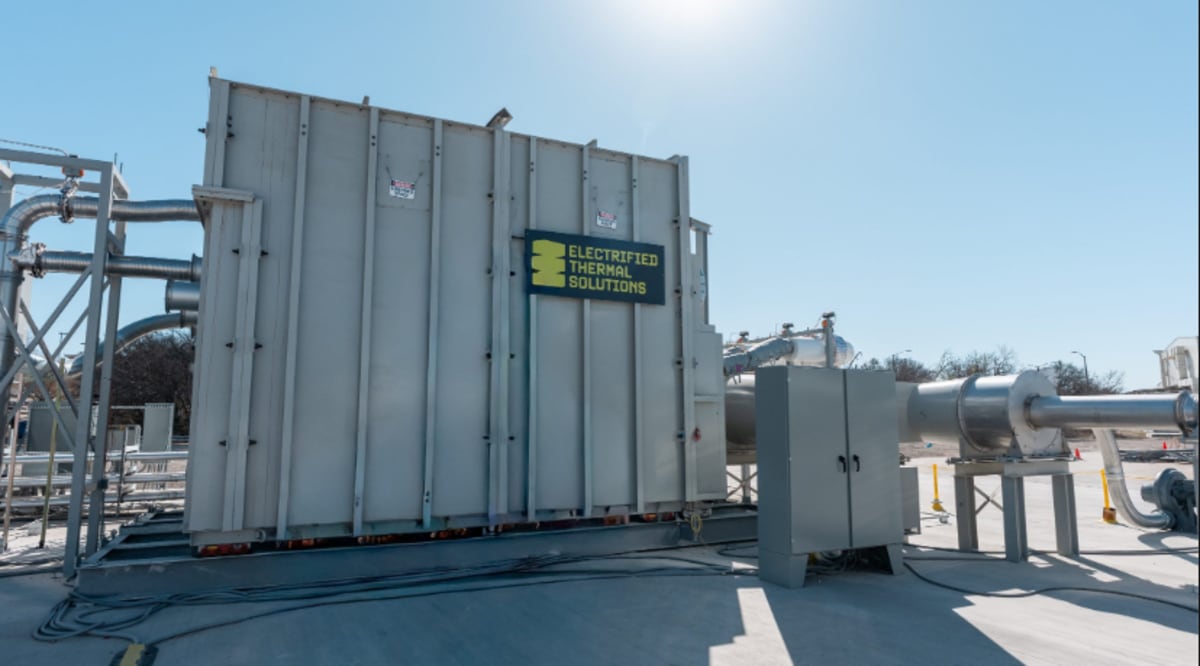
Holcim has installed two "Joule Hive" thermal batteries at one of its production facilities, marking the first time a major cement maker has electrified the extreme heat needed for manufacturing. The technology comes from Electrified Thermal Solutions, an MIT spin-off that spent 12 years figuring out how to make bricks conduct electricity and reach temperatures hot enough to make steel.
The challenge was massive. About 20 percent of global energy consumption goes toward industrial process heat, the kind needed to manufacture cement, steel, aluminum, and glass. Until now, only burning coal or methane could generate temperatures exceeding 1800°C.
ETS scientists cracked the code by rearranging firebrick chemistry to include more metallic oxides. When electricity flows through these modified bricks, they heat to cement-making temperatures with 95 percent efficiency. The bricks stack inside an elevator-sized insulated box that holds heat for up to three days, perfect for storing excess renewable energy from solar and wind farms.
"This is a step change in what's been done to actually electrify cement and concrete production," said Daniel Stack, ETS CEO. The announcement follows successful testing at Southwest Research Institute in San Antonio, where the first commercial-scale Joule Hive logged over 1,000 hours of operation.
Cement production accounts for roughly eight percent of global carbon dioxide emissions, making it one of the hardest industries to clean up. Process temperatures regularly exceed what conventional electric heating can reach, leaving combustion as the only option until now.
Holcim's head of operational excellence, Ram Muthu, called the deployment part of the company's "industry-shaping sustainability road map." Holcim is also becoming an investment partner in ETS, signaling confidence that the technology works at industrial scale.
The Ripple Effect
The first commercial Joule Hive installation is already underway in Kentucky. Ashland, a specialty chemical manufacturer, received up to $35 million from the Department of Energy to deploy the thermal batteries at its Calvert City plant. The facility will eventually replace its methane-fired boilers entirely.
Curt Jawdy from the Tennessee Valley Authority, the local electric utility, highlighted an unexpected benefit. Because the thermal batteries charge during off-peak hours, industrial facilities can decarbonize without straining the power grid. "Simpler is always better," he said. "The fact that the brick is also the heating element simplifies the system significantly."
The technology opens doors for steel, glass, and chemical manufacturers facing the same heat challenges. With three global industrial partners now on board, ETS is proving that even the heaviest industries can run on clean electricity.
Making concrete without wrecking the climate just became reality, not theory.
More Images

Based on reporting by CleanTechnica
This story was written by BrightWire based on verified news reports.
Spread the positivity!
Share this good news with someone who needs it