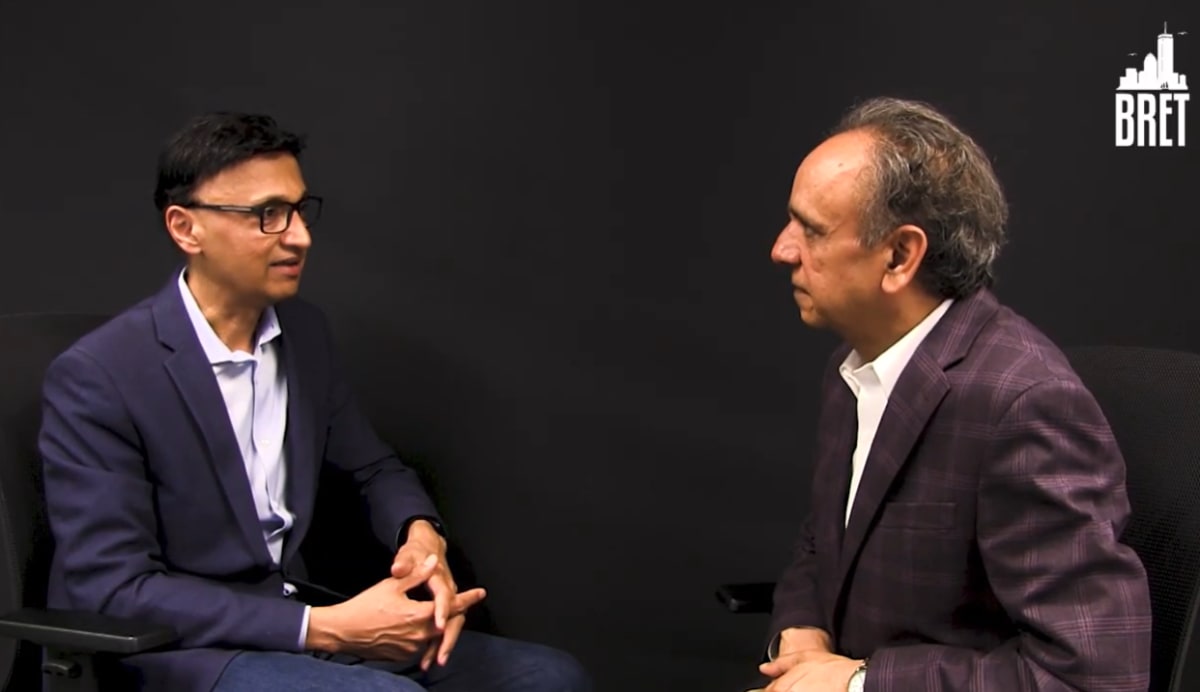
MIT Professor: AI Cuts Drug Discovery Time by Years
Artificial intelligence is helping scientists discover new medicines faster than ever before, analyzing research that once took years in a fraction of the time. MIT's Rama Ramakrishnan explains how this technology is becoming a powerful partner in solving some of humanity's biggest health challenges.
📺 Watch the full story above
Scientists are racing to cure diseases faster, and artificial intelligence just became their most valuable teammate.
Rama Ramakrishnan, a professor at MIT Sloan School of Management, recently shared how AI is transforming the way researchers discover new drugs and make scientific breakthroughs. The technology analyzes massive amounts of data and spots patterns that would take human researchers years to find on their own.
The impact on drug discovery has been especially dramatic. AI helps identify promising therapeutic compounds, improves clinical research, and slashes both the time and cost of bringing new treatments to patients. While the technology isn't replacing scientists, it's giving them superpowers to work faster and make better decisions.
Ramakrishnan knows what he's talking about. Before teaching at MIT, he spent over 20 years as a tech entrepreneur and executive, leading companies that were acquired by Oracle and Salesforce. At Salesforce, he ran an AI platform serving hundreds of millions of people monthly.
Now he teaches the next generation of AI innovators while making his course materials freely available online. His mission is simple: help people understand how to use AI as a collaborative tool that enhances human expertise rather than replaces it.
The applications extend far beyond healthcare. Researchers across multiple fields are using AI to process enormous volumes of information, spot emerging trends, and support smarter decision making. What once seemed impossible with traditional computing is now within reach.
The Ripple Effect
The real excitement isn't just about faster research. When drug discovery accelerates, life-saving treatments reach patients sooner. When scientists can analyze data more efficiently, they tackle bigger challenges. When AI handles the heavy computational lifting, human researchers can focus on the creative problem-solving that machines can't do.
Ramakrishnan emphasizes that AI works best as a partner, not a replacement. The technology amplifies what talented researchers can accomplish, helping them explore more possibilities and test more theories than ever before.
His advice for anyone wanting to use AI effectively? Approach it as a collaborative tool that can enhance your work, whether you're conducting research, solving business problems, or analyzing complex data.
The transformation is already happening in labs and research centers around the world. Scientists are discovering new compounds, understanding diseases better, and developing treatments that might have remained hidden in mountains of unanalyzed data.
This isn't science fiction or distant future talk. It's happening right now, and the pace of discovery keeps accelerating.
AI is changing how we discover, learn, and solve society's most complex challenges, one breakthrough at a time.
Based on reporting by Google: scientific discovery
This story was written by BrightWire based on verified news reports.
Spread the positivity!
Share this good news with someone who needs it