Moon May Have Formed in Just 5 Hours After Impact
New computer simulations reveal Earth's moon could have emerged fully intact within hours of a massive planetary collision 4.5 billion years ago. The discovery changes how scientists understand one of the solar system's most important cosmic events.
📺 Watch the full story above
Scientists just discovered that Earth's unusually large moon might have formed in a single workday rather than over thousands of years.
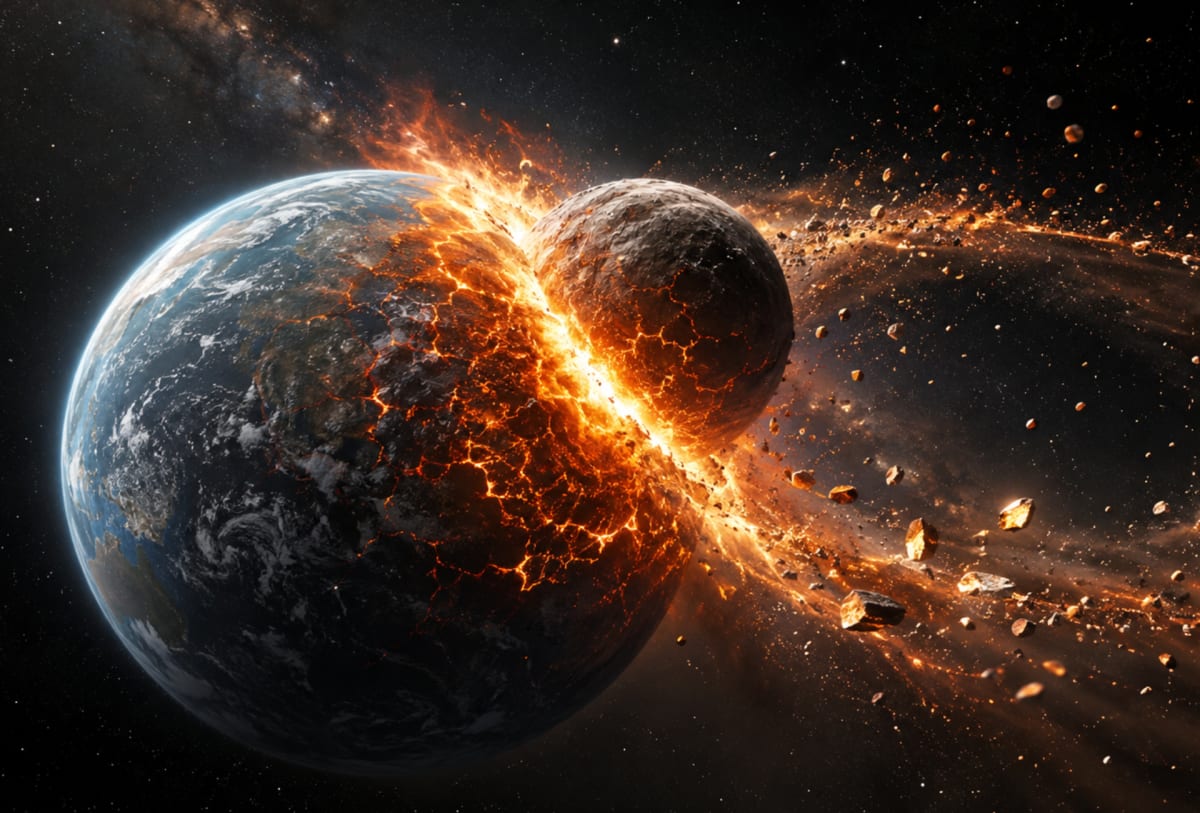
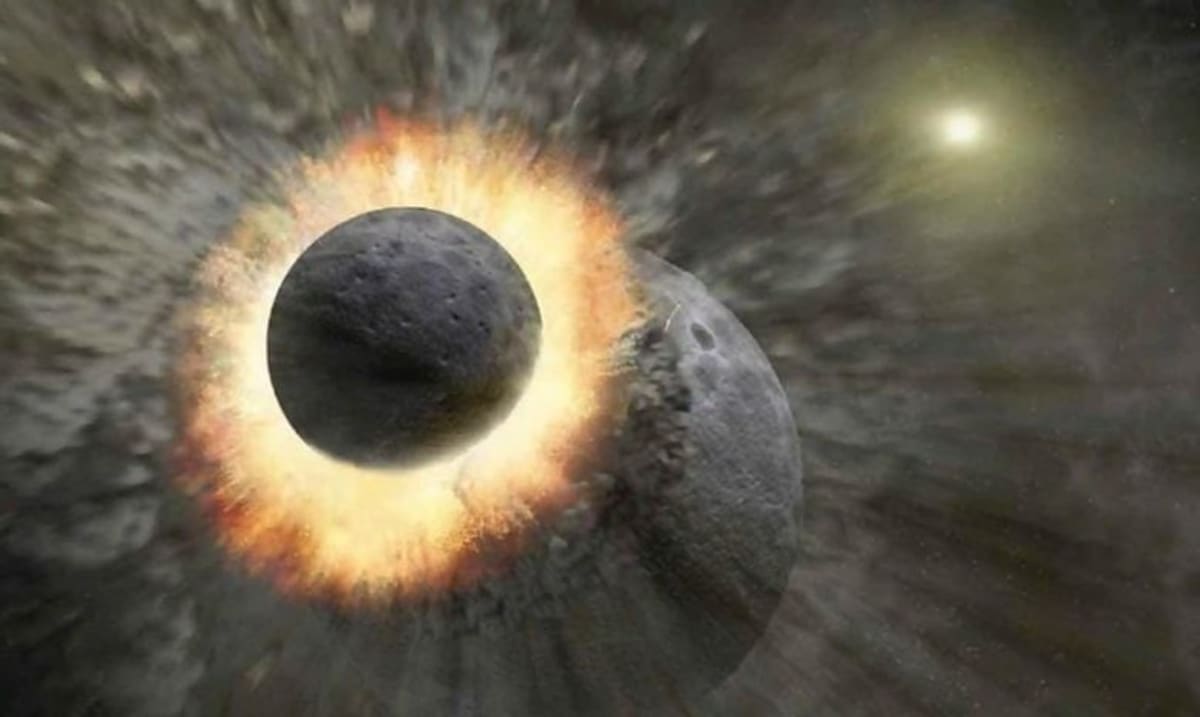
Researchers at the Southwest Research Institute and University of Arizona used advanced computer simulations to recreate what happened when a Mars-sized object named Theia slammed into Earth 4.5 billion years ago. What they found challenges decades of scientific thinking about our closest cosmic neighbor.
For years, scientists believed the collision destroyed Theia completely, spreading debris into a disk around Earth that slowly assembled into the moon over time. But the new simulations included something previous models ignored: the actual strength and temperature of the rocks involved in the crash.
"We discovered that the preexisting geology of the Mars-sized proto-moon matters," said Adeene Denton, the study's lead researcher. When the team added realistic rock physics to their simulations, everything changed.
Temperature turned out to be the game changer. Hotter planetary bodies are weaker than colder ones, and depending on how hot Earth and Theia were at impact, the collision produced completely different results.
In some scenarios matching the original impact models, a fully intact moon emerged within just five hours of the collision. Other temperature conditions still produced the traditional debris disk that gradually formed the moon.
Why This Inspires
This breakthrough shows how asking fresh questions about old mysteries can completely rewrite our understanding of the universe. The same collision that seemed thoroughly explained for decades turned out to hide surprising secrets waiting for the right tools to reveal them.
The discovery also creates an exciting new puzzle piece. Since planets cool as they age, the temperature at impact could help scientists finally pinpoint when the moon-forming collision actually occurred. That timing could explain mysteries about the moon's composition and why Earth ended up with such an unusually large companion in the first place.
The findings show that even events billions of years old can still surprise us when we look at them with new eyes and better technology.
Understanding how our moon formed matters beyond cosmic curiosity. The moon stabilizes Earth's rotation, creates tides that shaped the evolution of life, and has influenced human culture since our ancestors first gazed skyward. Knowing its true origin story connects us more deeply to the forces that made our home planet what it is today.
Science keeps reminding us that the universe holds more wonders than we imagine, and sometimes the biggest discoveries come from revisiting questions we thought we'd already answered.
Based on reporting by Google News - Scientists Discover
This story was written by BrightWire based on verified news reports.
Spread the positivity!
Share this good news with someone who needs it