New Cancer Drug Shrinks Lung Tumors in 42% of Patients
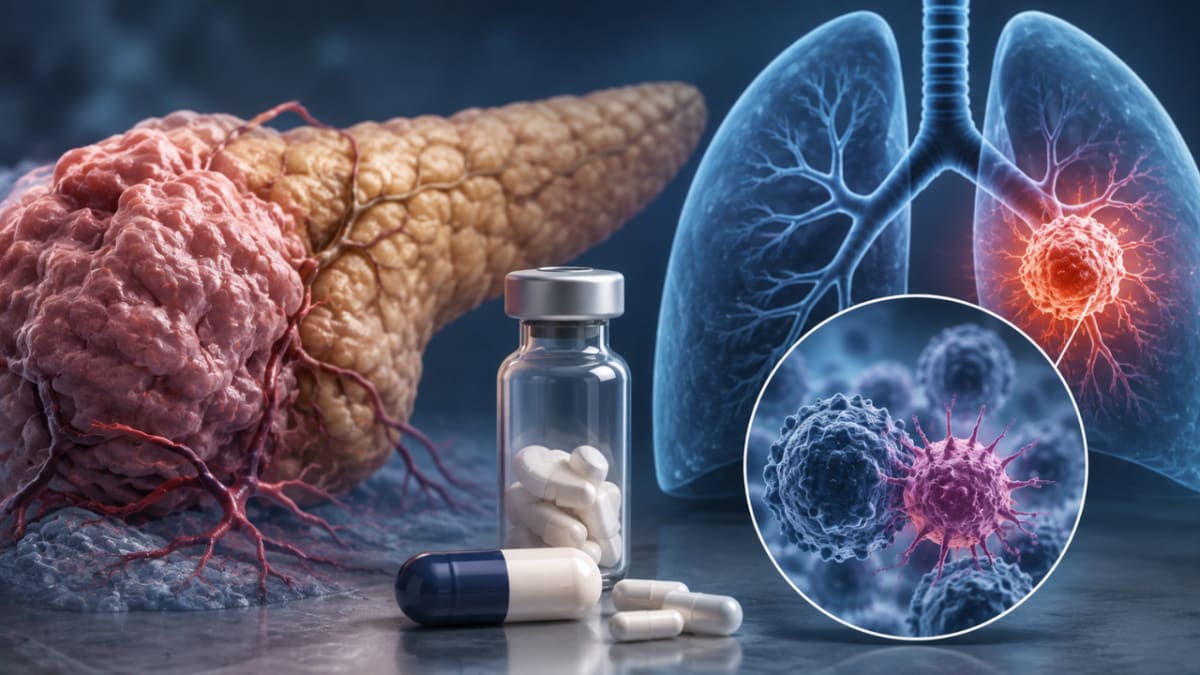
A recently approved pancreatic cancer drug is showing remarkable promise for lung cancer patients, shrinking tumors in 42% of people who had already tried other treatments. The early results offer hope to thousands living with limited treatment options.
📺 Watch the full story above
Patients with advanced lung cancer just got a promising new reason for hope.
Daraxonrasib, a drug approved last week for pancreatic cancer, shrank tumors in 42% of non-small cell lung cancer patients during early clinical trials at The University of Texas MD Anderson Cancer Center. The results, published September 2 in the New England Journal of Medicine, represent a significant leap forward for people whose cancers had stopped responding to chemotherapy and immunotherapy.
The numbers tell an encouraging story. Among 38 patients who received the treatment, tumor shrinkage lasted an average of 11.5 months. Patients lived an average of 16 months overall, compared to typical survival times of just 3 to 4.5 months with current standard treatments.
Dr. David Hong, the study's lead investigator, explained why this matters so much. "Immunotherapy has improved outcomes for many patients with non-small cell lung cancer, but the majority of these cancers eventually progress," he said. "At that point, the few treatment options available often have modest clinical benefit and substantial toxicities."
The drug works by targeting RAS protein mutations, which drive about 30% of non-small cell lung cancers. Until now, patients with these mutations have had very few targeted treatment options available.
Daraxonrasib does come with side effects. About 90% of patients experienced rash, while nausea, vomiting, and diarrhea were also common. However, Hong noted that "the toxicities are largely manageable compared to the alternatives available." About 71% of patients needed dose adjustments, and 10% had to stop treatment.
The timing couldn't be better for pancreatic cancer patients either. The FDA approved daraxonrasib for metastatic pancreatic cancer on August 26, making it the first targeted therapy in this new class. In that trial of 500 patients, people taking the drug lived nearly twice as long as those receiving standard chemotherapy.
Why This Inspires
This story shows how breakthroughs in treating one type of cancer can unexpectedly open doors for others. Scientists are now testing similar RAS-targeting drugs for colon cancer too, potentially helping thousands more patients.
A larger Phase 3 trial for lung cancer is already underway, bringing this treatment closer to approval for more patients who desperately need new options.
Based on reporting by Google: new treatment approved
This story was written by BrightWire based on verified news reports.
Spread the positivity!
Share this good news with someone who needs it