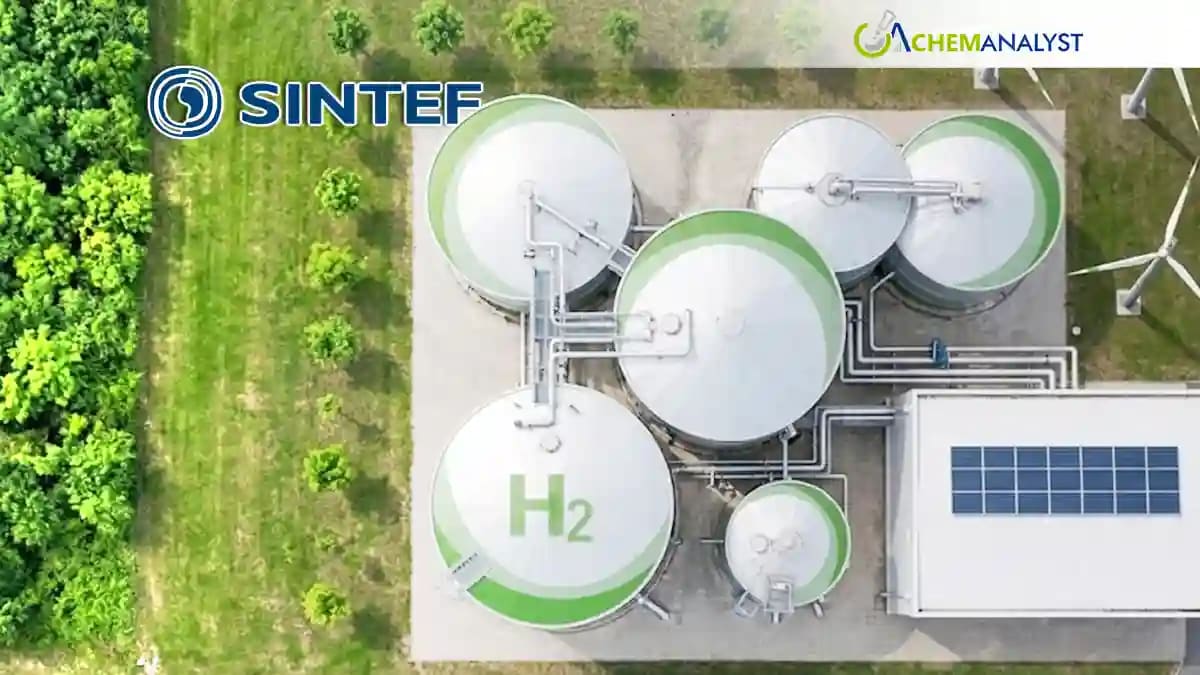
Norway Facility Turns CO2 Into Acetone Using Green Hydrogen
A Norwegian research center will use cutting-edge technology to transform waste carbon dioxide into valuable chemicals, proving we can make everyday products without adding emissions to the atmosphere. The project could reshape how the world manufactures everything from plastics to solvents.
📺 Watch the full story above
Scientists in Norway are about to prove that the chemicals in your nail polish remover can come from recycled carbon instead of fossil fuels.
SINTEF, one of Europe's leading research organizations, just partnered with Power to Hydrogen to install an advanced electrolyzer at their facility in Tiller, Norway. The system will produce renewable hydrogen that gets combined with captured carbon dioxide to create acetone, a chemical found in countless products from paint thinners to pharmaceuticals.
The 0.5-megawatt electrolyzer arrives in late 2026 and uses a special technology called anion exchange membrane (AEM) that adapts quickly to fluctuating renewable energy from wind and solar. When the sun shines bright or wind gusts strong, the system ramps up hydrogen production instantly.
This isn't just a lab experiment. The project is part of PYROCO2, a major European Union initiative bringing together multiple organizations to prove that carbon-neutral chemical manufacturing can work at commercial scale.
The Ripple Effect
The implications stretch far beyond one Norwegian facility. The chemical industry has long depended on petroleum-based feedstocks that release carbon into the atmosphere. This project demonstrates a circular carbon economy where waste CO2 becomes the raw material for new products instead of polluting our air.
Alexander Wentzel, Chief Scientist at SINTEF, emphasized that success requires hydrogen systems that operate efficiently while keeping costs down. He expressed confidence that this partnership delivers exactly that combination of performance and affordability.
For Power to Hydrogen, this marks their second major commercial deployment after a project launching this year at the Port of Antwerp-Bruges. CEO Paul Matter called SINTEF's selection a validation of their technology, noting that one of Europe's most demanding research institutions chose their system for its efficiency and reliability.
The broader message is clear: industries don't have to choose between environmental responsibility and economic viability. Matter highlighted that companies across sectors are actively seeking practical solutions to decarbonize manufacturing, and green chemical production represents the next major wave of hydrogen demand.
The entire system runs on renewable electricity, creating acetone with near-zero emissions compared to conventional petrochemical production methods. What was once considered industrial waste becomes tomorrow's manufacturing input.
Norway continues leading the clean energy transition, now showing the world that even complex chemicals can have a sustainable future.
More Images

Based on reporting by Google News - Norway Green Energy
This story was written by BrightWire based on verified news reports.
Spread the positivity!
Share this good news with someone who needs it