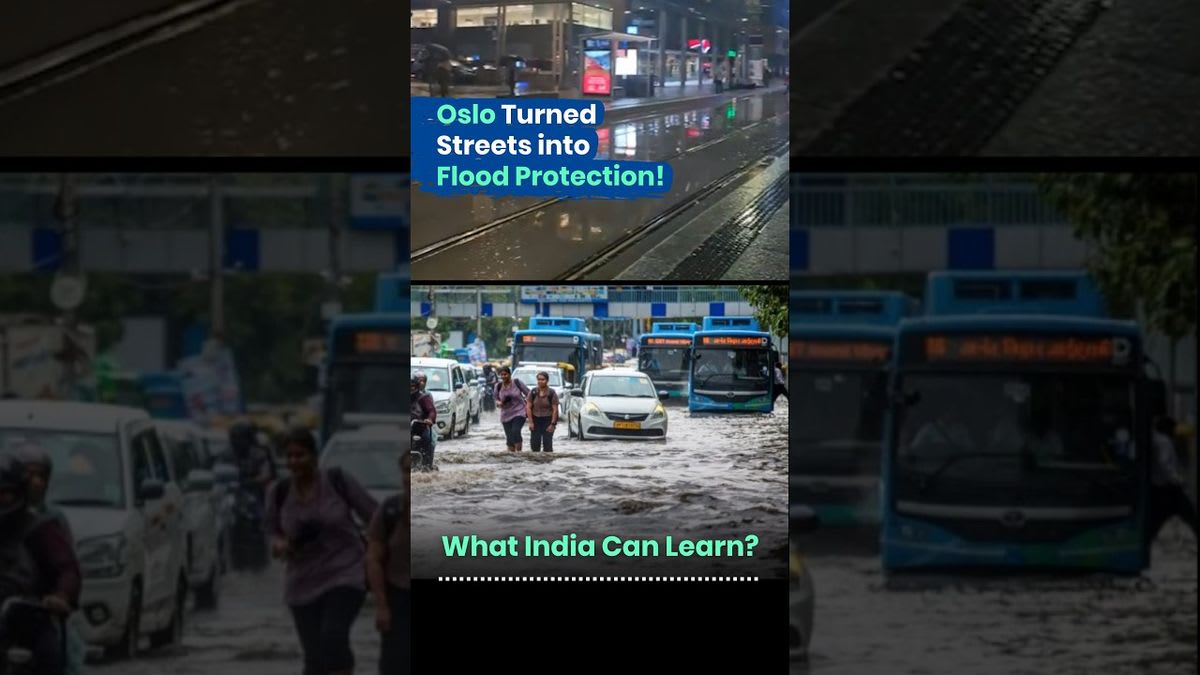
Oslo's Rain Gardens: A Simple Fix for Deadly Urban Floods
Two hours of rain can paralyze an Indian city, but Oslo found a surprisingly simple solution. Nine rain gardens on two streets now hold 60 cubic meters of water and could reshape how the world fights floods.
📺 Watch the full story above
Imagine your entire city turning into a flood zone in just two hours.
That's reality in Gurugram, India, where monsoon rains regularly transform streets into rivers. But halfway across the world, Oslo, Norway discovered a fix so simple it almost sounds too good to be true.
In 2017, Oslo turned two ordinary streets into a flood control experiment. The city installed nine rain gardens that together hold around 60 cubic meters of stormwater.
Rain gardens work like giant sponges built into sidewalks and roadsides. They absorb light rainfall, store heavier downpours, and safely redirect extreme flows before they overwhelm city drains.
The results speak for themselves. Streets that once flooded now stay dry, and the gardens cost a fraction of what massive drainage systems would require.
India desperately needs this solution. Cities like Gurugram, Mumbai, and Bengaluru face annual flooding that kills people, damages property, and brings life to a standstill. Traditional approaches focus on bigger drains and pumps, but they're expensive and often can't keep up with climate change.
Rain gardens offer something different. They're affordable, easy to maintain, and can be added to existing streets without complete reconstruction. Plants filter pollutants while absorbing water, creating green spaces that cool cities and improve air quality.
The Ripple Effect
Oslo's experiment proves that flood resilience isn't just about engineering bigger solutions. Sometimes the smartest answer is working with nature instead of against it.
Indian cities are starting to pay attention. Urban planners in several metros have begun studying green infrastructure as climate change makes flooding more frequent and severe. The question isn't whether rain gardens work, it's how quickly cities can adopt them.
Every rain garden installed is a street that won't flood, a family that won't lose their home, and a city one step closer to climate resilience.
More Images
%2Fenglish-betterindia%2Fmedia%2Fyoutube_thumbnails%2Fvi%2FdNESUvYkUCY%2Fmaxresdefault.jpg)
%2Fenglish-betterindia%2Fmedia%2Fyoutube_thumbnails%2Fvi%2FkLtpjlPt-Is%2Fmaxresdefault.jpg)
%2Fenglish-betterindia%2Fmedia%2Fyoutube_thumbnails%2Fvi%2F-TVWX-TgJu0%2Fmaxresdefault.jpg)
Based on reporting by The Better India
This story was written by BrightWire based on verified news reports.
Spread the positivity!
Share this good news with someone who needs it