Robotic Guide Dogs Now Talk to Visually Impaired Users
Researchers at Binghamton University created robot guide dogs that communicate verbally with blind users, offering route planning and real-time navigation feedback. Seven legally blind participants tested the system and expressed excitement about its potential to transform daily independence.
📺 Watch the full story above
Imagine a guide dog that not only leads you safely but can actually discuss your route options and describe your surroundings as you walk.
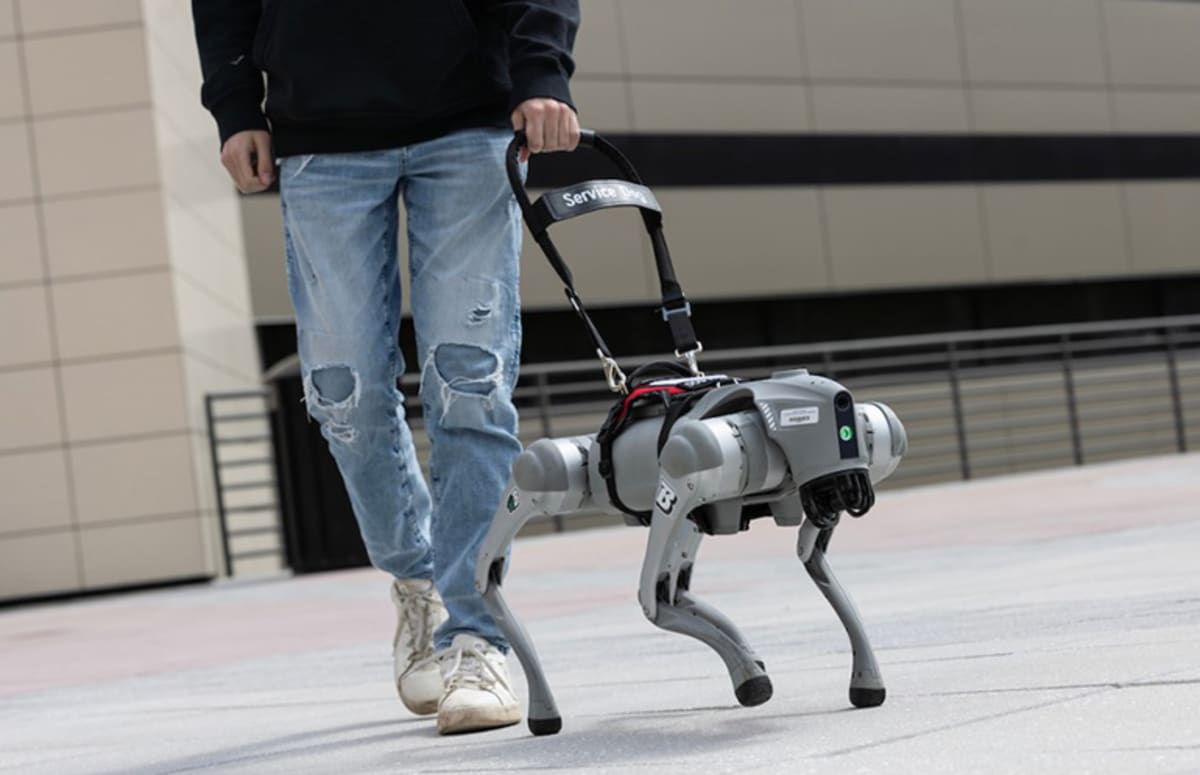
Researchers at Binghamton University in New York have made this a reality. Using artificial intelligence, they developed robotic guide dogs that hold conversations with visually impaired users while navigating them to their destinations.
The breakthrough builds on the team's earlier work training robot dogs to respond to leash tugs. Associate Professor Shiqi Zhang and his students added voice capabilities powered by large language models, the same technology behind advanced chatbots.
The difference is dramatic. Traditional guide dogs can learn about 20 commands. These robotic companions understand unlimited voice instructions and respond in full sentences.
Before setting off, the robot asks where the user wants to go and presents route options with estimated travel times. Once the user picks their preferred path, the journey begins with constant verbal updates about the environment.
"This is a long corridor," the robot might say, or alert users to upcoming obstacles. This running commentary provides crucial situational awareness that vision loss makes difficult to achieve alone.
Seven legally blind volunteers tested the system in a large office building with multiple rooms. They navigated to a conference room while the robot guided and narrated their journey. After completing the test, participants filled out questionnaires rating their experience.
The feedback was overwhelmingly positive. Users preferred the combined approach of pre-trip planning discussions and real-time scene descriptions over either feature alone.
Why This Inspires
Zhang said the participants showed genuine enthusiasm that went beyond polite feedback. They asked detailed questions about the technology and when it might become available for everyday use. Their excitement reflected a real hunger for tools that increase independence and confidence in navigating the world.
The robotic guide dogs represent more than just technological advancement. They open possibilities for people who might not be able to care for biological service animals or need navigation support in environments where live dogs face restrictions.
The research team presented their findings at the Annual AAAI Conference on Artificial Intelligence, one of the largest academic AI gatherings in the world. Their paper, "From Woofs to Words: Towards Intelligent Robotic Guide Dogs with Verbal Communication," detailed the system's design and results.
Next steps include expanding testing, improving the robots' autonomous capabilities, and enabling longer trips both inside buildings and outdoors. The ultimate goal is making robotic guide dogs practical for daily life, not just research settings.
The participants' hopeful response suggests the technology addresses a genuine need and could meaningfully expand mobility options for millions of visually impaired people worldwide.
More Images



Based on reporting by The Robot Report
This story was written by BrightWire based on verified news reports.
Spread the positivity!
Share this good news with someone who needs it