Robots Learn New Tasks in 2 Hours Using Human Demos
A Boston startup taught robots to master everyday tasks like peeling vegetables and dispensing tape with as little as two hours of human demonstration footage. The breakthrough could make factory automation faster and more affordable than ever before.
📺 Watch the full story above
Teaching a robot to peel a potato used to take weeks of programming, but startup Generalist just did it in two hours.
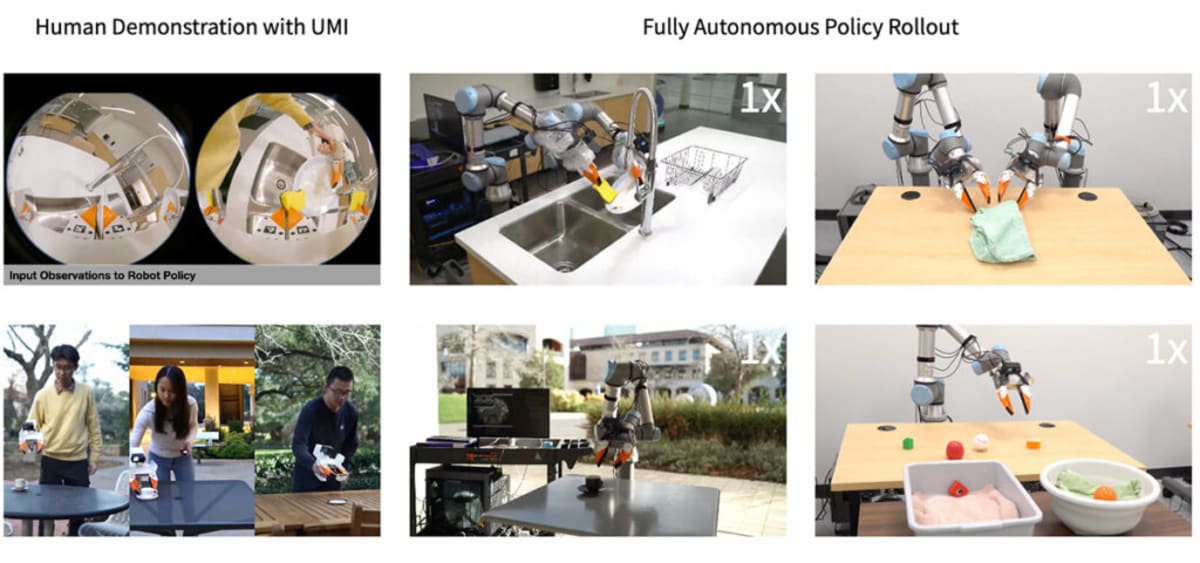
The company, now valued at $2 billion, has figured out how to turn everyday human actions into robot skills at remarkable speed. By having people demonstrate tasks using puppet-like controllers while GoPro cameras record, they've created a shortcut that bypasses traditional robot programming entirely.
The secret lies in treating robots like fast learners rather than machines that need every movement coded. Founding mechanical engineer Samantha Castellanos says her team collected between 2 and 80 hours of human demonstrations for various tasks, then let the robots watch and practice on their own for just a few minutes more.
At an automation trade show in June, Generalist showed off the results. On one side of the convention center, Universal Robots arms folded cardboard boxes. Across the hall, different robot arms repaired vacuum cleaners. The same underlying intelligence powered both, adapting to different robot hands and tools without reprogramming.
What impressed onlookers most wasn't just that the robots could do the tasks. When something went wrong, they figured out how to recover in real time, showing genuine problem-solving ability rather than rigid programming.
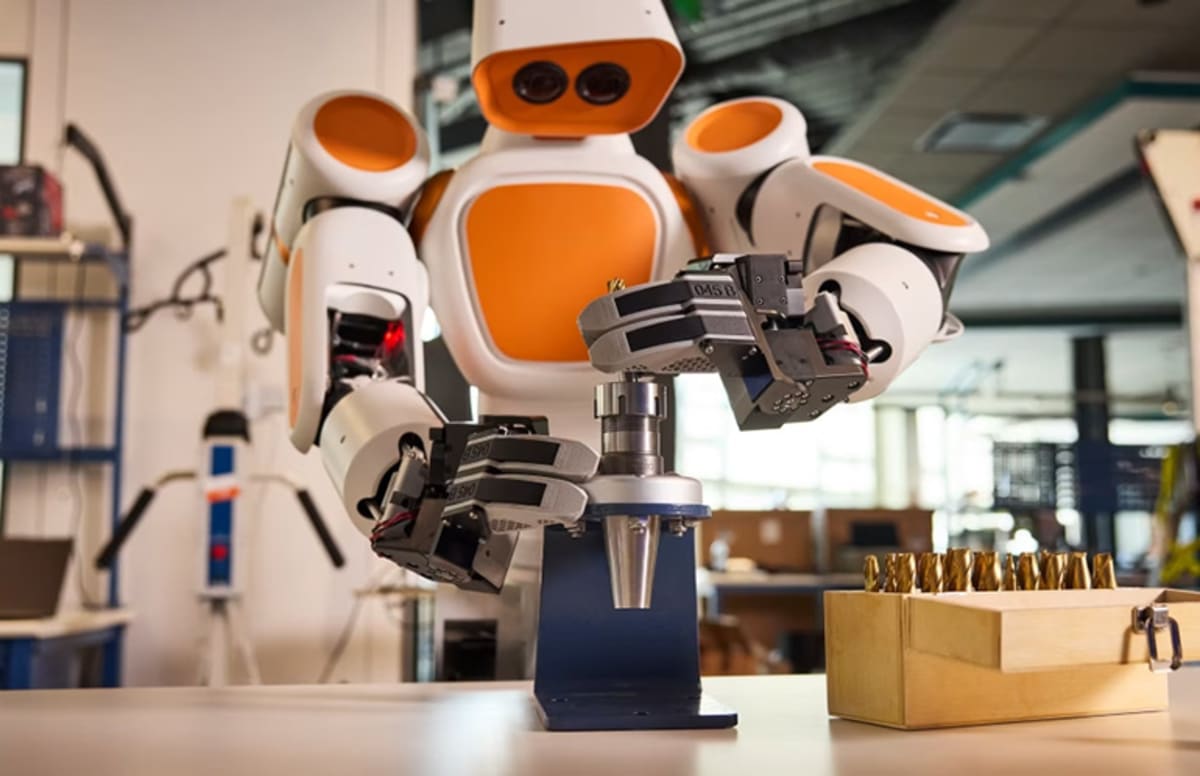
The approach works with surprising simplicity. Generalist's gripper has just one moving part, opening and closing like fingers. Castellanos says this elegance matters in real factories, where a broken component can shut down an entire production line. A simple gripper takes two minutes to swap out instead of hours.
The Ripple Effect
The implications extend beyond any single factory floor. In a field where competitors have collectively raised over $4 billion, Generalist's data-first approach offers a fundamentally different path to general-purpose robots.
By collecting demonstrations in their own Boston and California offices rather than requiring expensive custom setups, the company has compressed the timeline from concept to working robot. The tape dispenser task took just four minutes of robot practice after the initial human demonstrations, achieving reliable performance that could repeat 10 times in a row.
This speed matters because it makes automation accessible to smaller manufacturers who can't afford months of engineering time. A bakery could teach a robot to frost cupcakes. A repair shop could train one to sort screws. Tasks that were economically impossible to automate become viable when setup takes hours instead of months.
Castellanos describes the philosophy simply: everything serves the goal of building better models. Different tools, different tasks, different ways of interacting with the world all feed into creating robots that truly understand physics and manipulation.
The technology proves that robots don't need to be complex to be capable, opening doors to a future where automation adapts to human needs rather than the other way around.
More Images


Based on reporting by The Robot Report
This story was written by BrightWire based on verified news reports.
Spread the positivity!
Share this good news with someone who needs it