Stanford AI Trains Surgeons While They Sleep
Surgical residents are recording hundreds of hours of training videos that never get watched because attending physicians don't have time to review them. Stanford doctors built an AI that watches the footage, spots mistakes, and gives instant feedback without requiring an hour of anyone's time.
📺 Watch the full story above
Thousands of thumb drives filled with surgical training videos are sitting in drawers across America, unwatched and useless.
Teaching hospitals have been recording laparoscopic surgeries for years, but there's a problem. Reviewing just one video requires an attending surgeon and a resident to sit together for hours, walking through every cut and stitch. With schedules already packed, it rarely happens.
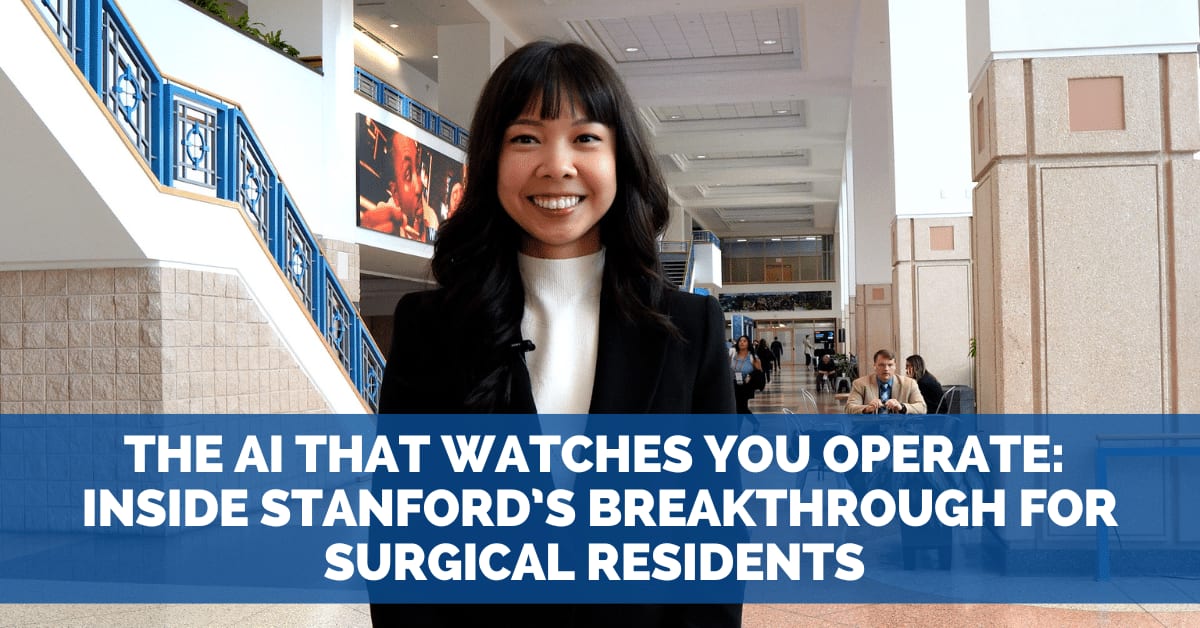
Dr. Chloe Nobuhara, a Stanford general surgery resident, helped solve this with her team. They built an AI specifically trained to watch surgical videos, understand what's happening, and tell residents exactly what they did right or wrong.
The tool works like a specialized teaching assistant. Residents upload their surgery videos to a web app, and the AI automatically breaks the footage into distinct segments like "clipping and cutting" or "complex dissection." Then it analyzes technique and flags errors, all without tying up an attending physician's schedule.
Generic AI tools like ChatGPT can't handle this work. Multi-hour surgical videos are too long and too technical for off-the-shelf models. The Stanford team trained their "Surgical Learning Model" on specific anatomical language and directional terms that surgeons actually use in operating rooms.
The results have been impressive. Over 60 users across four hospitals are already testing the system, and feedback shows they trust what the AI tells them.
The Ripple Effect
Better surgical training doesn't just help doctors. It directly protects patients on operating tables every single day.
The Stanford team is already thinking bigger than resident education. They're building the foundation for objective board certifications that don't rely on subjective human judgment. They're even preparing for a future where autonomous surgical robots need their own performance reviews.
"How do we grade the robots that are doing surgeries on their own?" Dr. Nobuhara asks. Her team is already working on the answer.
Right now, surgical residents can study their own technique at midnight, spot their mistakes before meeting with their attending, and focus review sessions on the moments that matter most. A three-hour video becomes five targeted clips. Hundreds of hours of footage become useful instead of wasted.
The AI isn't replacing surgeons, but it's making them better faster, and that means safer surgeries for all of us.
More Images




Based on reporting by Google News - AI Breakthrough
This story was written by BrightWire based on verified news reports.
Spread the positivity!
Share this good news with someone who needs it