Tiny Black Hole Found 18,000 Light-Years From Earth
Astronomers discovered a small black hole hiding in a star cluster using an incredible method: watching a single star wobble for 23 years. This breakthrough shows just how precise our space telescopes have become at spotting the invisible.
📺 Watch the full story above
While monster black holes millions of times heavier than our sun usually grab headlines, scientists just found something much smaller and harder to detect.
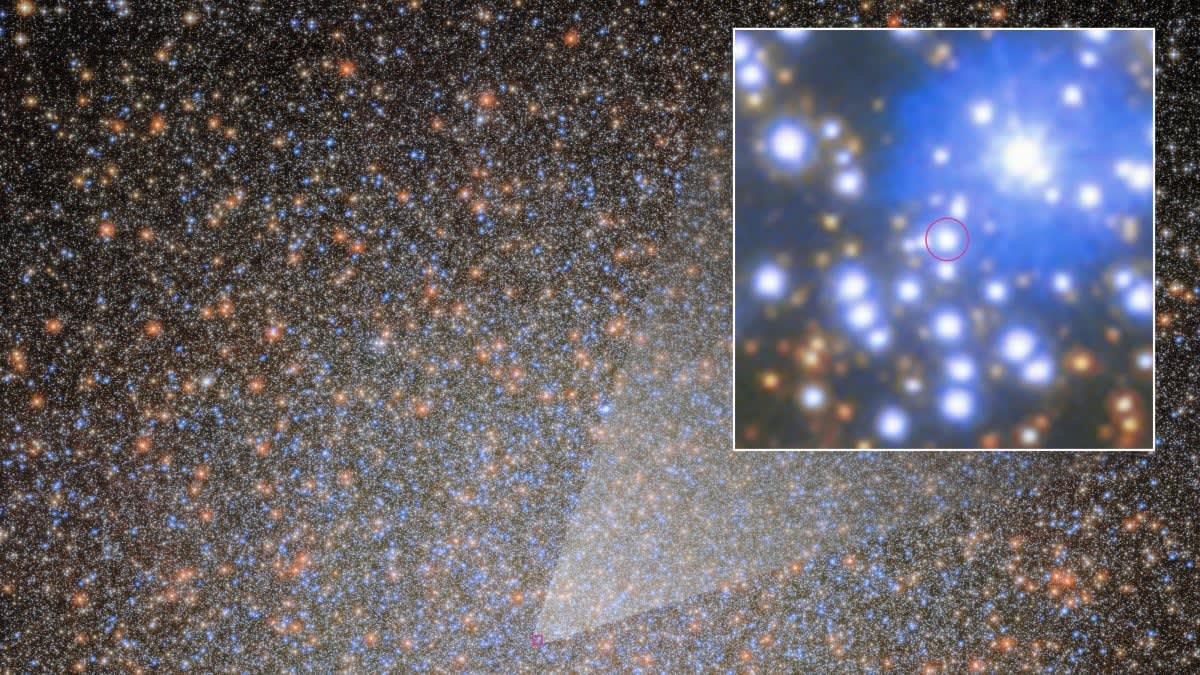
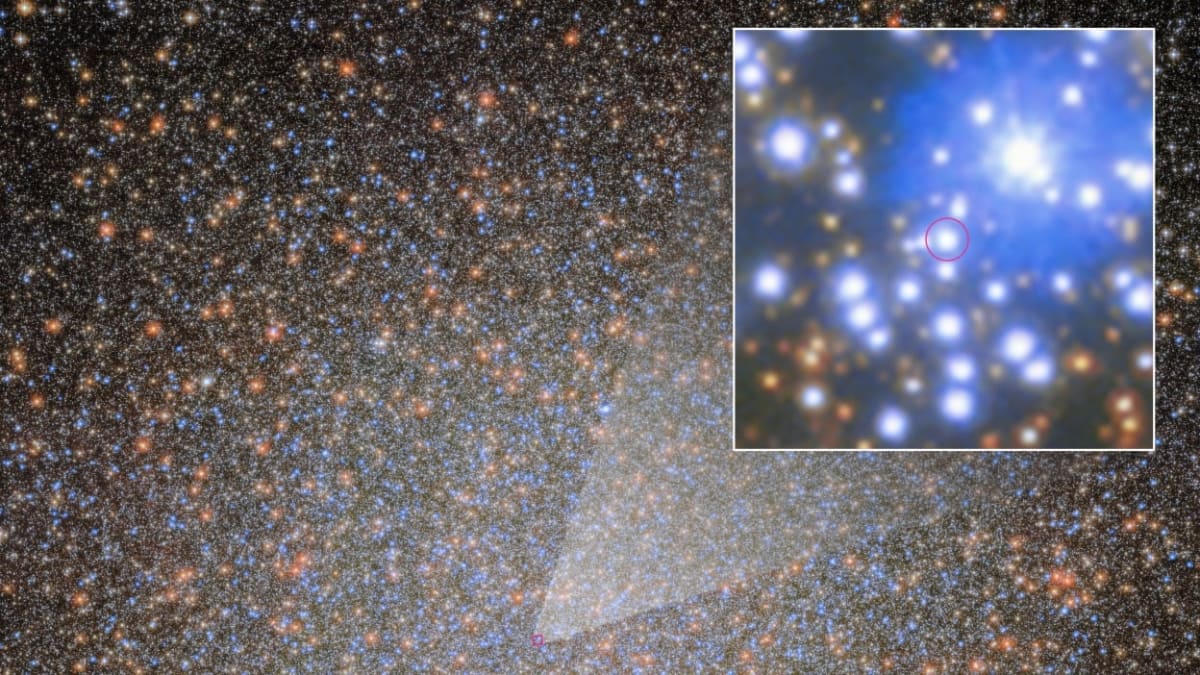
Researchers using NASA's James Webb and Hubble space telescopes spotted a black hole just 4.5 times the mass of our sun, tucked inside Omega Centauri. This ancient cluster holds millions of stars about 18,000 light-years from Earth.
The discovery itself is as impressive as what they found. Unlike massive black holes that announce themselves by devouring gas or shooting out jets of energy, this one sat quietly invisible.
Matthew Whitaker, a University of Utah researcher who led the study, explained the team tracked one ordinary star's tiny wiggle across 23 years of archived telescope data. The star, about three-quarters the sun's mass, takes nearly a century to orbit the black hole from a great distance.
"The precision of these measurements is incredible, down to a fraction of a pixel on Hubble and Webb's detectors," Whitaker said. The only force that could create that specific wobble was a stellar black hole's gravity gently tugging on the star.
This marks the first time scientists have found such a small black hole using this technique, called astrometry. Previous attempts with other methods came up empty.
Why This Inspires
This discovery proves we've entered an era where astronomers can spot invisible objects across unimaginable distances by measuring movements smaller than a single pixel. The patience to track a star's position for over two decades, combined with cutting-edge technology, turned the impossible into reality.
The black hole, dubbed oMEGACat BH-2, also challenged what scientists thought they knew. Computer models predicted ancient stars should create heavier black holes, but this one came in lighter than expected. Early stars formed before heavier elements became common in the universe, and researchers believed they'd leave behind more mass when they died.
"We now know that a metal-poor star is able to form a black hole like this," said coauthor Anil Seth, "and we need to figure out how that happens."
Scientists suspect thousands more black holes hide in Omega Centauri, but detecting them requires this level of precision. Some models estimate 10,000 stellar black holes should exist in the cluster, while others predict the crowded environment kicks smaller black holes out into space over billions of years.
Now astronomers want to know if finding tiny black holes in star clusters is rare or common, and whether these dark objects influence what happens inside clusters. Every answer opens new questions about how the universe works.
The results appeared in The Astrophysical Journal Letters, showing that sometimes the smallest discoveries require the biggest leaps in human ingenuity.
More Images

Based on reporting by Google: James Webb telescope
This story was written by BrightWire based on verified news reports.
Spread the positivity!
Share this good news with someone who needs it