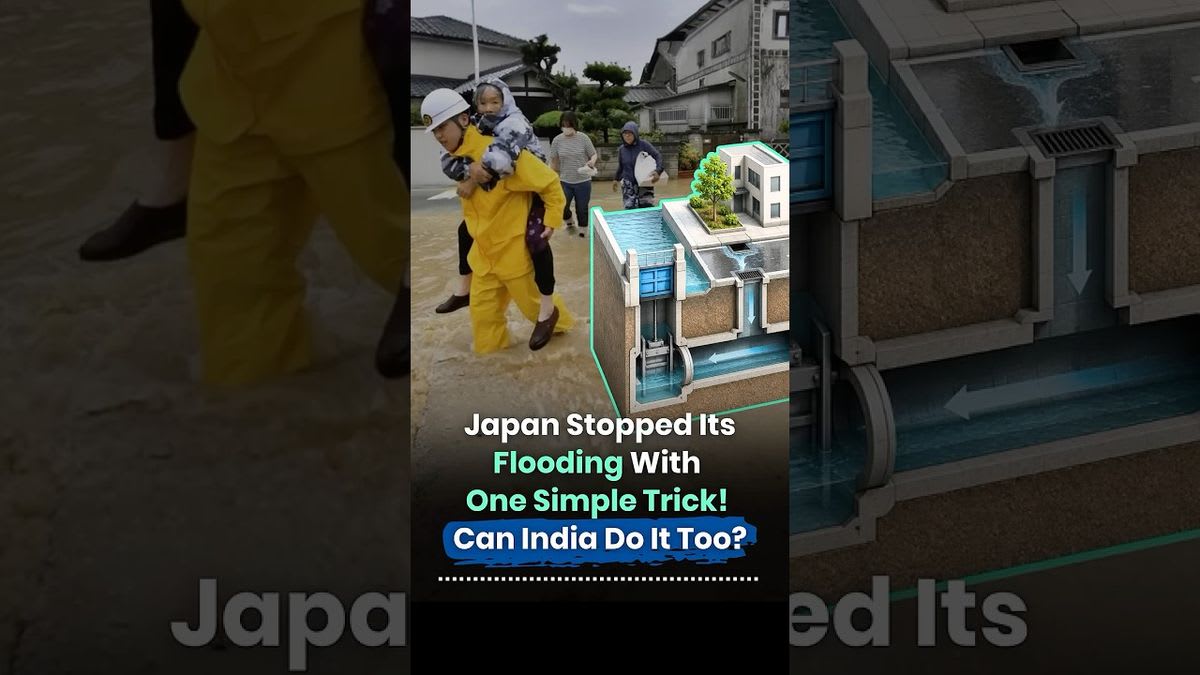
Tokyo's Underground Tunnels Stop Floods During Typhoons
While Mumbai floods after hours of rain, Tokyo stays dry during massive typhoons thanks to a massive underground system. Could this engineering marvel inspire solutions for Indian cities?
📺 Watch the full story above
Tokyo handles typhoons better than Mumbai handles a rainy afternoon, and the secret lies 50 meters underground.
The G-Cans system is one of the world's largest underground flood control networks, built beneath Tokyo to keep the city running during extreme weather. When heavy rain hits, massive tunnels capture excess water and funnel it into enormous storage chambers before pumping it safely into the Edo River.
The results speak for themselves. Roads stay open during typhoons. Trains keep running on schedule. Daily life continues with minimal disruption while other major cities would grind to a halt.
Mumbai tells a different story. Just a few hours of monsoon rain can turn streets into rivers and shut down the entire city. The contrast highlights how infrastructure can mean the difference between resilience and crisis.
The Ripple Effect
As climate change brings more extreme rainfall events, cities worldwide are watching Tokyo's success. The G-Cans system doesn't just prevent flooding. It protects homes, saves lives, keeps businesses operating, and prevents billions in economic losses every year.
Indian cities face increasingly severe monsoon flooding as rainfall patterns intensify. Mumbai, Chennai, Bangalore, and other metros see regular disruptions that affect millions of people and cost the economy dearly.
Underground flood control systems require massive investment and years of construction. But they offer a permanent solution rather than temporary fixes. Japan built G-Cans over decades, planning for the long term rather than just responding to the last disaster.
The technology exists. The blueprints are proven. What Indian cities need now is the political will to invest in infrastructure that protects future generations. Tokyo spent years building a system that keeps 13 million people safe and productive during the worst weather.
Could similar engineering transform Indian cities from flood-prone to flood-proof? The question isn't whether it's possible, but whether we're ready to make it a priority.
Tokyo proved that cities don't have to accept flooding as inevitable.
More Images

%2Fenglish-betterindia%2Fmedia%2Fyoutube_thumbnails%2Fvi%2FzBmq9hVV2bg%2Fmaxresdefault.jpg)
%2Fenglish-betterindia%2Fmedia%2Fyoutube_thumbnails%2Fvi%2FUgoBPZp0eCs%2Fmaxresdefault.jpg)
%2Fenglish-betterindia%2Fmedia%2Fyoutube_thumbnails%2Fvi%2FzkWgYDoWTnI%2Fmaxresdefault.jpg)
Based on reporting by The Better India
This story was written by BrightWire based on verified news reports.
Spread the positivity!
Share this good news with someone who needs it