Women's Appliqué Collective Thrives in Tharad, India
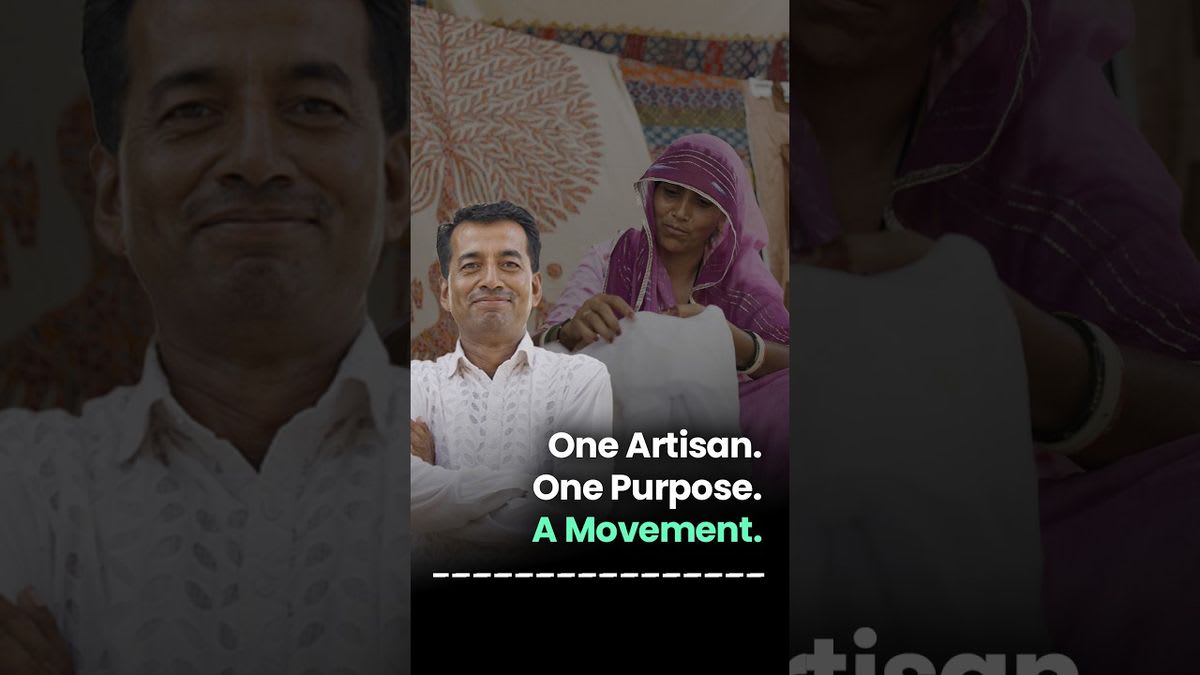
A single artisan's quest to find buyers for traditional appliqué work has blossomed into one of India's largest women-led craft collectives. What started as a struggle for market access has become a thriving movement preserving centuries-old traditions.
📺 Watch the full story above
The problem in Tharad wasn't a lack of talent. It was a lack of customers willing to buy what skilled artisans were creating.
One determined artisan refused to accept that his village's traditional appliqué work would fade into obscurity. He set out to find buyers beyond Tharad's borders, determined to prove that ancient craft techniques still had value in modern markets.
That single effort sparked something bigger than anyone expected. Today, the initiative has grown into one of the region's largest women-led appliqué collectives, creating steady income for dozens of families while keeping traditional techniques alive.
The collective recently entered a new growth phase with support from Flipkart Foundation and AIACA. The partnership focuses on expanding market access and helping artisans adapt their traditional products for contemporary buyers without losing the craft's authentic character.
Women who once had limited economic opportunities now lead a thriving enterprise. They're not just making beautiful textiles. They're running a business, making decisions, and earning financial independence.
The Ripple Effect
The collective's success reaches far beyond individual paychecks. Young women in Tharad now see craft work as a viable career path rather than a dying tradition. Families have new financial stability. Traditional knowledge that might have disappeared is being actively practiced and passed down.
The model proves that heritage crafts can compete in modern markets when artisans get the right support. By reimagining how traditional appliqué fits into today's fashion and home décor markets, the collective has created sustainable demand for skills that have been refined over generations.
Other villages are taking notice. The Tharad model shows that preserving cultural heritage and building economic opportunity aren't opposing goals. They can fuel each other when communities have access to markets and business support.
One artisan saw a problem and refused to walk away, and now an entire community is writing a different future.
More Images
%2Fenglish-betterindia%2Fmedia%2Fyoutube_thumbnails%2Fvi%2FgR7CYGCKTGQ%2Fmaxresdefault.jpg)
%2Fenglish-betterindia%2Fmedia%2Fyoutube_thumbnails%2Fvi%2FdW-b8n9ZrW8%2Fmaxresdefault.jpg)
%2Fenglish-betterindia%2Fmedia%2Fyoutube_thumbnails%2Fvi%2F29S9w1oly8U%2Fmaxresdefault.jpg)
Based on reporting by The Better India
This story was written by BrightWire based on verified news reports.
Spread the positivity!
Share this good news with someone who needs it