
10 Breast Cancer Treatments Approved in Just 5 Months
The FDA approved 10 new breast cancer therapies between May and September 2026, bringing patients unprecedented treatment options in record time. Three of the approvals represent entirely new types of medicine never before used in cancer care.
For breast cancer patients, 2026 brought a wave of hope that few saw coming.
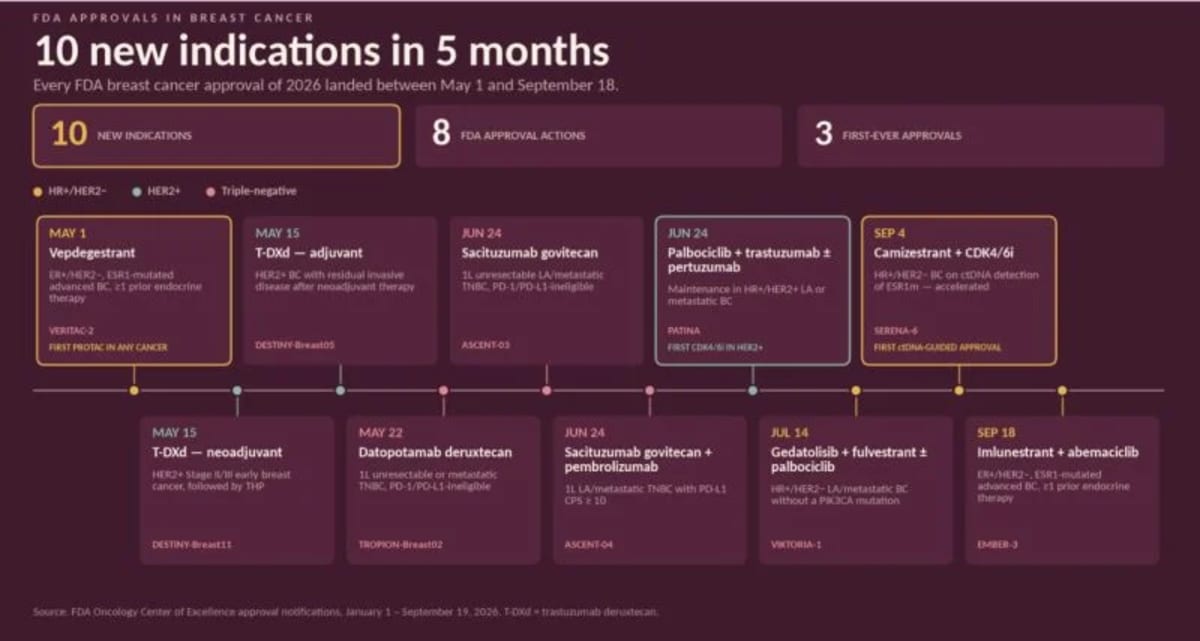
Between May 1 and September 18, the FDA approved 10 new treatment options for breast cancer across 8 approval actions. That's more than two new therapies per month, each offering patients fighting this disease a new pathway forward.
Dr. Erika Hamilton, Director of the Breast Cancer Research Program at Sarah Cannon Research Institute, called the pace of progress remarkable. Three of the approvals were completely new drugs entering the market for the first time: vepdegestrant, camizestrant, and gedatolisib.
But three approvals went even deeper than just new medications. Vepdegestrant became the first PROTAC ever approved for any cancer, representing an entirely new way to fight the disease at the molecular level. Palbociclib combined with trastuzumab became the first CDK4/6 inhibitor to treat HER2-positive breast cancer, opening doors for patients who previously had fewer options.
Perhaps most groundbreaking, camizestrant became the first therapy approved based on a resistance mutation found in blood tests before scans even showed the cancer was progressing. This means doctors can now intervene earlier, adjusting treatment before traditional imaging catches up.
The ESR1 mutation alone drove three separate approvals this year, with two coming just 14 days apart. And T-DXd crossed into curative treatment for the first time, now approved for both before and after surgery.
Hamilton praised not just the research teams but also the FDA itself. The agency processed this enormous volume of data while handling approvals across all cancer types, despite being understaffed. Each approval represents countless hours from patients, caregivers, pharmaceutical companies, investigators, nurses, trial staff, and regulators.
The Ripple Effect
This surge in approvals does more than just add treatment options. It validates the clinical trial process and shows patients that participating in research can directly accelerate progress for everyone.
For women facing breast cancer today, these approvals mean more personalized treatment paths. Doctors can now match therapies to specific genetic mutations, switch treatments earlier when resistance develops, and even use advanced medications in curative settings that were once reserved only for late-stage disease.
The pace also signals something larger: the scientific understanding of breast cancer is accelerating, with new modalities like PROTACs potentially transforming cancer treatment across all types in coming years.
Five months delivered a decade's worth of progress for breast cancer patients everywhere.
More Images



Based on reporting by Google: new treatment approved
This story was written by BrightWire based on verified news reports.
Spread the positivity!
Share this good news with someone who needs it