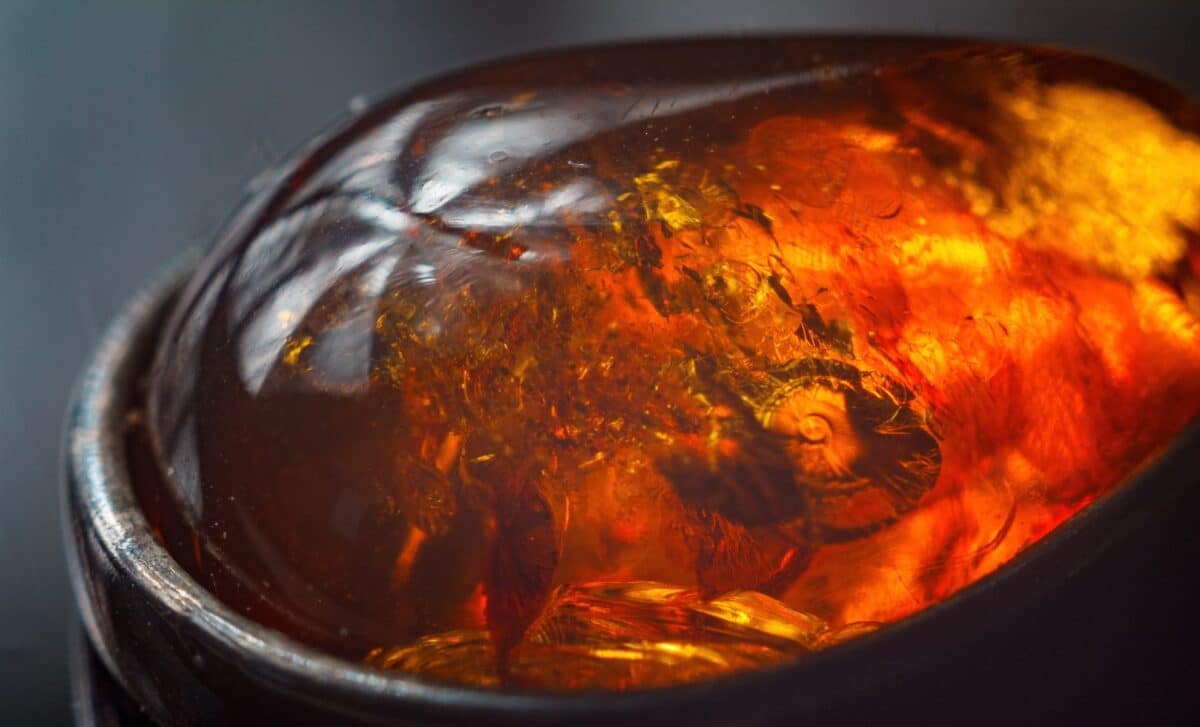
100-Million-Year-Old Bug Found With Crab-Like Claws
Scientists discovered a tiny prehistoric predator with crab-like claws preserved perfectly in amber from Myanmar. The 100-million-year-old find reveals how evolution can create the same clever tools in completely different creatures.
A bug frozen in time for 100 million years just revealed one of evolution's coolest tricks.
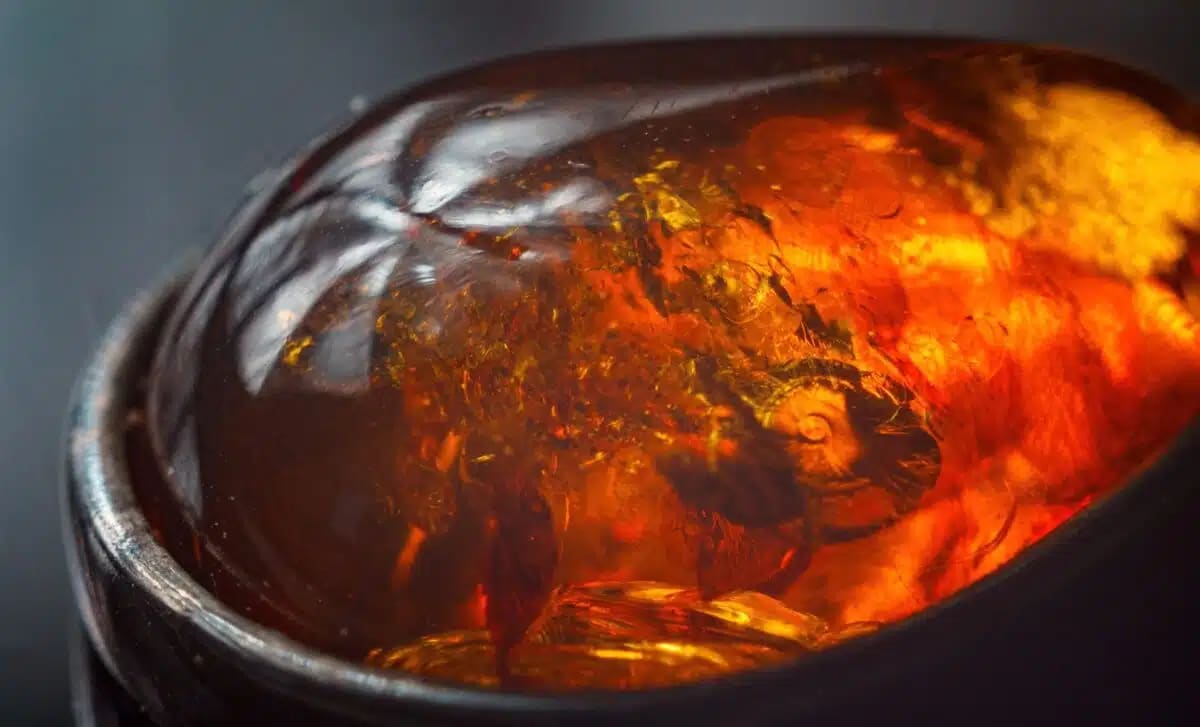
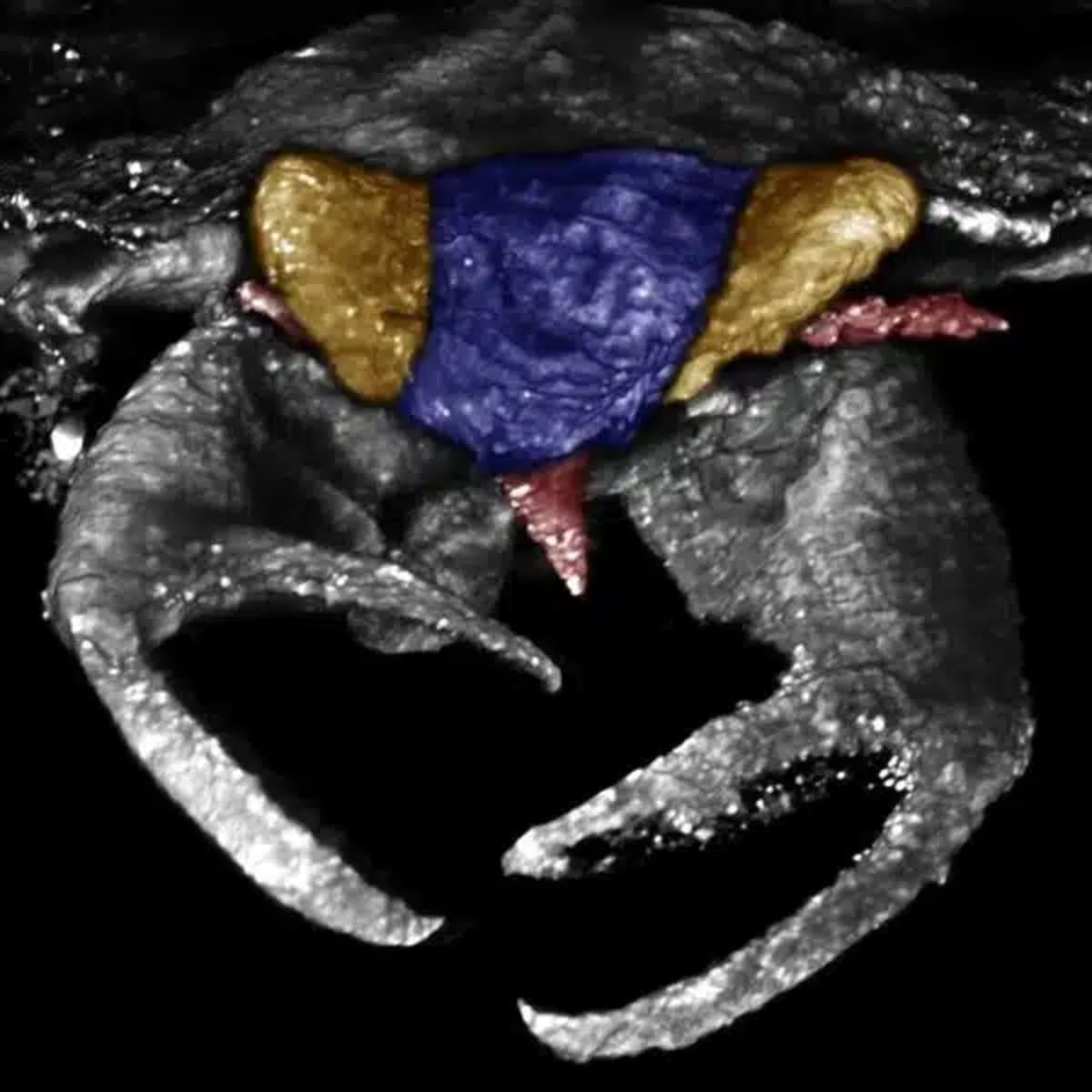
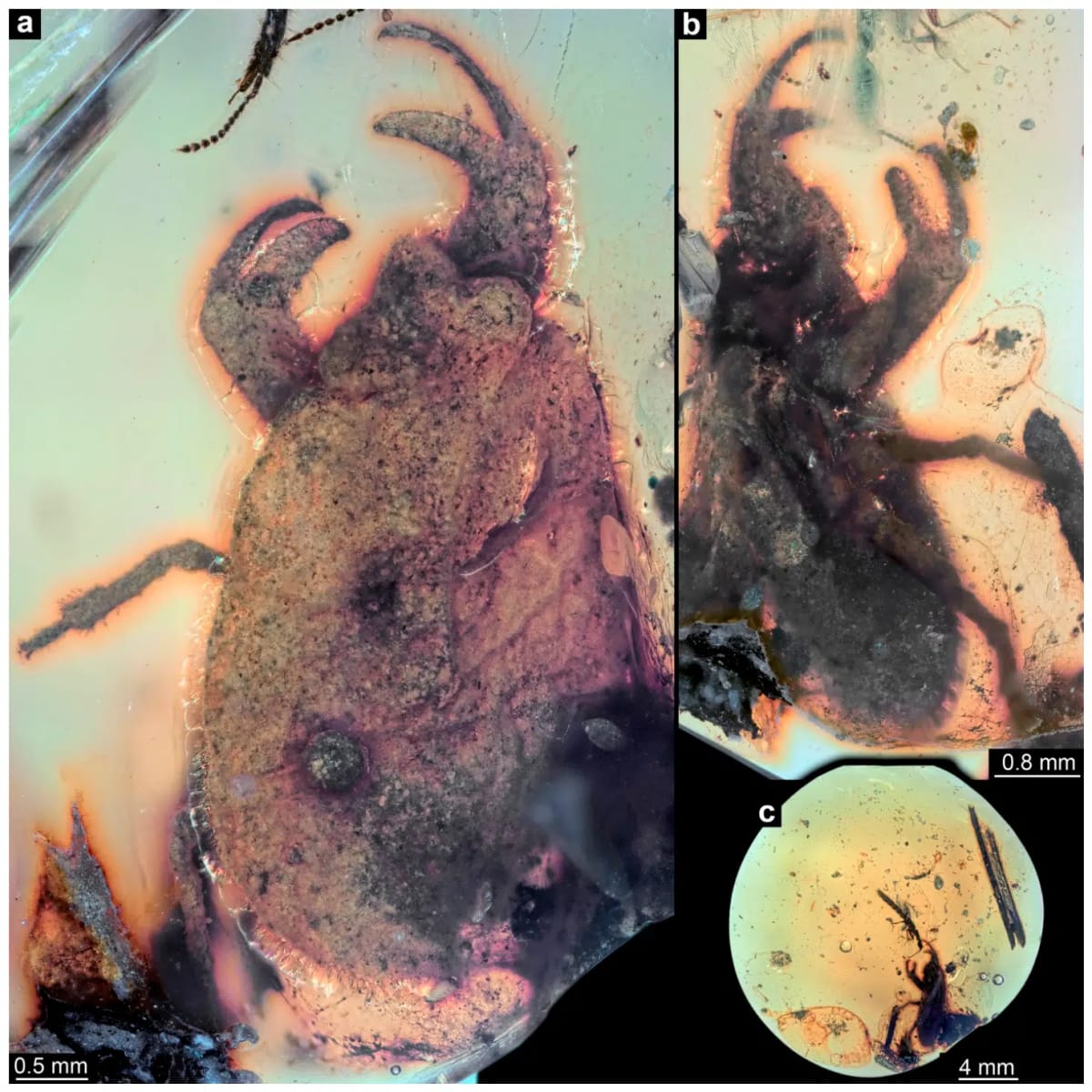
Researchers from LMU Munich uncovered a never-before-seen species trapped in amber from Myanmar's Kachin region. The tiny true bug, now named Carcinonepa libererrantes, sports unusual claw-like pincers on its front legs that look surprisingly similar to those found on crabs and lobsters.
Here's what makes this discovery special. These specialized claws have only appeared independently in three other insect groups throughout history, making this the fourth known case of evolution creating the same solution in unrelated creatures.
Carolin Haug, the study's lead zoologist, used micro-computed tomography to create a full 3D scan of the fossil. Her team compared more than 2,000 claw structures from living and extinct species and found the closest matches weren't other bugs at all, but crustaceans like crabs, lobsters, and shrimp.
The amber came from Myanmar's famous fossil deposits, which continue to surprise scientists with perfectly preserved glimpses into ancient ecosystems. The region has become a treasure trove for understanding what life looked like in Cretaceous forests 100 million years ago.
The researchers gave their discovery a name with personality. Carcinonepa combines "carcino" (meaning crab) with "nepa" (a type of water bug), while the species name "libererrantes" pays tribute to the K-pop group Stray Kids, whose signature pose resembles the bug's claw position. One of the study authors, Fenja Haug, is a devoted fan.
Based on its body structure, the ancient predator likely prowled Cretaceous forests near coastal areas, using its specialized claws to snatch smaller insects. It belongs to the true water bugs and shares traits with modern toad bugs.
Why This Inspires
This tiny hunter shows us that nature loves a good design so much it reinvents it across completely different branches of the tree of life. When a tool works, evolution finds a way to create it again and again, whether you're a crab scuttling along the ocean floor or a bug hunting in an ancient forest.
The discovery also reminds us that our planet still holds countless secrets waiting to be revealed. Every amber fossil from Myanmar offers a window into ecosystems that thrived when dinosaurs walked the Earth, showing us just how creative and diverse life has always been.
Scientists continue finding new species in these amber deposits, each one adding another piece to the puzzle of how ancient creatures lived, hunted, and adapted to their world millions of years before humans arrived.
More Images

Based on reporting by Google News - Scientists Discover
This story was written by BrightWire based on verified news reports.
Spread the positivity!
Share this good news with someone who needs it