100-Million-Year-Old Fossil Shows 3 Ancient Predators
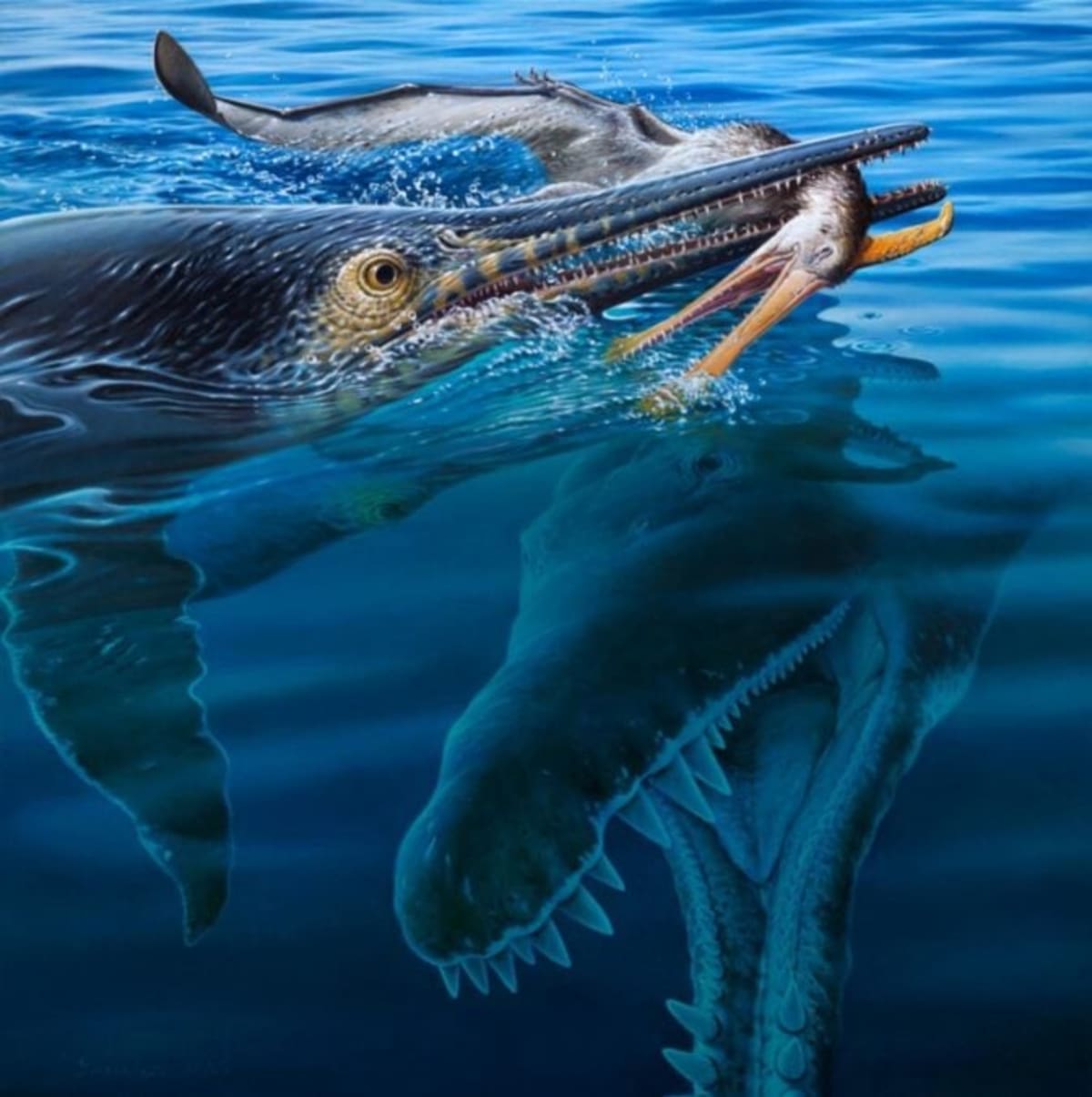
Australian paleontologists discovered a remarkable fossil capturing three prehistoric predators in one snapshot: a flying reptile eaten by a dolphin-like creature, which was then devoured by a massive sea monster. This rare find offers an unprecedented window into the ancient food chain from over 100 million years ago.
Scientists in Australia just uncovered one of the clearest snapshots of prehistoric predator behavior ever found, frozen in stone for over 100 million years.
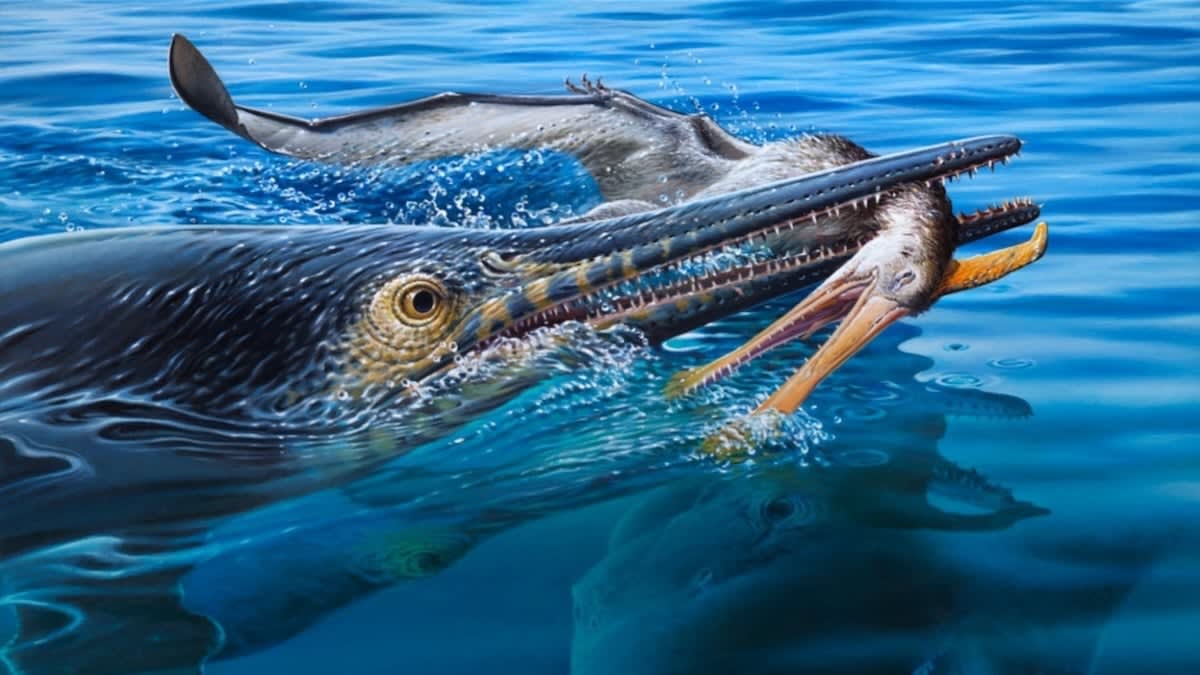
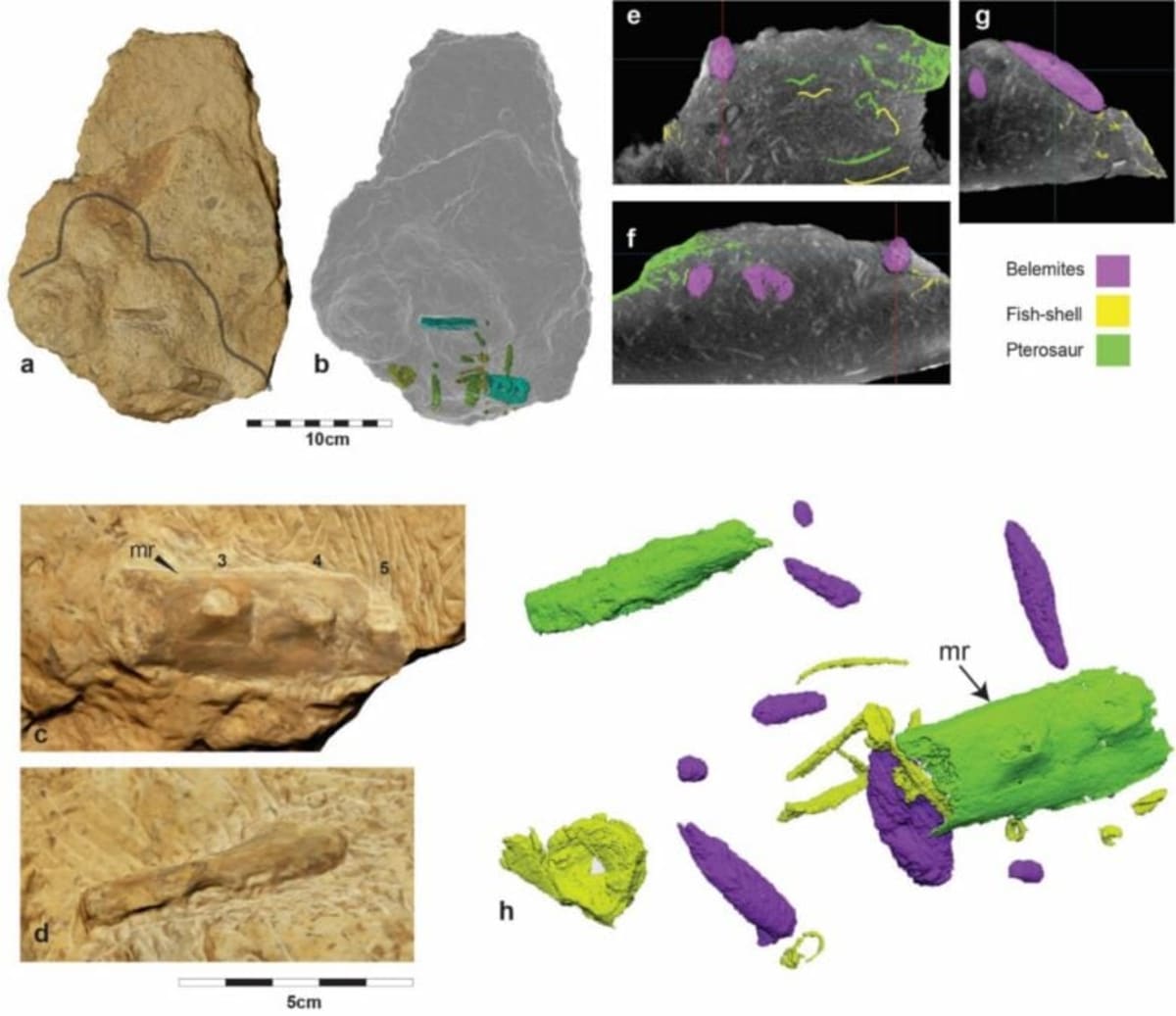
The discovery started with a fossilized Platypterygius australis, a dolphin-like marine reptile about 20 feet long that swam in Australia's ancient Eromanga Sea. When researchers scanned what appeared to be its fossilized stomach contents, they found something unexpected: pieces of a pterosaur jawbone mixed in with the usual fish bones and squid shells.
This marks the first direct evidence that these marine reptiles hunted pterosaurs, likely catching the flying reptiles as they swooped down to grab fish from the ocean surface. The pterosaur became an unlucky meal for the ichthyosaur, but that wasn't the end of the story.
The Platypterygius skeleton itself told a violent tale. Its vertebrae were split, ribs were missing, and numerous bones showed massive crushing bite marks. One vertebra even had a rib jammed against a broken edge, suggesting powerful jaws had processed this meal with force.
The culprit? Kronosaurus queenslandicus, a giant pliosaur stretching over 30 feet long with crocodile-like jaws. As the apex predator of its time, Kronosaurus was the only creature in the Eromanga Sea capable of inflicting such damage.
"It's one of the clearest examples ever discovered of a three-tier predator interaction and offers an unprecedented snapshot of behavior in Australia's Cretaceous seas," says paleontologist Dean Lomax from the University of Manchester.
Why This Inspires
This discovery reminds us that nature's complexity goes back far deeper than we often imagine. The same food web dynamics we see in today's oceans where orcas hunt seals that eat fish operated in fundamentally similar ways 100 million years ago.
Paleontologist Matt White from the University of New England notes that such behavioral snapshots are incredibly rare in the fossil record. When they do appear, they tell stories that textbooks and bones alone never could, bringing ancient worlds vividly back to life.
The find also highlights how Australia's now-arid outback was once covered by vast inland seas teeming with life. These ancient seabeds continue yielding treasures that reshape our understanding of prehistoric ecosystems.
Similar behavioral fossils discovered recently include pterosaur footprints in South Korea showing land hunting, and a megaraptor found in Argentina with crocodile still in its mouth.
This three-in-one fossil proves that the struggle for survival has always been nature's most constant feature, connecting today's oceans to ancient seas in an unbroken chain of life.
More Images

Based on reporting by Google: fossil discovery
This story was written by BrightWire based on verified news reports.
Spread the positivity!
Share this good news with someone who needs it