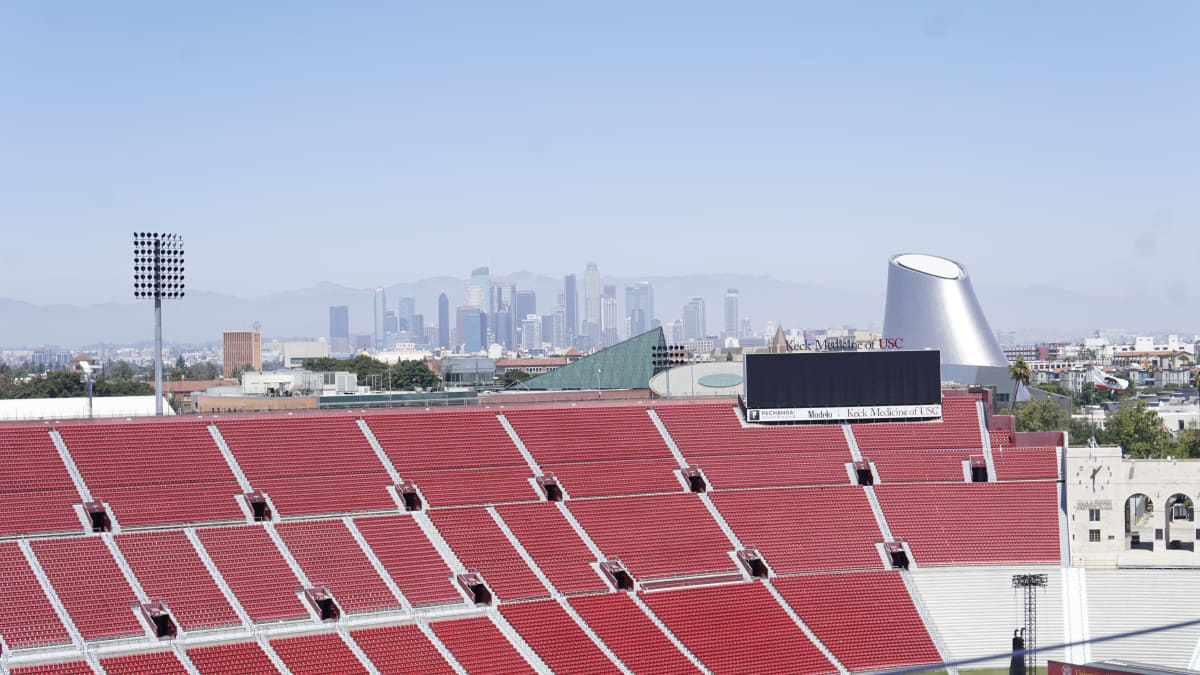
100-Year-Old LA Coliseum Diverts 90% of Waste from Landfills
The historic Los Angeles Memorial Coliseum has become one of America's most sustainable stadiums by keeping game-day waste out of landfills. The century-old venue is pioneering zero-waste operations while preparing to host the Olympics for a record third time in 2028.
After every USC Trojans football game, something remarkable happens at the Los Angeles Memorial Coliseum that most fans never see.
While tens of thousands of people head home, a dedicated team begins handpicking through mountains of leftover cups, food containers, and pizza boxes. They sort every item into ten different waste streams, diverting at least 90 percent away from landfills.
Matthew Buswell leads this effort as the venue's director of operations and sustainability. He's been transforming the iconic stadium's environmental footprint for over a decade, earning multiple awards for the Coliseum's "zero waste" operations.
"We have the time and the space, so we are going to do it," Buswell explains. "There is no excuse for us not to sort through all our trash."
The waste sorting program launched around 2015 and has delivered measurable wins. Fewer truck trips to landfills mean lower costs and reduced emissions. Food scraps now feed into an onsite biodigester that transforms leftovers into soil conditioner instead of methane-producing garbage.
The Memorial Coliseum, with its distinctive white arches, will make history in 2028 as the first venue to host three Summer Olympic Games. The open-air bowl first welcomed athletes in 1932, then again in 1984.
But sustainability involves more than waste management. Buswell dreams of installing solar panels across the stadium, which feasibility studies show would make financial sense over time while providing much-needed shade for fans enduring LA's intense summer heat.
The challenge is budget. As a century-old structure, the Coliseum requires constant maintenance and repairs. Buswell recently showed off a brick-sized chunk of concrete that fell from the stands, evidence of why workers currently surround the building on scaffolding for restoration work designed to extend its life another hundred years.
The Ripple Effect
The Coliseum's waste diversion success proves that even historic venues can embrace modern sustainability practices without sacrificing their primary mission. The model demonstrates that with commitment and creativity, older facilities don't need complete rebuilds to make meaningful environmental progress.
Sports and environment researchers have identified over 600 measures venues can take to become more sustainable, from choosing local partners to offering free drinking water. The Coliseum shows that starting with waste management can deliver immediate, quantifiable results while building momentum for bigger changes.
As climate change intensifies and extreme weather becomes more common, sustainable operations will shift from optional to essential for venues everywhere. The century-old stadium is proving that age is no barrier to leading the way forward.
Based on reporting by Google News - Clean Energy
This story was written by BrightWire based on verified news reports.
Spread the positivity!
Share this good news with someone who needs it