100 Years of Modern Rocketry: NASA's Next Giant Leap
A century after Robert Goddard launched the world's first liquid-fueled rocket from a Massachusetts cabbage patch, NASA says the best is still ahead. His 2.5-second flight changed everything we know about space exploration.
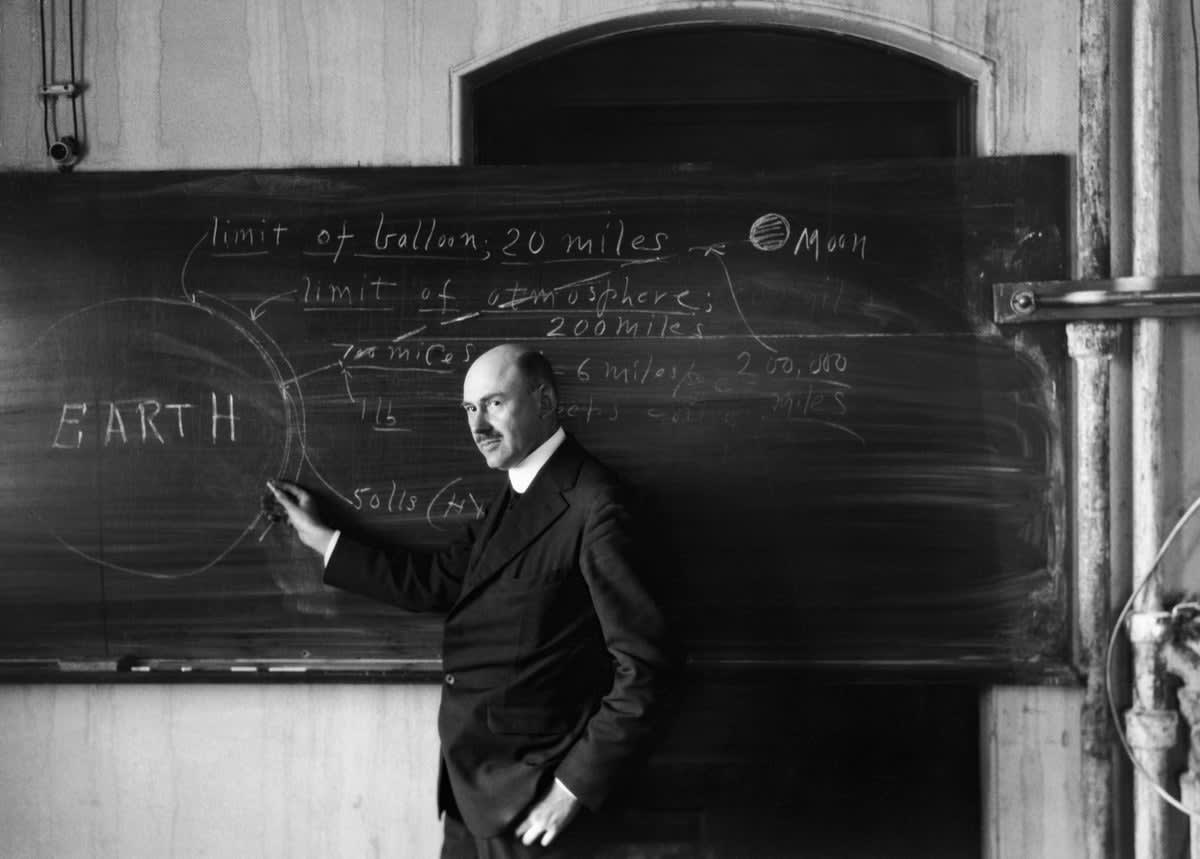
On March 16, 1926, physicist Robert Goddard stood in a cabbage patch in Auburn, Massachusetts, and changed humanity's future. His 11-pound rocket prototype, nicknamed "Nell," flew for just 2.5 seconds, but that brief flight launched the modern space age.
Before that historic moment, every rocket in history relied on solid fuel, dating back to gunpowder-packed "fire arrows" used against Mongol invaders in 13th-century China. Liquid fuel changed the game completely, offering more powerful thrust and precise control needed for actual spaceflight.
Other visionaries like Russia's Konstantin Tsiolkovsky and Germany's Hermann Oberth understood liquid fuel's potential. But Goddard proved it could actually work.
Today, rockets launch almost daily. Satellites swarm the sky, robots explore Mars, and the International Space Station has housed humans continuously for decades. All of it traces back to those few seconds among the cabbages.
NASA engineer Kurt Polzin says Goddard's real genius wasn't just building a rocket. "His scientific and analytical approach established a framework for systematically engineering and improving rocket components, a methodology still followed today," Polzin explains.
That framework now powers everything from traditional chemical rockets to ion thrusters on modern spacecraft. Goddard even anticipated electric propulsion in his notes, recognizing that accelerating charged particles could create thrust.
The Bright Side
Space launches have become so routine they barely make headlines anymore, but that's actually wonderful news. Companies like SpaceX and Blue Origin have slashed costs through innovations like reusable rockets, making space more accessible than ever before.
The next frontier looks even more exciting. Engineers are developing better cryogenic fluid management to prevent fuel boil-off on long missions. Nuclear propulsion systems could dramatically cut travel time to distant planets. Miniature propulsion systems are powering tiny CubeSats and SmallSats into orbit.
David Manzella, NASA's senior technologist for in-space propulsion, points out we've barely scratched the surface. Future missions might include flying rockets on other planets to relocate equipment or launch astronauts from alien surfaces.
Chemical rockets will likely remain our ticket to orbit for years to come, but no single design fits every mission. Different challenges require different solutions, pushing engineers to keep innovating.
From a 2.5-second flight in a vegetable garden to daily launches that barely turn heads, we've come remarkably far in 100 years. The next century of exploration promises to be even more extraordinary.
More Images

Based on reporting by Scientific American
This story was written by BrightWire based on verified news reports.
Spread the positivity!
Share this good news with someone who needs it