1,400-Year-Old Prince's Gold-Filled Tomb Found in Essex
A tiny piece of bronze sticking out of an English field led archaeologists to the earliest Christian Anglo-Saxon royal burial ever found in England. Inside the timber chamber, they discovered gold crosses, Byzantine treasures, and clues to how Christianity first took hold among English royalty.
A small piece of bronze protruding from a construction site in Essex changed everything archaeologists thought they knew about early Christian England.
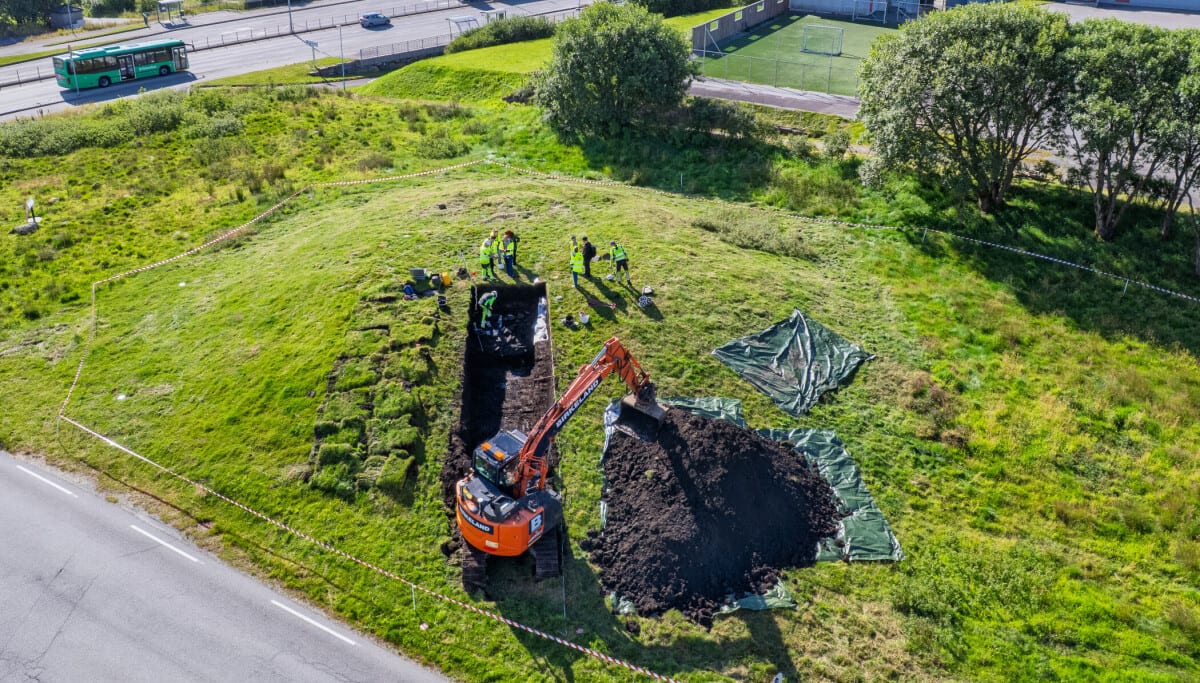
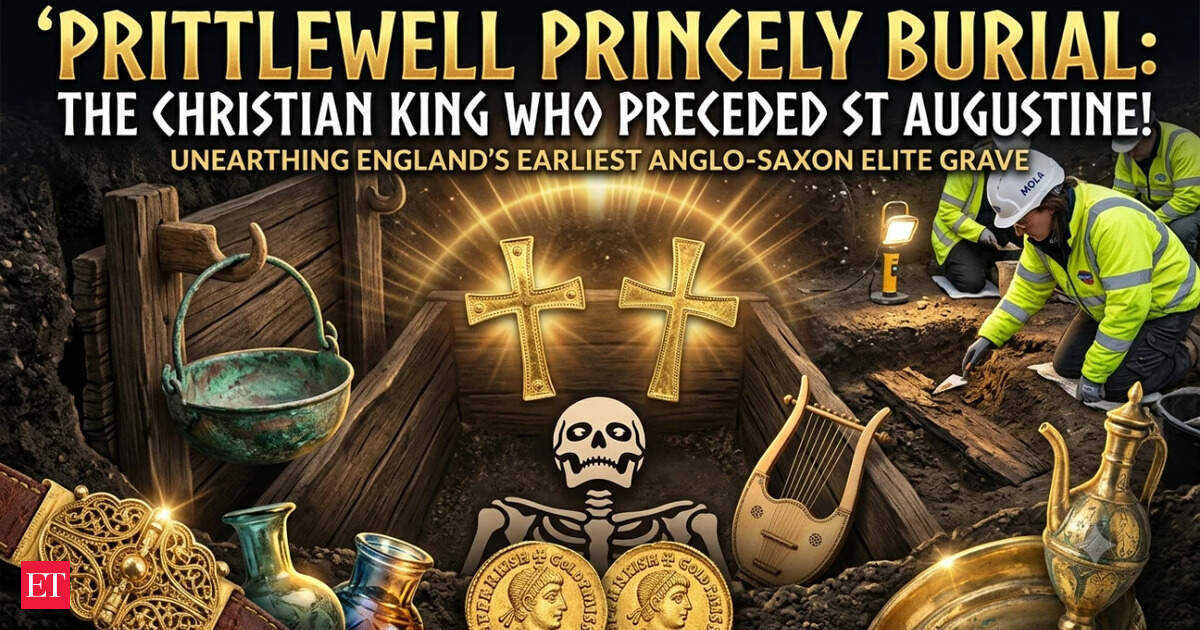
In 2003, road workers in Prittlewell were preparing to widen a street when archaeologists arrived for a routine check. The area had yielded Roman artifacts before, but nothing prepared them for what lay beneath. On their first day, they spotted what looked like timber rot in a square pit. The next day, they uncovered a copper bowl still hanging from a hook on an ancient wall.
What followed was the discovery of a lifetime. Inside the 1,400-year-old burial chamber lay a wooden coffin surrounded by treasures fit for royalty. Gold crosses rested where the man's eyes would have been. A gold belt buckle, drinking vessels made of glass and horn, and even a lyre filled the space around him.
The two gold crosses told archaeologists something remarkable. This was the earliest dated Christian burial of an Anglo-Saxon prince ever found in England, dating to around 580 to 605 AD. That means this man likely converted to Christianity before St. Augustine's famous mission from Rome in 597 AD, rewriting the timeline of how the faith spread through England's ruling families.
The treasures revealed a prince connected to a much wider world. A Byzantine flagon had traveled all the way from Syria, possibly carried by a pilgrim visiting the shrine of St. Sergius before being traded across continents. Frankish gold coins and ornate glasswork showed trade routes stretching across Europe and beyond.
More than 40 experts spent 15 years studying the burial using CT scans, spectroscopy, and microscopy. They confirmed the occupant was a man of princely rank, though his exact identity remains a mystery. Researchers initially wondered if he might be Sæberht, the Christian king of Essex, but the burial proved too early. He may have been Sæberht's brother Seaxa, though only fragments of tooth enamel survived for study.
The Ripple Effect
This single burial chamber opened a window into a pivotal moment in English history. It proved that Christianity had already taken root among the highest levels of Anglo-Saxon society earlier than historians believed. The prince's conversion likely influenced other nobles and helped pave the way for England's eventual embrace of the faith.
His tomb also revealed sophisticated trade networks connecting early medieval England to Byzantium, Francia, and the Middle East. These weren't isolated kingdoms but connected societies exchanging goods, ideas, and beliefs across thousands of miles.
A tiny piece of bronze changed our understanding of how faith, culture, and connection shaped a nation 1,400 years ago.
More Images




Based on reporting by Google: archaeological discovery
This story was written by BrightWire based on verified news reports.
Spread the positivity!
Share this good news with someone who needs it