1,400-Year-Old Zapotec Tomb Found in Mexico
Archaeologists in Mexico have uncovered a spectacularly preserved 1,400-year-old tomb filled with colorful murals and carvings that reveal how the ancient Zapotec people honored their dead. The discovery, announced by Mexico's president, is being called the country's most important archaeological find in a decade.
Imagine stepping into a room untouched for 1,400 years, where vibrant paintings still glow on the walls and stone guardians still watch the entrance.
That's exactly what archaeologists from Mexico's National Institute of Anthropology and History found when they opened a Zapotec tomb in Oaxaca this year. Located on Cerro de la Cantera hill near San Pablo Huitzo, the tomb dates back to 600 CE and sits in the heart of what was once one of ancient Mesoamerica's most advanced civilizations.
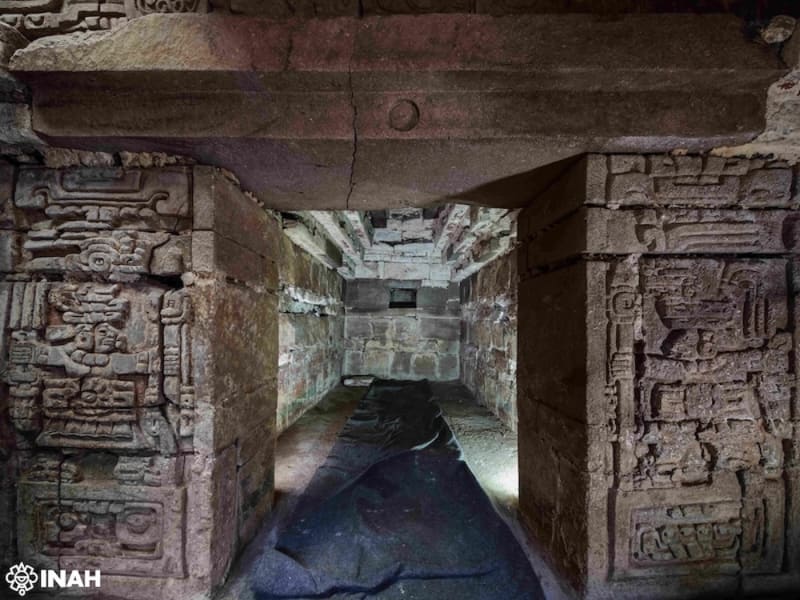
The tomb's entrance tells a story in stone. A carved owl, symbol of death and the underworld in Zapotec belief, perches above the doorway with its beak touching the painted face of a nobleman. Researchers believe this figure may have served as a spiritual bridge between the living and the divine, someone descendants could call upon for help from the afterlife.
Flanking the entrance stand carved figures of a man and woman wearing ritual headdresses, likely guardians of this sacred space. Above them, a stone frieze displays calendar names, which were central to Zapotec identity and religious life.
Inside the burial chamber, the real treasure emerged. Murals painted in ochre, white, green, red, and blue cover the walls, showing a procession of figures carrying bags of copal incense toward the tomb entrance. The scene captures a funeral ceremony frozen in time, offering rare visual proof of how the Zapotec honored their elite dead.
President Claudia Sheinbaum Pardo announced the discovery herself, calling it a powerful testament to Mexico's ancient cultural heritage. The Zapotec civilization flourished in Oaxaca from at least 500 BCE, developing sophisticated writing systems, calendars, and urban planning centered around their capital at Monte Albán.
Why This Inspires
This discovery does more than add artifacts to a museum. It brings voices from 1,400 years ago back into conversation, showing us that humans have always created beauty to honor those they've lost and always believed in something beyond themselves.
The fragile murals survived centuries of plant roots, insects, and environmental changes. Now a team of conservators works carefully to stabilize them so future generations can witness this ancient artistry.
The tomb reminds us that great civilizations leave their mark not just in conquest or commerce, but in how tenderly they say goodbye.
Based on reporting by Google: archaeological discovery
This story was written by BrightWire based on verified news reports.
Spread the positivity!
Share this good news with someone who needs it