1,500-Year-Old Maya Altar Unearthed in Mexico
Archaeologists discovered a ceremonial altar from AD 400-750 while working on Mexico's Maya Train project, revealing how ancient communities practiced their faith. The six-meter structure will be preserved in place, offering new insights into Maya spiritual life beyond major cities.
Construction crews building a railway line in Mexico's Yucatán Peninsula just uncovered something extraordinary: a 1,500-year-old Maya altar that reveals how smaller communities worshipped and connected to their gods.
The discovery happened during archaeological work along the Maya Train freight route near the port city of Progreso. Teams from Mexico's National Institute of Anthropology and History found a square structure, roughly six meters on each side, built on three stacked levels with a bench along one side.
What makes this find special is its location. The altar sat at the heart of a residential neighborhood, not a grand temple complex, showing that everyday Maya families had their own sacred spaces between AD 400 and 750.
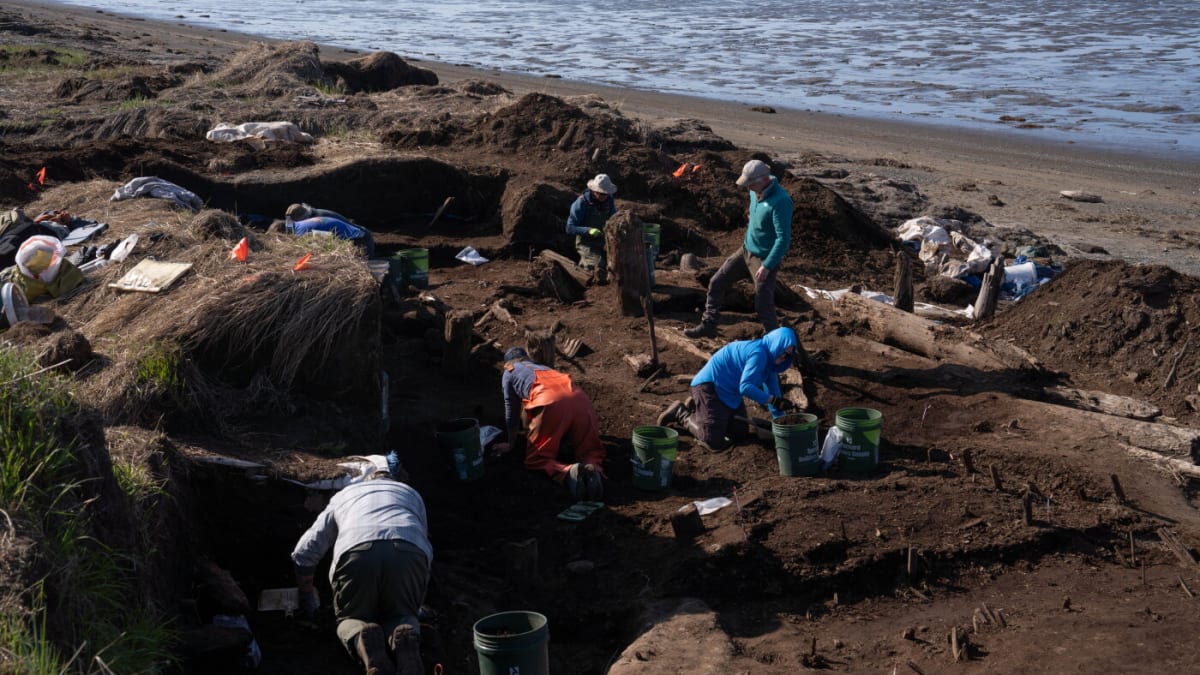
Archaeologist Susana Echeverría Castillo, who coordinates excavation work on the project, led a team of specialists and more than 150 workers to carefully document the site. They found the altar surrounded by clusters of homes built from limestone, arranged around shared courtyards where families likely gathered.
Inside the structure, researchers discovered fascinating clues about Maya life. A limestone disc called a "panucho" once covered a hollowed log beehive, suggesting the ancient Maya practiced beekeeping at this very spot. Three flat stones arranged near the center and a cavity carved 80 centimeters deep into bedrock point to ceremonial rituals we're only beginning to understand.
An offering of a ceramic vessel and a necklace made from shell and greenstone beads helped researchers date the site. These precious items hint at the community's connections to coastal trade networks that linked fishing villages with inland farming towns.
The Ripple Effect
This discovery shows how major infrastructure projects can protect history instead of destroying it. The railway construction created jobs for local workers while giving archaeologists resources to explore sites that might never have been examined otherwise.
Mexican Secretary of Culture Claudia Curiel de Icaza celebrated the find as "safeguarding a memory that belongs to everyone." The altar will be preserved in place beneath a protective layer and the planned service road, ensuring future generations can study it.
Researchers now plan to investigate how this settlement connected to larger Maya economic centers like Chunchucmil, which traded coastal salt and fish for crops grown inland. Understanding these ancient trade routes could reveal how isolated communities maintained their spiritual practices while participating in regional commerce.
The multidisciplinary team used photogrammetry and other modern techniques to create detailed records before construction continues. Similar altar structures have been found nearby, suggesting a pattern of community worship across northwestern Yucatán that archaeologists are only beginning to map.
One ancient altar is teaching us that progress doesn't require erasing the past.
More Images


Based on reporting by Google: archaeological discovery
This story was written by BrightWire based on verified news reports.
Spread the positivity!
Share this good news with someone who needs it