16 Ancient Roman Faces Brought to Life in Budapest Museum
A new exhibit in Budapest reveals hyperrealistic faces of 16 people who lived 1,700 years ago in Roman-era Hungary. Using cutting-edge technology and ancient DNA, scientists recreated what these individuals actually looked like.
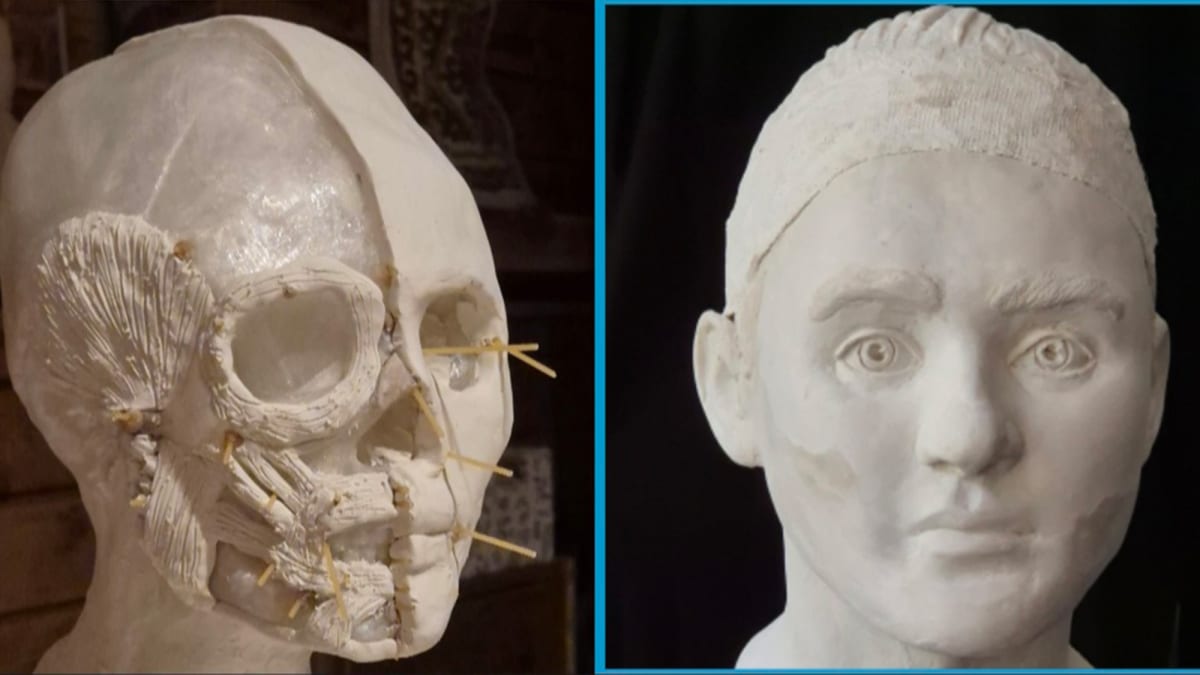
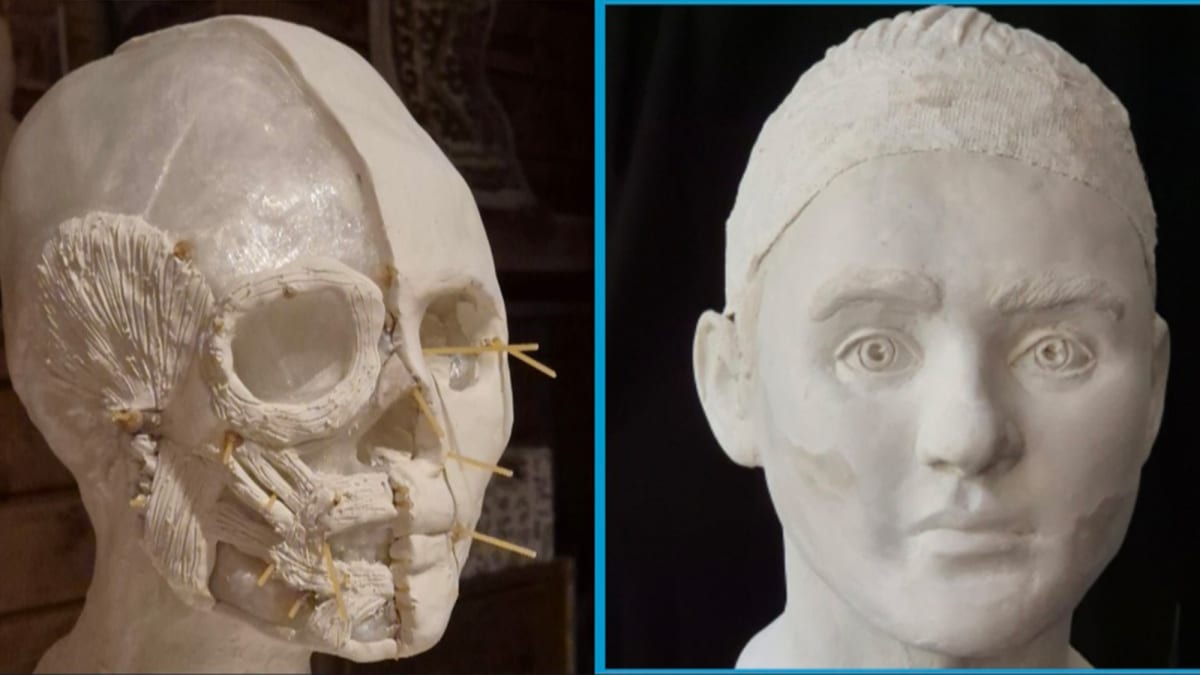
Nearly 1,700 years after her death, a young woman crowned with a laurel wreath has appeared again, her face reconstructed with astonishing detail down to her individual eyelashes.
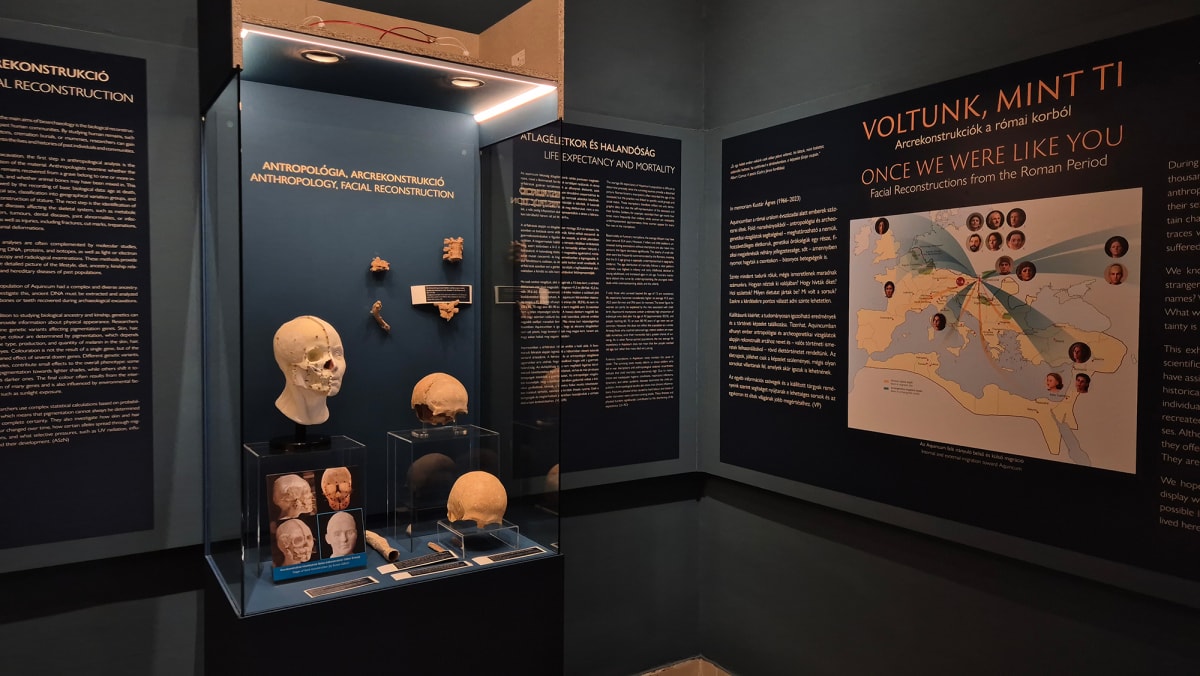
She's one of 16 people from ancient Aquincum who now greet visitors at Budapest's Aquincum Museum through "Once We Were Like You," an exhibition running through October 31. The display pairs skulls excavated from the Roman-era city with scientifically informed reconstructions of how these people looked in life.
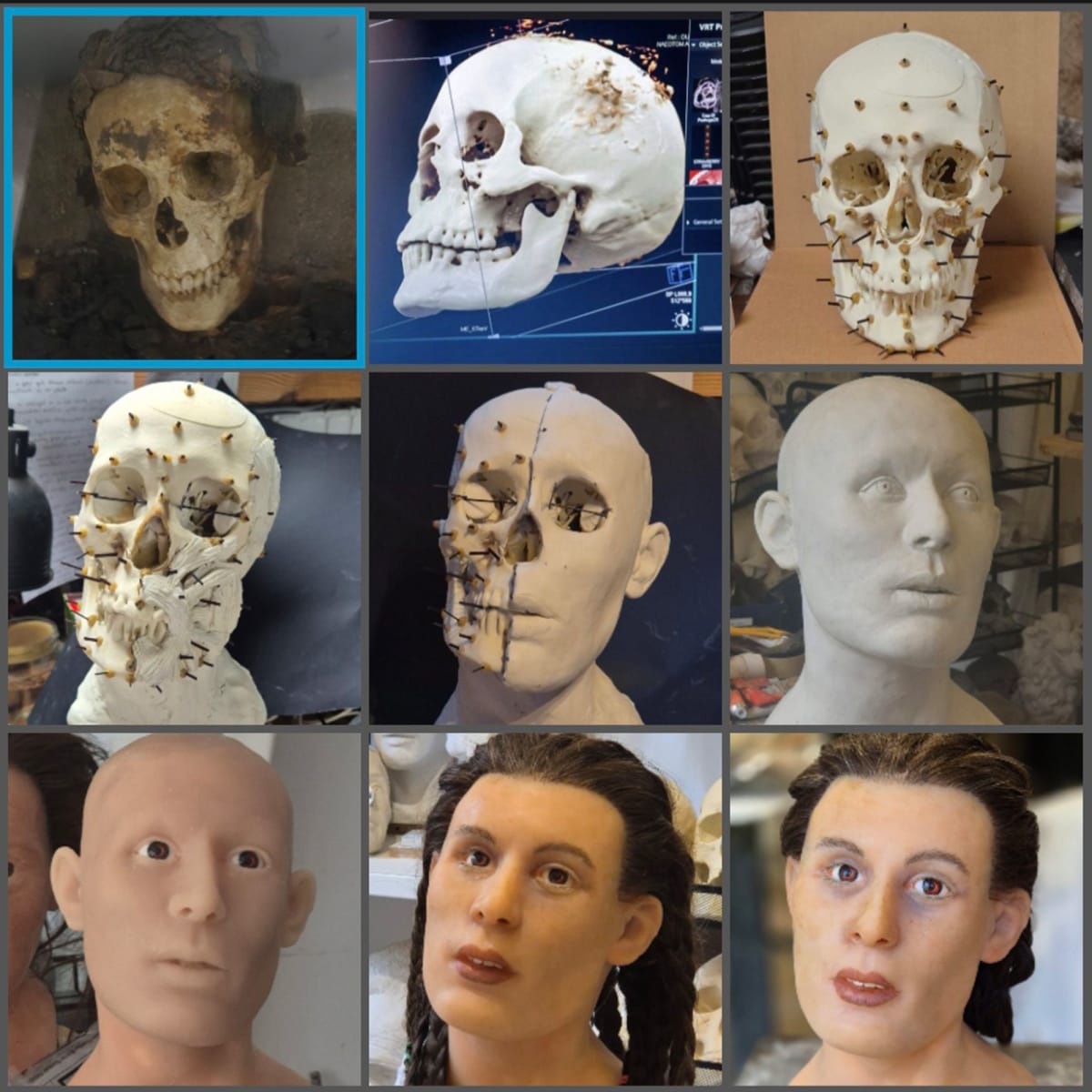
Six of the reconstructions are hyperrealistic silicone models featuring artificial eyes, real human hair, eyebrows, eyelashes, and even beards. The faces belong to men, women, and a child who lived in what is now Hungary during the first through fourth centuries.
"The face is the most important feature for recognizing a person," said Emese Gábor, the forensic facial reconstruction specialist who sculpted the silicone faces. Her work transforms ancient skeletal remains into recognizable human beings that museum visitors can truly encounter.
The reconstruction process begins with high-resolution 3D CT scans of original skulls. Specialists then create exact 3D-printed replicas, allowing experts to work without disturbing the ancient remains.
Gábor uses over 60 anatomical landmarks to rebuild each face. Ancient DNA analysis provides additional clues about eye, hair, and skin color, though many details like hairstyle and expression remain educated guesses.
The residents of Aquincum came from remarkably diverse backgrounds. Genetic and archaeological analyses reveal connections to present-day Italy, Scotland, and Syria, as well as Sarmatian groups from the Eurasian steppe and Celtic communities who lived in the region before Roman rule.
The Ripple Effect
The exhibition includes people from all walks of ancient life: a construction worker, a military officer, a blacksmith, and a young girl who died in childhood. One woman appears to have been a nurse or healer, buried in a children's cemetery surrounded by those she may have cared for.
The woman with the laurel wreath, known as the Jablonka Road mummy, particularly moved Gábor. She was buried with fine clothing, a weaving spindle, bird-shaped cork sandals, and a painted male portrait near her feet, possibly representing her husband or father.
"Every reconstruction is a journey," Gábor said. "As I shape each face, I find myself reflecting on that person's life again and again."
By bringing these ancient faces back to life, the exhibition creates an emotional bridge across 17 centuries, reminding us that history isn't just dates and artifacts but real people who lived, loved, and left their mark on the world.
More Images

Based on reporting by Live Science
This story was written by BrightWire based on verified news reports.
Spread the positivity!
Share this good news with someone who needs it