1,700 Volunteers Count Homeless in San Diego Jan. 29
San Diego County needs 400 more volunteers for its annual homeless count on January 29, which helps secure funding and shape solutions. Last year's count showed promising decreases across most North County cities.
Nearly 1,700 volunteers will fan out across San Diego County before dawn on January 29 to count every person experiencing homelessness, and organizers still need 400 more helpers to complete the mission.
The annual Point-in-Time Count does more than tally numbers. It collects detailed information about who needs help and where, breaking down data by age, veteran status, and location. Cities use this snapshot to plan services and secure funding for programs that actually work.
"Every volunteer plays a critical role in ensuring we have accurate data to secure resources and create programs that make a real difference," said Dijana Beck, director of the county's Office of Homeless Solutions.
Most volunteers will work from 4 a.m. to 8 a.m., walking streets and parks to respectfully count and survey people sleeping outside or in shelters. A few evening shifts are also available from 6:30 p.m. to 9 p.m.
North County needs the most help. Oceanside is short 24 volunteers, Encinitas needs 17, and Escondido, San Marcos, and Ramona each need 15 more people to sign up.
The Bright Side
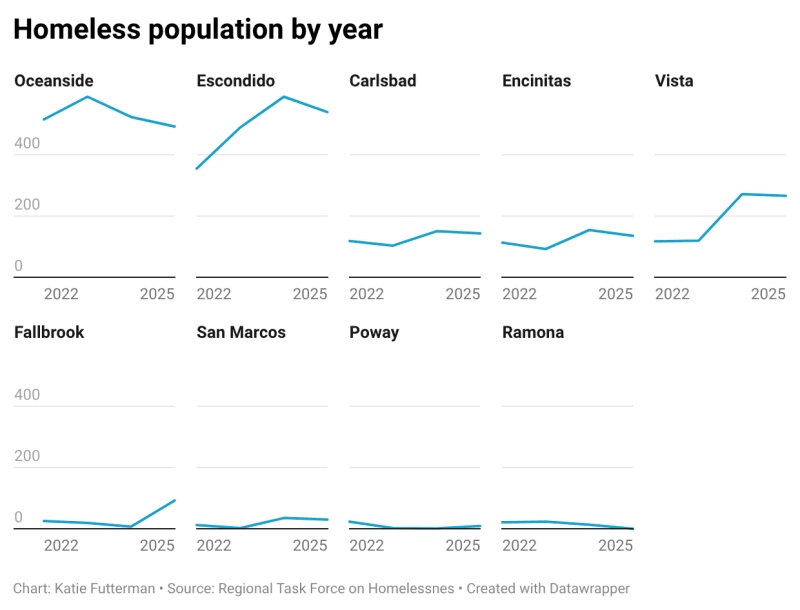
Last year's count brought genuinely good news. The total number of people experiencing homelessness in San Diego County dropped from 10,605 to 9,905. Nearly every North County city counted fewer homeless residents than the year before, breaking a five-year upward trend.
That 700-person decrease represents hundreds of families and individuals who found stable housing. While North County's homeless population had grown 20% between 2020 and 2024, the 2025 count showed real progress was possible.
The data isn't perfect. People staying with friends that night, in hospitals, or in jail won't be counted on the streets. The Regional Task Force on Homelessness partners with the Sheriff's Office to track incarcerated individuals separately, making the final numbers more complete.
Volunteers who participate get to see their community's challenges firsthand while being part of the solution. People can register for shifts at dozens of locations across the county or donate to support the count.
Results typically come out in May, giving cities several months to analyze the data and adjust their approaches. When 1,700 people wake up early to help their neighbors, that's already a win worth celebrating.
More Images



Based on reporting by Google: volunteers help
This story was written by BrightWire based on verified news reports.
Spread the positivity!
Share this good news with someone who needs it