1930s Home in Cambridge Becomes Carbon Negative
A UK building society transformed a drafty 1930s semi-detached house into a carbon-negative showcase, proving old homes can exceed modern energy standards. While new UK rules target future construction, 29 million existing homes need similar upgrades to reach net zero.
A standard 1930s home in Cambridge just became better for the climate than most brand-new houses, and it's showing millions of UK homeowners what's possible.
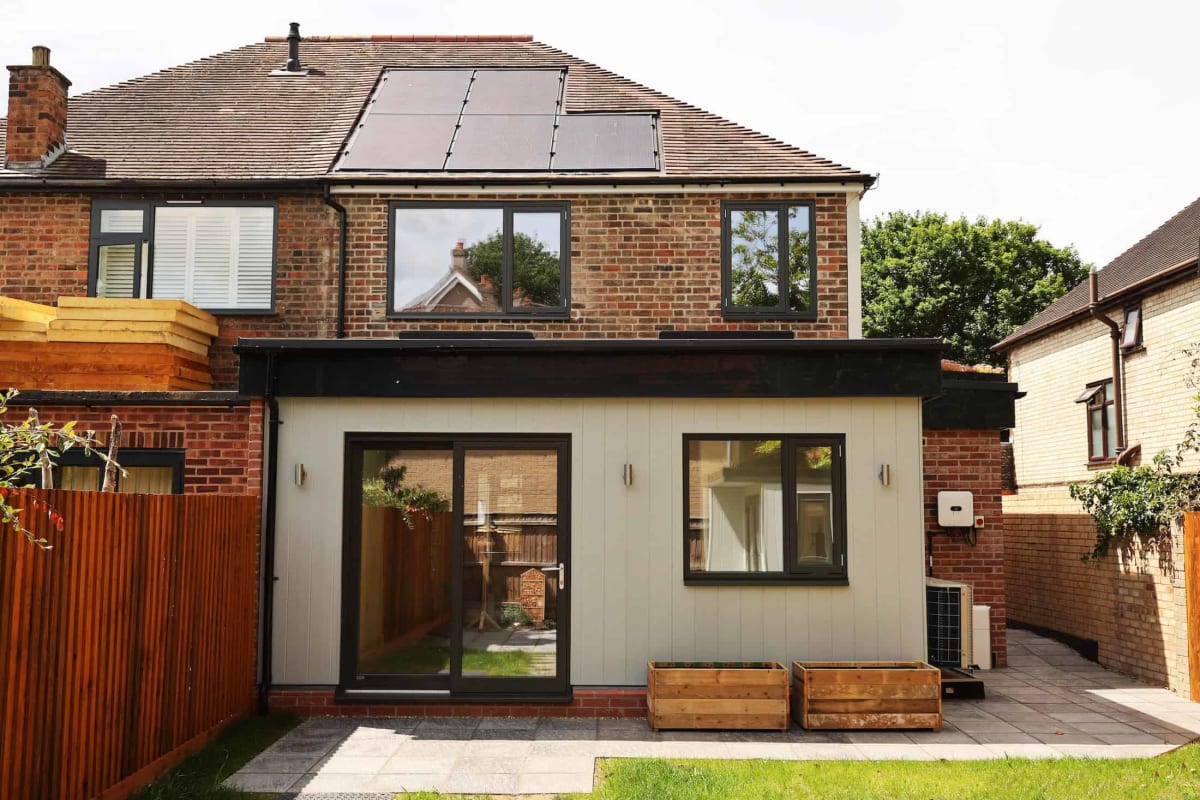
The Cambridge Building Society bought an ordinary semi-detached house and transformed it into an A-rated, carbon-negative property. The home now removes more carbon from the atmosphere than it produces, a feat rarely achieved even in new construction.
"There's a lot out there for newbuilds, but there's not a lot out there in the retrofit space," explains project manager Duncan Turner. The society wanted to prove that aging homes can be pushed far beyond minimum requirements.
The transformation included every type of insulation: internal, external, cavity, roof and floor. An intelligent liquid membrane sealed every surface to prevent heat loss, while a mechanical ventilation system keeps air fresh and prevents condensation.
An air source heat pump now handles all heating and hot water through underfloor systems. Solar panels generate electricity, and a battery stores excess power. A 3,000-liter tank under the lawn collects rainwater for toilets, the washing machine and the garden.
The timing matters more than ever. Britain's new Future Homes Standard requires all new construction to be zero-carbon-ready starting next year, cutting emissions by 75 to 80 percent compared to 2013 rules. Solar panels will become standard on most new homes, and gas boilers are being phased out for heat pumps.
But those rules only affect homes yet to be built. The real challenge is Britain's 29 million existing homes, many dating back to the 19th and early 20th centuries that leak heat and cost hundreds of pounds extra per year in utility bills.
The Ripple Effect
The project proves that older homes don't have to stay inefficient. Homeowners face high upfront costs but see dramatically lower utility bills over time, and some even sell power back to the grid for revenue.
The technologies used are no longer specialist or unaffordable. Heat pumps, solar panels and insulation systems cost far less than a decade ago, and installers understand them well.
Turner's advice is straightforward: "If you understand how your house is failing, you can fix it."
The Cambridge project shows that reaching net zero isn't just about building new homes, it's about upgrading the ones we already have.
Based on reporting by Positive News
This story was written by BrightWire based on verified news reports.
Spread the positivity!
Share this good news with someone who needs it