%2Ffile%2Fattachments%2F2993%2F08ED_524878_849467.jpg)
1976 Student Leader Murphy Morobe on Soweto's Legacy
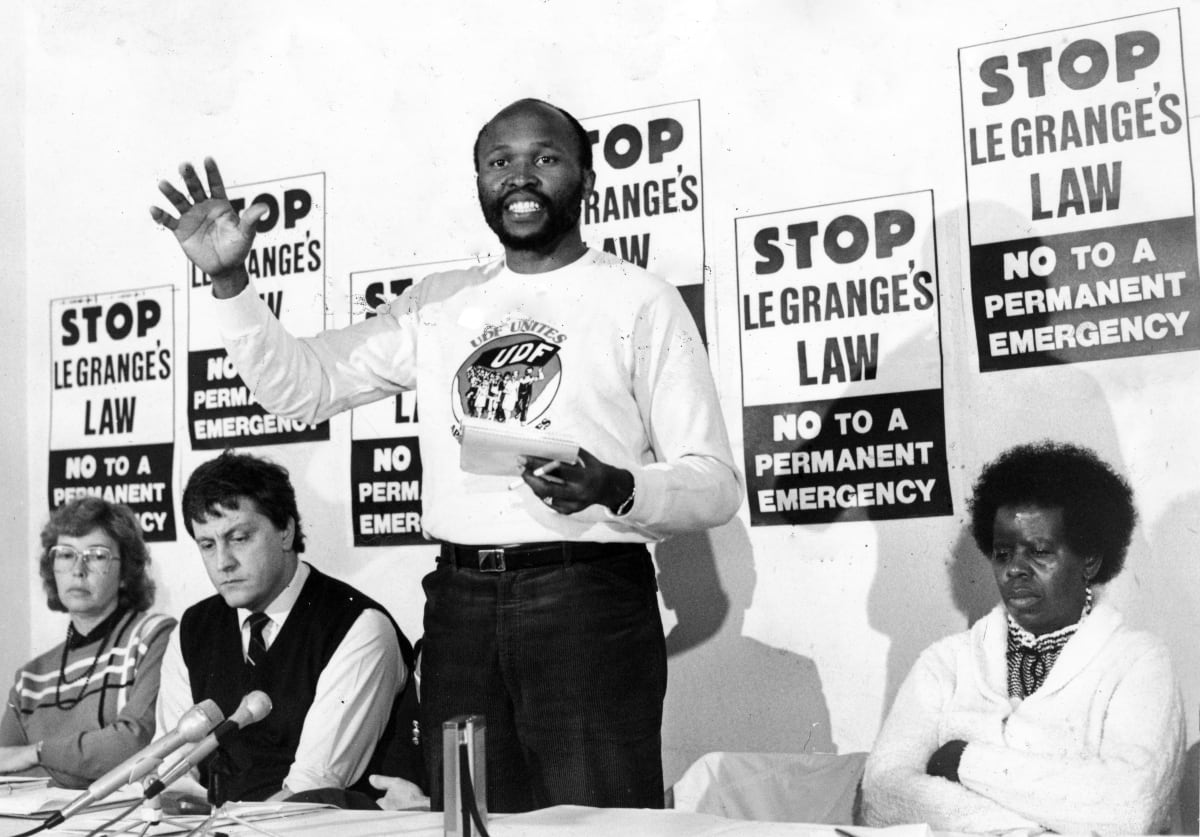
Fifty years after the Soweto Uprising, Murphy Morobe reflects on how a student march against unfair education sparked a movement that changed South Africa. His story shows how young people armed with courage and conviction helped end apartheid. #
When Murphy Morobe walked into Morris Isaacson High School for his final two years, he found more than textbooks and tests. He discovered teachers who dared to discuss ideas beyond the government-approved "Bantu Education" curriculum, planting seeds that would help change a nation.
Morobe joined the South African Students Movement in 1972, where he first learned about black consciousness from leaders like Steve Biko. The movement focused on helping young people understand their power and worth in a system designed to diminish both.
By 1975, a new rule requiring black students to learn math and science in Afrikaans had sparked outrage across townships. Three days before June 16, 1976, Morobe and fellow students including Tsietsi Mashinini made a bold decision: organize a mass march of all Soweto schools.
Their plan relied on speed and coordination. Each high school would mobilize neighboring schools, with student movement members leading the charge.
On the morning of June 16, instead of the usual Lord's Prayer, students sang "Nkosi Sikelel' iAfrika." They pulled hidden placards from their school bags and poured into the streets.
"The march became bigger and bigger as we moved from school to school," Morobe recalls. The police arrived to disperse them, and what happened next became a turning point in South African history.
The Soweto Uprising, as it became known, awakened global attention to apartheid's injustices. Images of students standing up for their right to quality education in their own language spread worldwide.
Why This Inspires
Morobe's journey from student organizer to voice for national change shows what happens when young people refuse to accept injustice. He and his classmates didn't wait for adults to fix broken systems. They organized, mobilized, and risked everything for a better future.
Their political consciousness grew from real events: dock workers striking for dignity in Durban, Portuguese colonies winning freedom in Africa, and their own teachers modeling courage. Each stepping stone built their confidence that change was possible.
Morobe is careful to note he was "one of many as part of a larger collective," never claiming sole leadership. That humility reflects the movement's true power: thousands of young people discovering that together, they could move mountains.
Fifty years later, his story reminds us that education has always been worth fighting for. When students anywhere stand up for their right to learn, they're walking in footsteps that changed the world.
#
More Images

%2Ffile%2Fattachments%2F2993%2F08ED_524890_202953.jpg)
%2Ffile%2Fattachments%2F2993%2F08ED_491434_583994.jpg)
Based on reporting by Daily Maverick
This story was written by BrightWire based on verified news reports.
Spread the positivity!
Share this good news with someone who needs it
%2Ffile%2Fattachments%2Forphans%2Floerbroer_810842.jpg)
%2Ffile%2Fattachments%2Forphans%2FTL_2489789_604634.jpg)