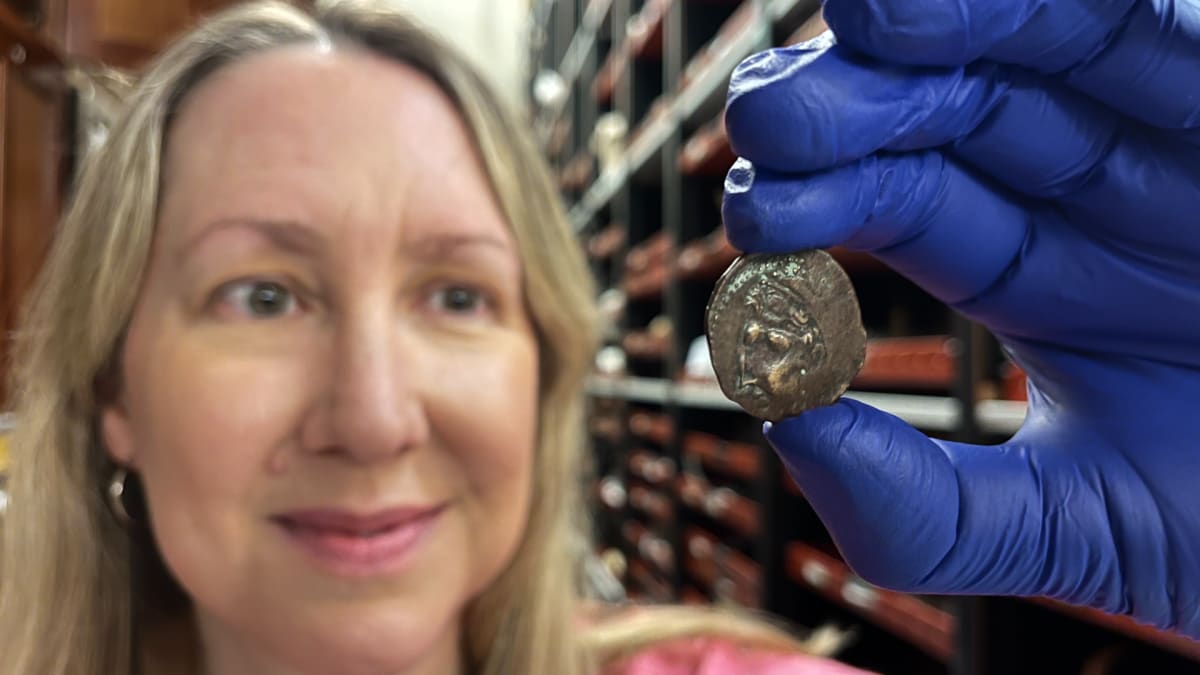
2,000-Year-Old Phoenician Coin Used as Bus Fare in England
A bronze coin minted in ancient Spain 2,000 years ago mysteriously turned up as bus fare in 1950s England. Now, the cashier's grandson has donated this treasured piece of history to a museum where everyone can enjoy it.
A coin that traveled through two millennia and across continents ended up in the most ordinary place: a bus driver's till in Leeds, England.
James Edwards worked as a cashier for Leeds City Transport in the 1950s, collecting fares from bus and tram drivers. Whenever he found fake or foreign coins mixed in with the day's earnings, he'd take them home for his grandson Peter, sparking a fascination that would last a lifetime.
"Neither of us were coin collectors, but we were fascinated by their origin and imagery. To me, they were treasure," Peter Edwards said.
One coin stood out from the rest. Peter's research revealed it was minted over 2,000 years ago in Gadir, a Phoenician settlement that's now the Spanish city of Cádiz.
The bronze coin tells a vivid story of ancient life. On one side sits the god Melqart, Gadir's chief deity, wearing Hercules' iconic lion-skin headdress. The other side shows two bluefin tuna, honoring the fishing industry that kept the coastal city thriving.
Gadir was the Phoenicians' earliest Western European colony, founded in the 12th century B.C. The settlement passed through Carthaginian hands after the First Punic War, then came under Roman control less than a century later.
Why This Inspires
How this ancient coin ended up paying for a bus ride in 1950s Leeds remains a delightful mystery. Peter suspects a soldier returning from World War II may have brought it home, unknowingly carrying a piece of history in his pocket.
Rather than keeping his grandfather's gift locked away, Peter donated it to Leeds Museums and Galleries. Museum curator Kat Baxter confirmed the coin's age and origin, welcoming it into their collection of ancient currency.
"Museums like ours are not just about preserving objects. They're also about telling stories like this one and inspiring visitors to think about the history that's all around us, sometimes in the most unlikely of places," said Leeds City Councillor Salma Arif.
The donation means researchers can study the coin while visitors marvel at its journey. A simple act of generosity transformed a family keepsake into a shared treasure.
"My grandfather would be proud to know, as I am, that the coin is coming back to Leeds," Peter said, though he admits the mystery of its arrival will never be fully solved.
Sometimes the best stories are the ones we'll never completely understand.
More Images


Based on reporting by Live Science
This story was written by BrightWire based on verified news reports.
Spread the positivity!
Share this good news with someone who needs it
%2Fhttps%3A%2F%2Ftf-cmsv2-smithsonianmag-media.s3.amazonaws.com%2Ffiler_public%2F81%2Fdd%2F81ddd40e-6ceb-4c0a-8b50-8faad9e7912c%2F3fgt4pc.jpg)
%2Fhttps%3A%2F%2Ftf-cmsv2-smithsonianmag-media.s3.amazonaws.com%2Ffiler_public%2Fcb%2Ff0%2Fcbf09863-7b51-4a6e-9146-18afe0ba8b81%2Ftomb2.png)