224 Volunteers Reach 8,700 People With Rare Disease Info
Volunteers helping families affected by frontotemporal degeneration (FTD) had their biggest year yet, completing 316 awareness activities across the country. Their efforts connected nearly 9,000 people with critical resources and support for a rare, often misdiagnosed condition.
When Roshnee Burma hosted a meet and greet in Chicago for families affected by frontotemporal degeneration, seven people showed up to share their experiences and realize they weren't alone.
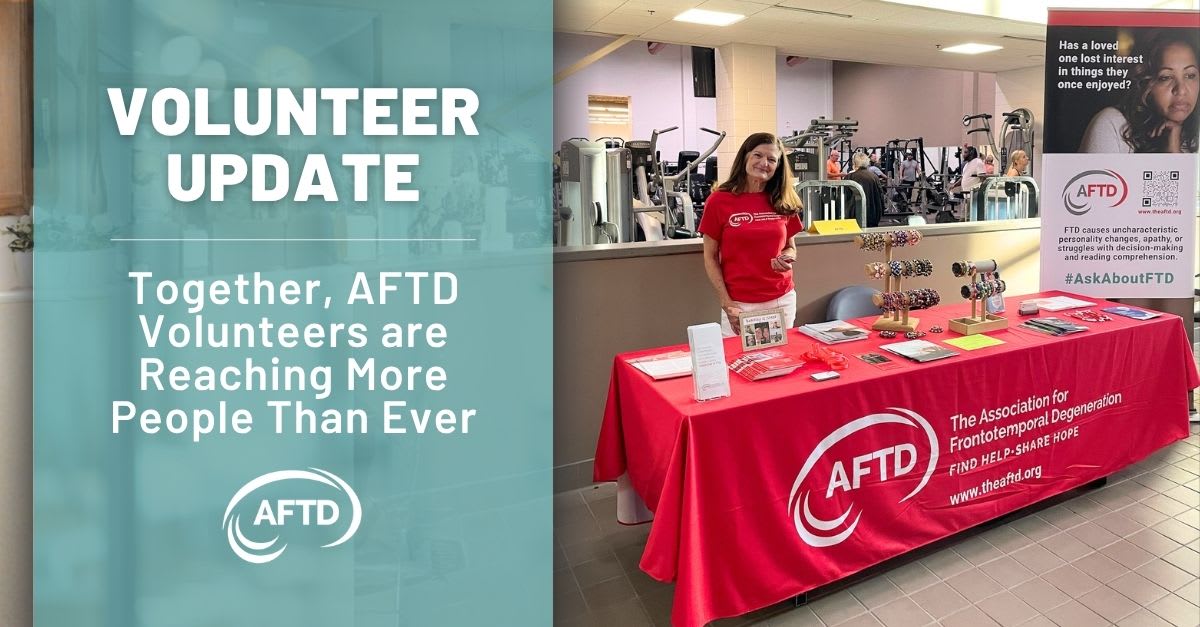
It was one of 316 awareness activities completed this year by volunteers working with the Association for Frontotemporal Degeneration (AFTD). These volunteers are on a mission to spread the word about FTD, a rare brain disorder that often goes misdiagnosed for years.
The numbers tell a powerful story. This year, 224 active volunteers shared information about FTD and AFTD's resources in their communities, up from 206 the previous year. Through information tables, healthcare provider visits, presentations, and community gatherings, they reached approximately 8,700 people.
Volunteer Anika Honaker has personally shared resources with nearly 100 healthcare providers. "In educating providers, I am able to help other families hopefully get a quicker and more accurate diagnosis," she said. "FTD doesn't get to hide anymore."
These awareness efforts create unexpected moments of connection. While setting up at South Carolina's Senior Day event, volunteer Amber Steed met another exhibitor who had lost both a friend and a family member to FTD. He came over to thank her for the work she was doing, giving Amber the chance to share how AFTD supports families living with the condition.
The Ripple Effect
Every conversation started by a volunteer sends ripples far beyond that single interaction. When healthcare providers learn to recognize FTD symptoms earlier, families get faster diagnoses and access to support sooner. When communities understand the condition better, families feel less isolated. When strangers at information tables pick up brochures, they might recognize symptoms in someone they love.
The volunteers' work matters especially because FTD often strikes people in their 40s and 50s, when symptoms can be mistaken for depression, stress, or early onset Alzheimer's. Better awareness means better outcomes for families navigating this challenging diagnosis.
Behind every brochure handed out and every presentation given is a volunteer who knows firsthand why this work matters. Their growing momentum shows what's possible when people commit to making sure others don't face a difficult diagnosis alone.
Based on reporting by Google: volunteers help
This story was written by BrightWire based on verified news reports.
Spread the positivity!
Share this good news with someone who needs it