24 Nations Unite at Michigan State for Food Safety Future
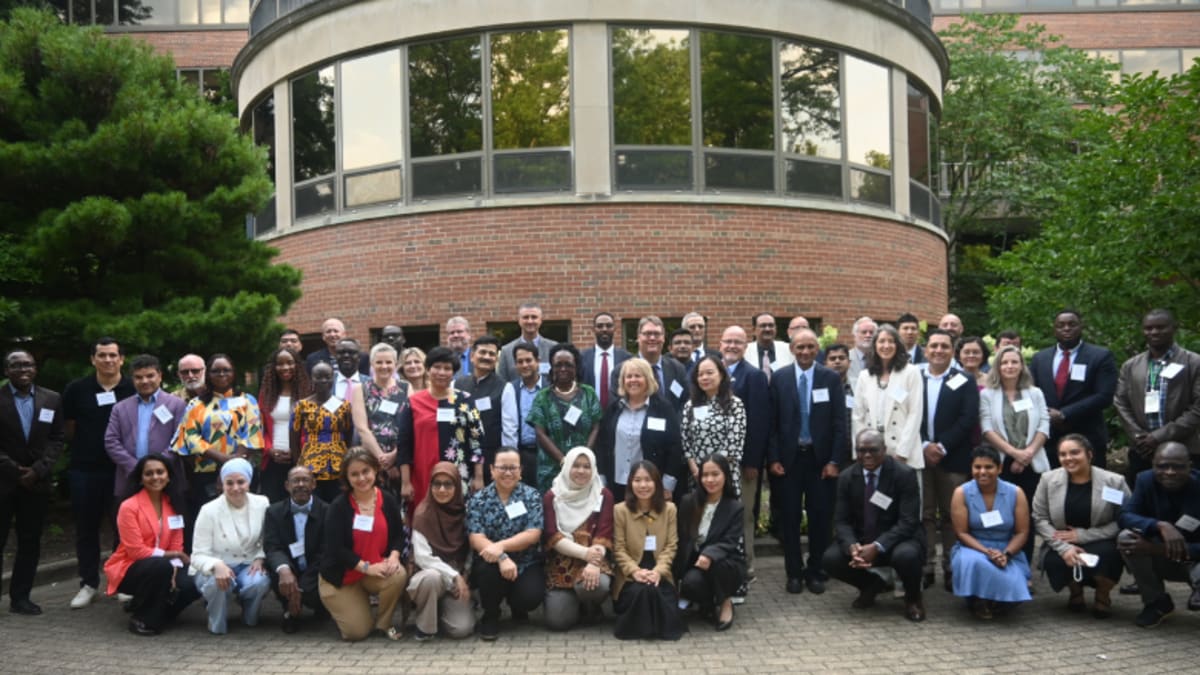
Over 70 food safety experts from 24 countries gathered at Michigan State University to tackle a critical challenge: keeping the world's food safe as climate change, new technologies, and global supply chains create unprecedented risks. Their shared mission: "If it's not safe, it's not food."
When 70 food safety leaders from two dozen countries met at Michigan State University last summer, they shared a powerful rallying cry: food safety saves lives.
The Global Food Safety Symposium brought together experts facing mounting challenges in July 2024. Climate change is shifting where dangerous pathogens appear. Digital technologies are transforming how food moves across borders. Geopolitical tensions are exposing weak spots in systems that feed billions.
The four-day gathering tackled a pressing question: How can we protect food safety in an increasingly connected world? Participants represented expertise spanning continents, from university researchers to industry leaders to government regulators.
The challenges are accelerating faster than ever before. New pathogens are emerging that scientists have never encountered. Supply chains now cross multiple countries before food reaches dinner tables. Customer expectations about transparency and safety keep rising, while regulatory frameworks struggle to keep pace.
Climate change emerged as a particularly urgent threat. Warming temperatures are changing where biological and chemical hazards appear in the food supply. Weather patterns once considered predictable are now creating new risks that food safety systems weren't designed to handle.
But the experts didn't just identify problems. They built networks designed to share solutions across borders. Knowledge that helps prevent foodborne illness in one country can now travel to others facing similar challenges.
The Ripple Effect
This international collaboration matters beyond conference rooms. When food safety experts share what works, fewer people get sick. When one country develops a better way to track contamination, others can adapt those methods. When researchers identify an emerging pathogen, global networks can respond faster.
The symposium reinforced a fundamental truth repeated throughout the four days: "If it is not safe, it is not food." That principle doesn't stop at national borders. A contaminated food product can travel thousands of miles in hours, making international cooperation essential rather than optional.
Michigan State University's World Agriculture Center has positioned itself as a hub for these critical conversations. By bringing together diverse perspectives and expertise, the center is helping build the resilient food safety systems our interconnected world demands.
The participants left with more than presentations and research papers. They left with relationships, shared protocols, and communication channels that transcend geography. When the next food safety challenge emerges, these 70 leaders from 24 countries will be ready to respond together.
More Images


Based on reporting by Google: cooperation international
This story was written by BrightWire based on verified news reports.
Spread the positivity!
Share this good news with someone who needs it