250-Million-Year-Old Egg Reveals Mammal Ancestor Secrets
Scientists discovered the first confirmed egg from a mammal ancestor, solving a mystery about how tough little Lystrosaurus survived Earth's worst extinction event. The 250-million-year-old fossil shows these creatures laid large, soft-shelled eggs that helped their babies thrive in brutal conditions.
A tiny fossil curled inside an ancient egg just answered one of evolution's biggest questions: Did our mammal ancestors lay eggs?
The answer is yes, and the discovery explains how life bounced back after the worst disaster Earth has ever seen.
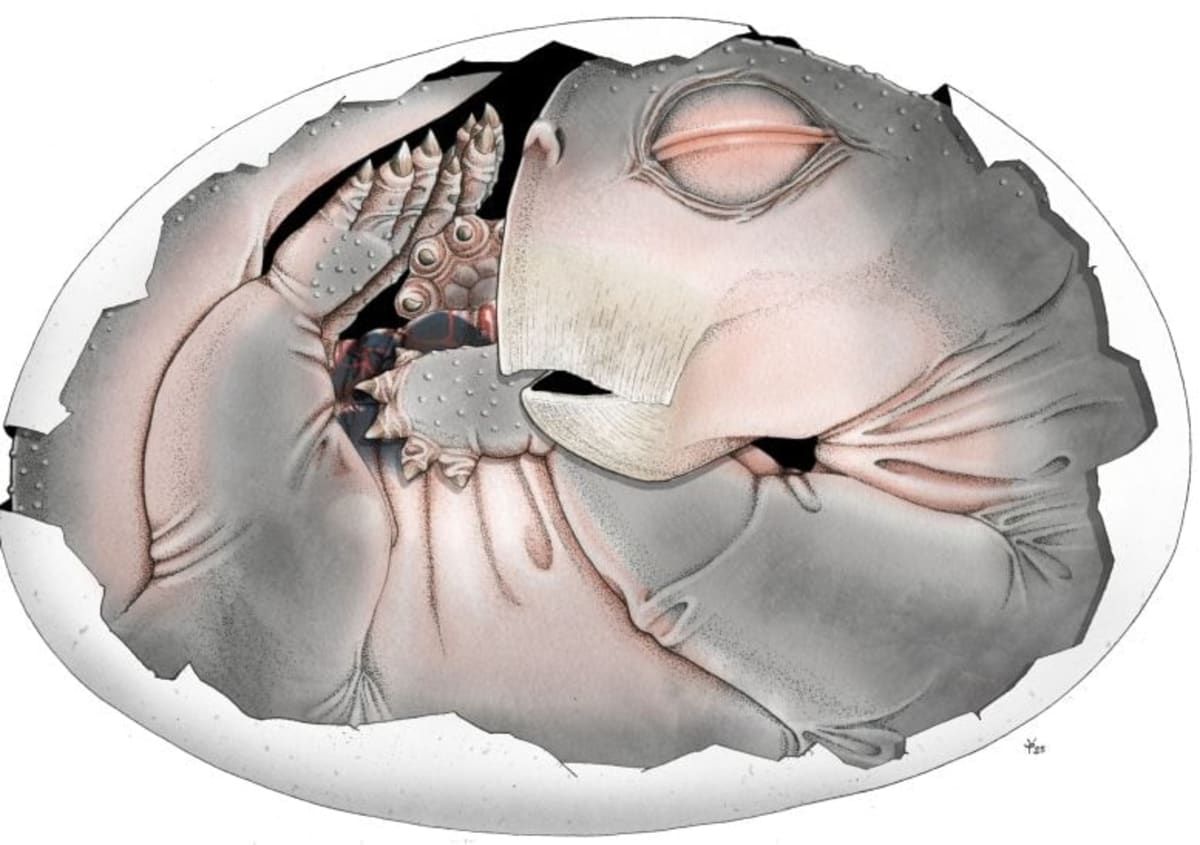
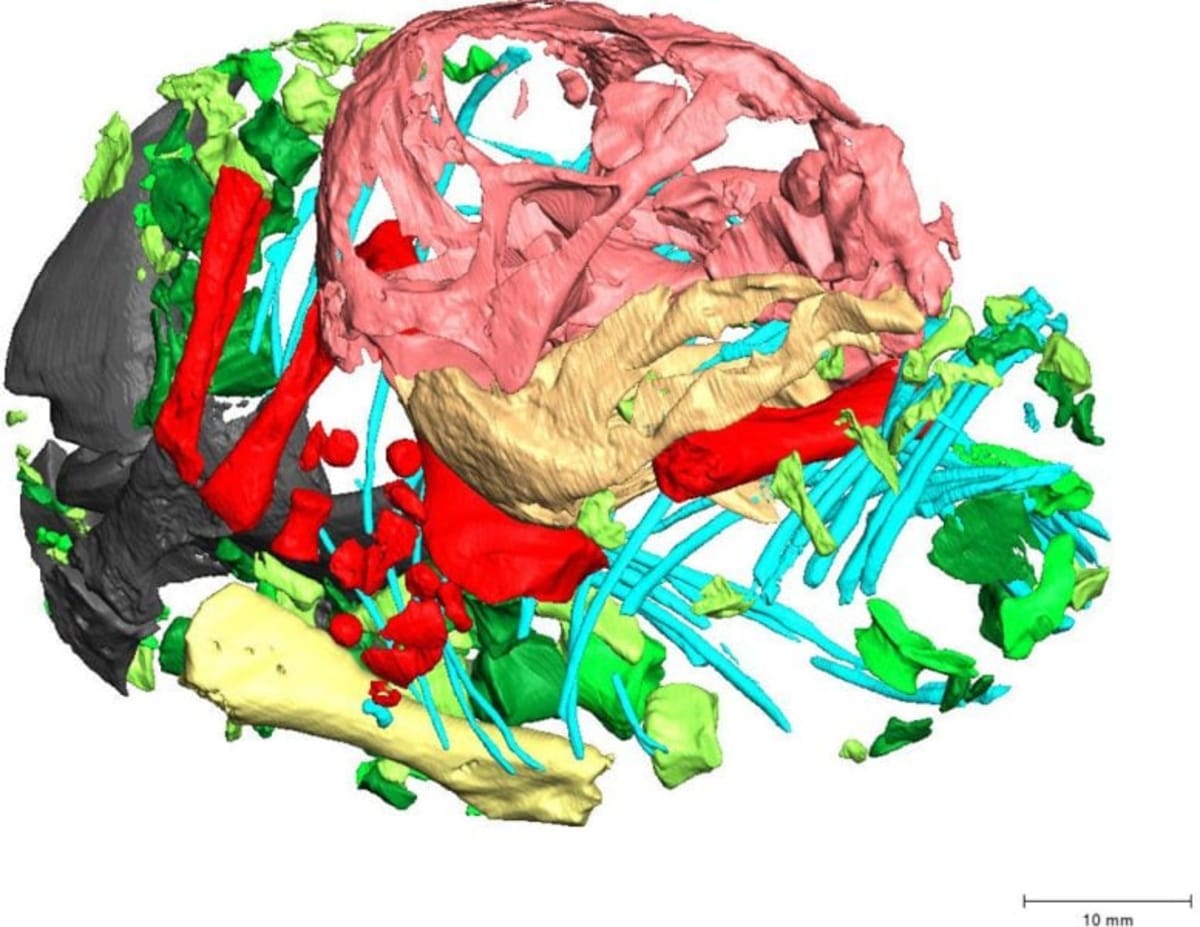
Scientists found a Lystrosaurus embryo perfectly preserved inside a 250-million-year-old egg in South Africa. This plant-eating creature, about the size of a pig, was a distant ancestor of all mammals. It thrived after the End-Permian Mass Extinction wiped out most life on the planet.
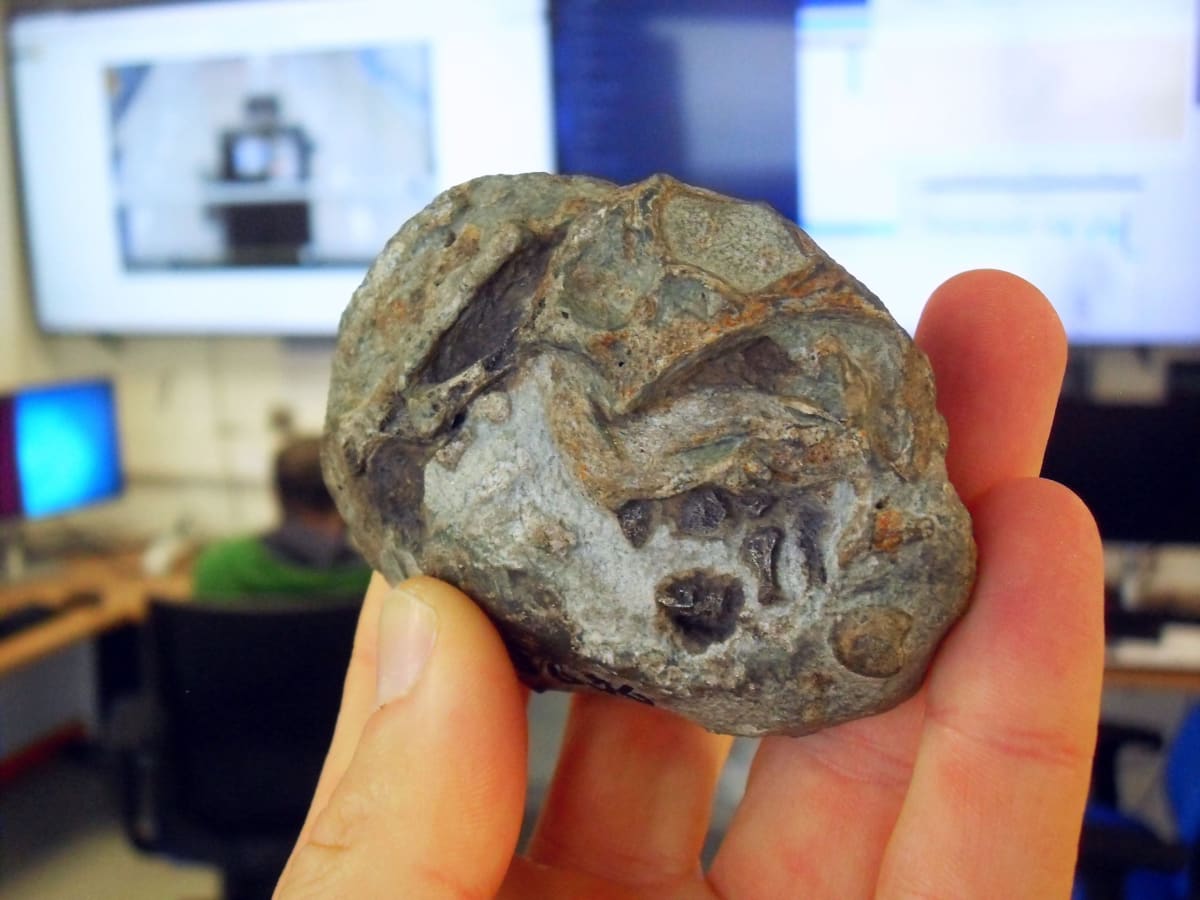
Professor Jennifer Botha remembers when her team first spotted the fossil back in 2008. "My preparator identified a small nodule that revealed tiny flecks of bone," she says. "As he carefully prepared the specimen, it became clear that it was a perfectly curled-up Lystrosaurus hatchling."
The team suspected it died inside an egg, but they needed better technology to prove it. Seventeen years later, advanced synchrotron scanning at the European Synchrotron Radiation Facility in France revealed the truth.
The scans showed something exciting: the baby's jawbones hadn't fused together yet. That meant it couldn't eat on its own and was still developing inside the egg when it died.
Why This Inspires
This discovery reveals a brilliant survival strategy. Lystrosaurus produced relatively large eggs packed with extra yolk, giving babies enough nutrition to develop quickly without parental care.
When these hatchlings emerged, they could walk, eat, and dodge predators almost immediately. They grew fast and started reproducing young, creating new generations rapidly in a world struggling to recover.
The eggs were soft-shelled, which explains why scientists had never found one before. Unlike hard dinosaur eggs that fossilize easily, soft shells rarely survive millions of years. This find is incredibly rare.
Professor Julien Benoit explains why this matters today. "Understanding how past organisms survived global upheaval helps scientists better predict how species today might respond to ongoing environmental stress," he says.
Lystrosaurus faced extreme heat, drought, and an unstable environment after the extinction. Its reproductive strategy turned those challenges into opportunities. While other species struggled, these tough little survivors spread across the supercontinent and flourished.
The research shows that resilience isn't just about being strong. Sometimes it's about adapting quickly, growing fast, and giving your offspring the best possible start in a difficult world.
This 250-million-year-old lesson in survival offers hope for understanding how life adapts when everything changes.
More Images
Based on reporting by Google: fossil discovery
This story was written by BrightWire based on verified news reports.
Spread the positivity!
Share this good news with someone who needs it