28 States Move to Legalize Plug-In Balcony Solar Panels
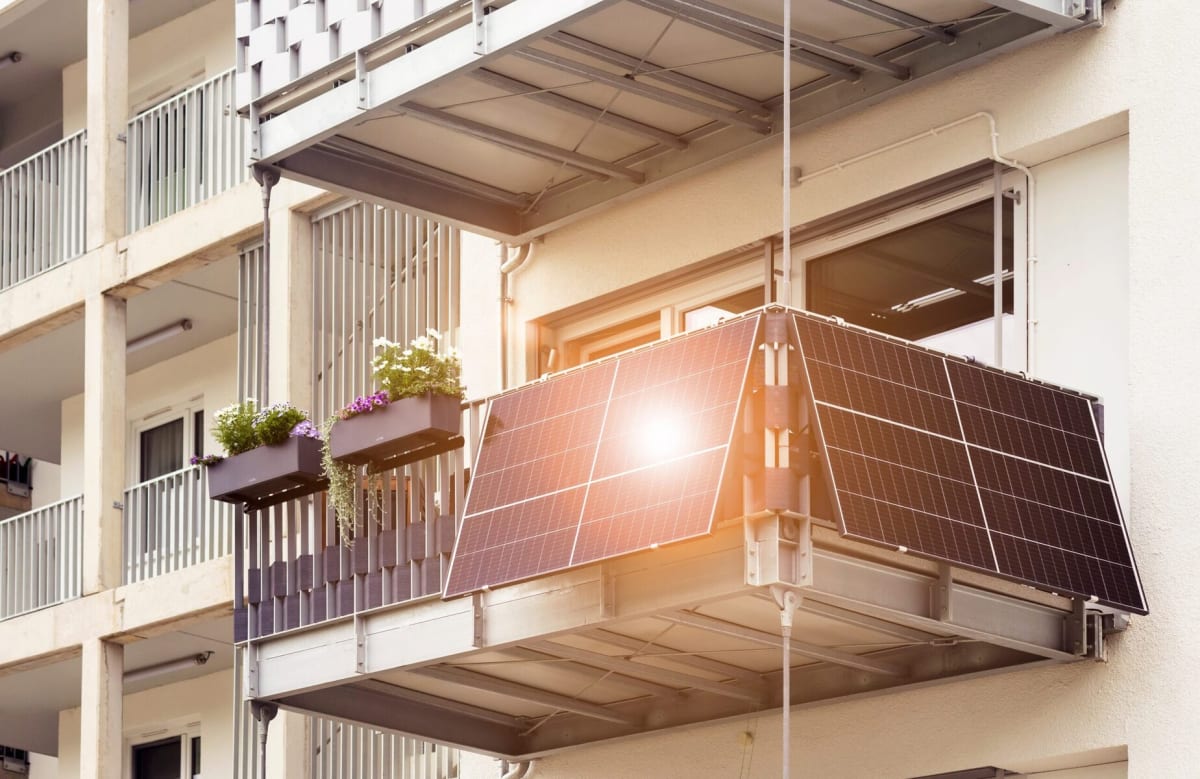
Affordable solar panels you can zip-tie to your balcony and plug into the wall are coming to America. Twenty-eight states are now pushing laws to make these $400-$1,100 devices legal, offering renters and apartment dwellers a chance to cut electricity bills by up to 20 percent.
Lauren Phillips turned her Bronx balcony into a tiny power plant with zip ties and a standard wall outlet. The mother of two is now generating her own electricity for the first time in her life.
Phillips installed what may be the first plug-and-play solar panel in the Bronx last fall. The 220-watt system, secured to her railing, costs about $400 and will save her roughly $100 per year while powering 15 to 20 percent of her family's needs.
"I have an enormous childcare bill every month. My electricity bills never go anything but up," Phillips said. "Everywhere you turn, things are only getting more expensive."
She's part of a small but growing movement of Americans taking clean energy into their own hands. These portable solar kits require no professional installation, no rooftop access, and no landlord permission in states where they're legal.
Utah became the first state to officially allow balcony solar in March 2025. A few thousand households there have already plugged in their systems.
Now lawmakers in 28 other states and Washington, D.C., have introduced similar legislation. Both Democrats and Republicans see the technology as a practical answer to rising utility costs.
New York Assemblymember Emily Gallagher, who introduced her state's bill last September, said constituents are "extremely enthusiastic" about the idea. An 800-watt unit costing $1,099 can power a refrigerator or several small appliances during sunny hours, saving New York households an average of $279 annually.
The technology isn't new to the world. As many as four million households in Germany have installed balcony solar systems, which people can even order through Ikea.
But American utilities have kept the devices in regulatory limbo. Outside Utah, companies typically require users to sign interconnection agreements that can involve fees and weeks of waiting, the same process needed for a full rooftop array.
"The technology has evolved, and the law hasn't caught up yet," Phillips said. Installing her system might be "an act of solar civil disobedience."
The Ripple Effect
The balcony solar movement is opening clean energy access to millions of people previously left out. Renters make up more than one-third of American households, and most apartment dwellers have never had a realistic path to solar power.
These plug-in systems change that equation completely. No roof ownership required, no permanent installation, and no five-figure investment needed.
UL Solutions launched safety testing protocols in January to ensure the devices meet national standards. Experts are now refining those guidelines to support wider adoption.
The bills moving through state legislatures would eliminate interconnection requirements for certified systems, just as Utah did. That means future users could buy a panel, attach it to their balcony, plug it in, and start generating power the same day.
For Phillips, watching her panel work feels almost magical. "This is just a thing that I plugged in, and I'm generating my own power."
More Images

Based on reporting by Google News - Clean Energy
This story was written by BrightWire based on verified news reports.
Spread the positivity!
Share this good news with someone who needs it