3 Teens Build $276 Exoskeleton, Tongue-Controlled Wheelchair
Three high school students won IEEE's top scholarships for creating life-changing assistive technology that costs a fraction of commercial alternatives. Their innovations help people with disabilities navigate terrain, control devices with their tongue, and walk using mind signals.
A $276 exoskeleton that reads your thoughts before you even decide to move. A wheelchair you control entirely with your tongue. A robot that conquers rough terrain to restore independence.
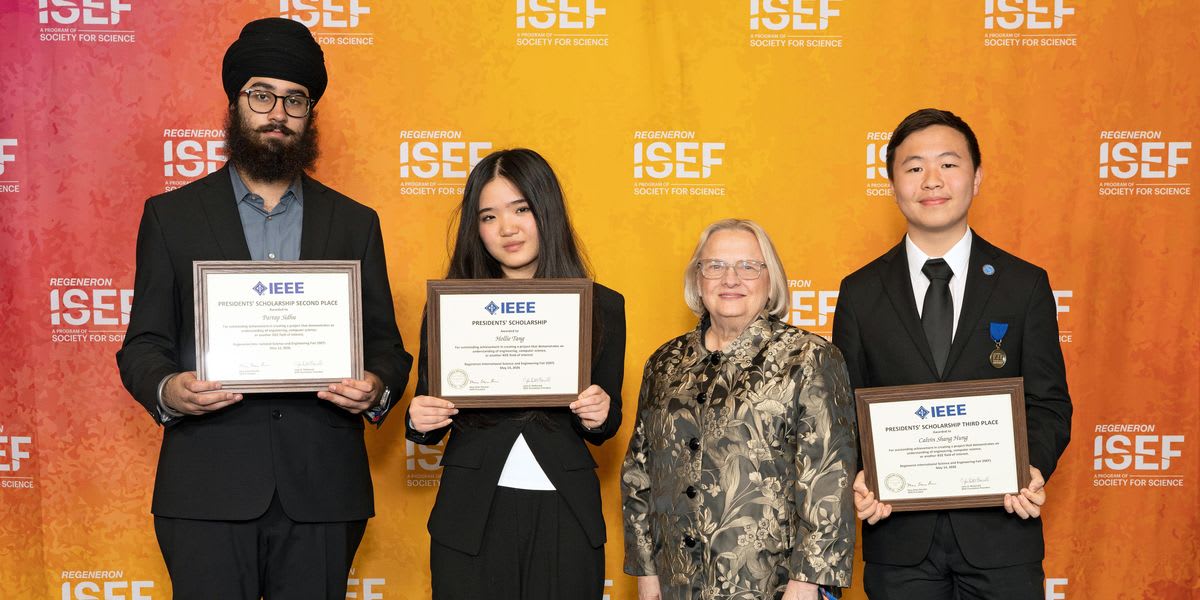
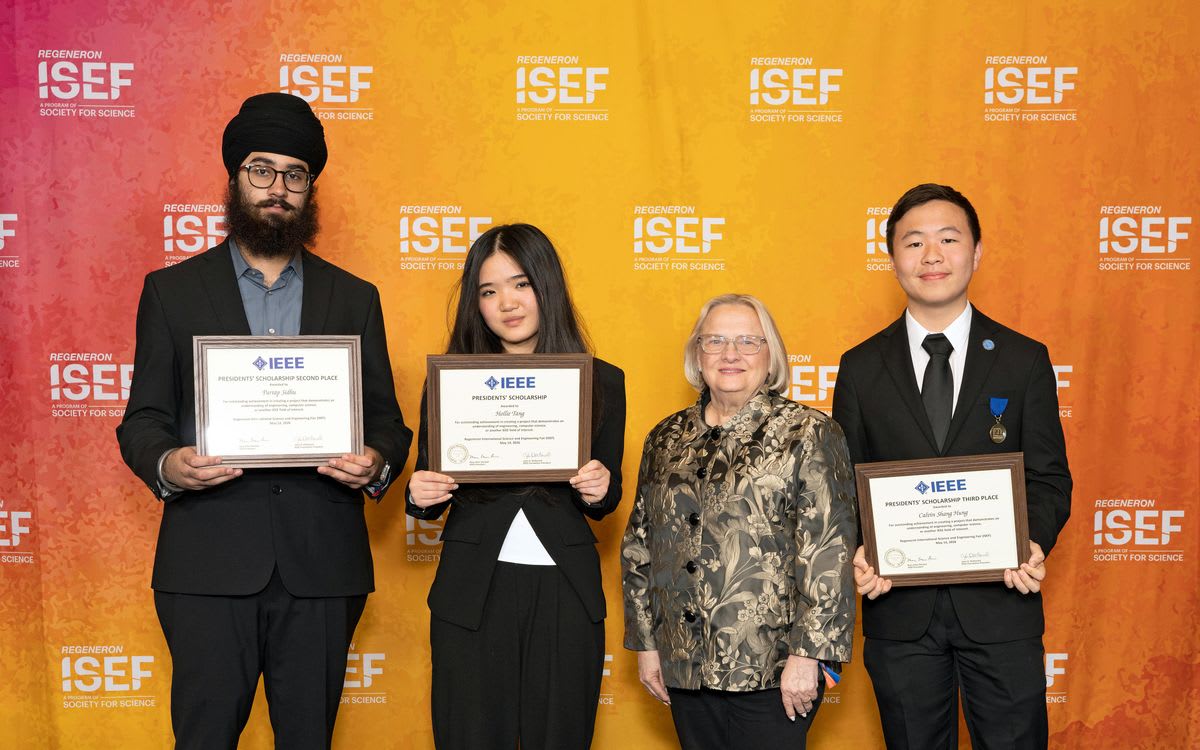
These aren't concepts from a research lab. They're real inventions built by three high school students who just won IEEE's Presidents' Scholarship awards at the International Science and Engineering Fair in Phoenix this May.
Holly Tang, a sophomore from Wilson High School in California, took home the top prize of $10,000 for Tonguage. Her system lets people control wheelchairs, computers, and robotic arms using only tongue movements and eye blinks captured by a standard laptop camera.
The tongue acts as a directional cursor while eye blinks work as mouse clicks. A face-tracking feature ensures commands come only from the intended user, critical for wheelchair safety.
Tang deliberately designed Tonguage to work with affordable equipment anyone can access. "Mobility conditions don't discriminate," she says. "They can affect anyone of any income, gender, and socioeconomic status."
What started as a simple keyboard alternative expanded when Tang visited a rehabilitation center. She realized people with disabilities deserve more than just basic functionality. They deserve to play games and enjoy entertainment too.
Partap Sidhu, a junior from New York's Bethpage High School, won second place for NeuroGait. His mind-controlled exoskeleton detects the faint electrical pattern your brain produces one to two seconds before you consciously decide to move.
The system achieved 99.9 percent accuracy in detecting intended movements. The full process from brain signal to physical movement operates at 95.2 percent accuracy across 500 trials.
The most remarkable part? Sidhu built the entire system for about $276. Commercial exoskeletons cost between $40,000 and $100,000.
He used pneumatic artificial muscles instead of rigid motors, mimicking human anatomy to adjust naturally to the body's limitations. Sidhu plans to bring NeuroGait to the community center where he first saw people with mobility issues struggle with three flights of stairs.
Calvin Shang Hung earned third place and a $400 scholarship for his rough-terrain navigation robot that helps people access challenging outdoor spaces.
The Ripple Effect
More than 1 billion people worldwide live with disabilities that affect their independence and mobility, according to the World Health Organization. Traditional assistive technology often costs tens of thousands of dollars, putting it out of reach for most families.
These three students didn't just build impressive projects for a science fair. They created affordable, accessible solutions that could genuinely change lives.
Tang's visit to the rehabilitation center taught her something classrooms can't. "Including empathy in your technological solution is so important," she says. "Empathy is hard to teach in a classroom, but it can be learned through experience, and through actually meeting people whose lives your work might change."
Each student received an IEEE President's coin alongside their scholarship, IEEE student memberships, and recognition from IEEE President Mary Ellen Randall. They said the coin was a highlight of their experience.
These young inventors prove that breakthrough innovation doesn't require massive budgets or advanced degrees—just creativity, empathy, and determination to solve real problems for real people.
More Images
Based on reporting by IEEE Spectrum
This story was written by BrightWire based on verified news reports.
Spread the positivity!
Share this good news with someone who needs it