3 Women Train AI to Map Moon Craters for Future Landings
A three-woman team at BIT Mesra spent three years teaching AI to detect lunar craters, solving a problem that once required exhausting manual work by geologists. Their ISRO-funded breakthrough could guide future Moon missions and revolutionize how we map space.
Three women in Ranchi just taught a computer to see the Moon the way geologists do, and it could change how humanity lands on lunar surfaces forever.
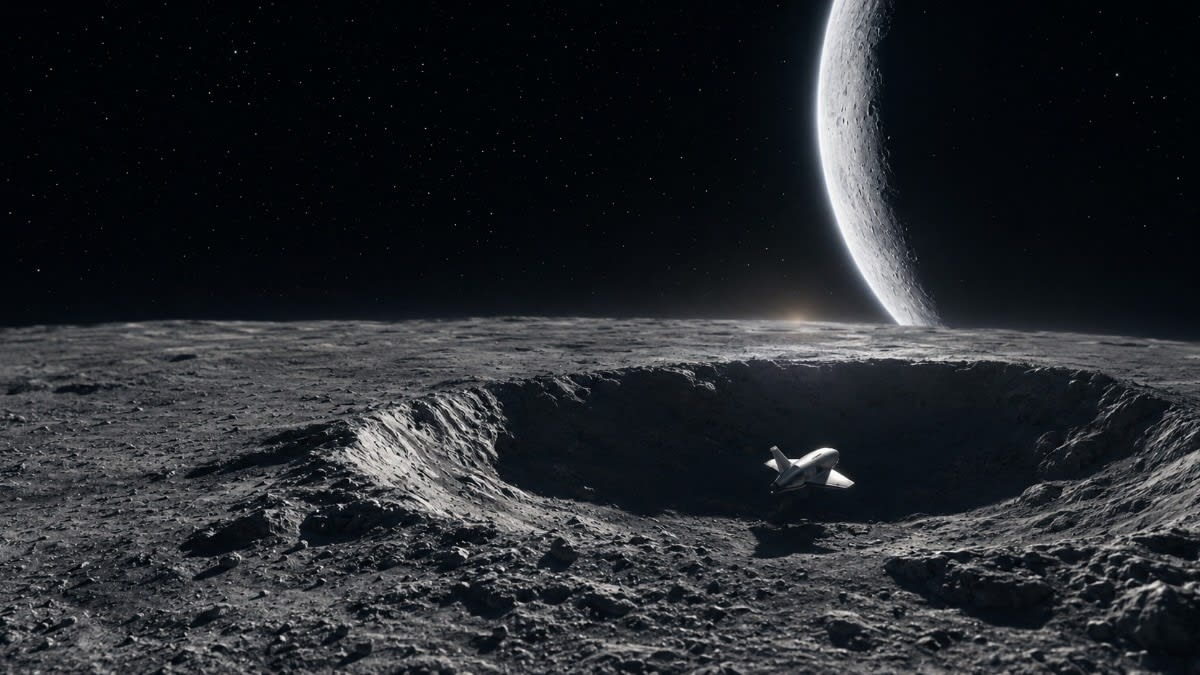
Dr. Sanchita Paul, Dr. Mili Ghosh, and researcher Mimansa Sinha at Birla Institute of Technology spent three years training artificial intelligence to automatically detect and map lunar craters. What once took geologists countless hours of manual tracing now happens in seconds.
The challenge was massive. ISRO approached the academic community in 2023 with a problem: counting craters by hand was painfully slow and exhausting. They needed automation, but lunar surfaces are nothing like standard photographs.
"We computer science people generally work on standard images," Dr. Paul explains. "But satellite data uses Digital Elevation Models. It's a completely different, highly complex dataset."
The team tested everything from U-Net architectures to YOLO detection models, eventually combining Mask R-CNN with a powerful 101-layer ResNet backbone. They fed it data from NASA's Lunar Reconnaissance Orbiter and India's Chandrayaan missions.
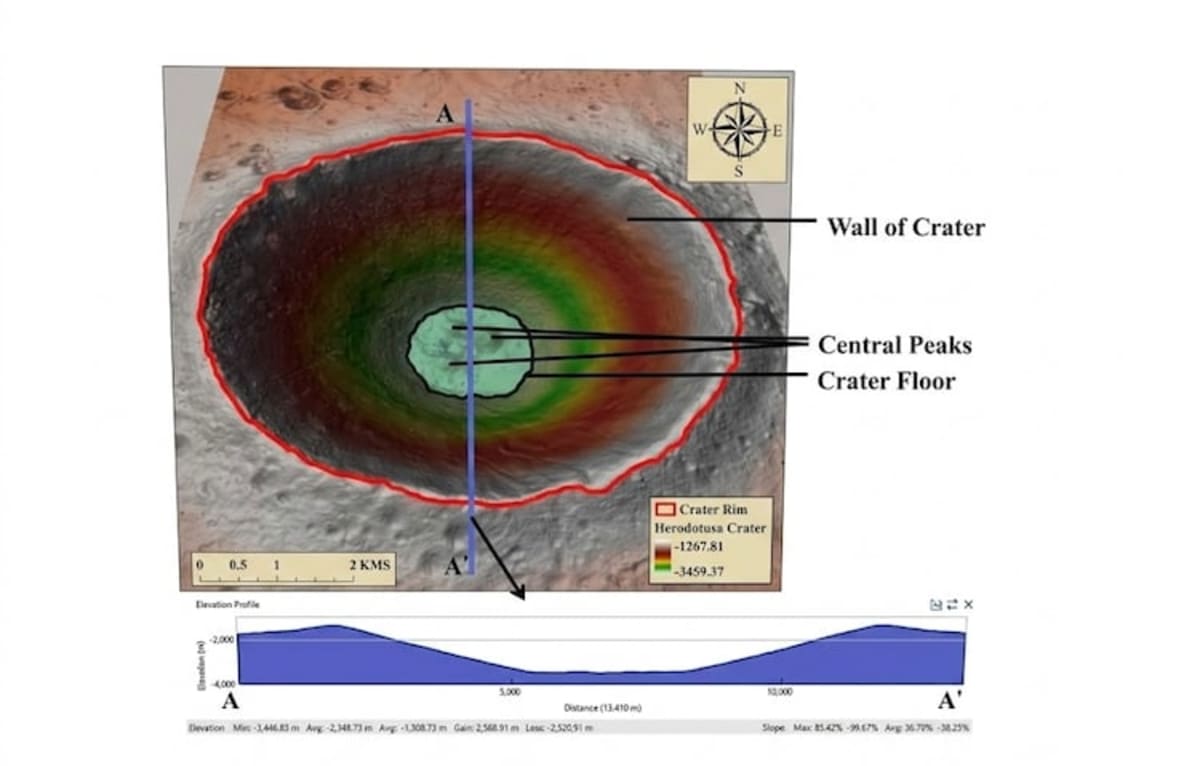
But finding craters wasn't enough. The team built custom software called CraterMorpho that instantly measures each crater's diameter, depth, slope, and surface roughness. It's like giving the AI not just eyes, but the expertise of a trained geologist.
The system proved remarkably skilled at spotting tiny craters less than half a kilometer wide that other tools miss completely. It even mastered the tricky geometry of craters inside other craters and overlapping impacts.
They tested their work on one of the Moon's most complex areas: Vallis Schröteri, nicknamed the "Cobra Head" by astronomers. The AI successfully catalogued craters across 35 high-resolution images of this volcanic valley.
The Ripple Effect
This breakthrough reaches far beyond mapping. Crater dating helps scientists understand the Moon's geological history by analyzing which impacts happened first. Navigation planning for rovers and landers becomes safer when AI can quickly identify hazards.
Future missions could use this technology in real-time, helping spacecraft avoid dangerous terrain during descent. What the BIT Mesra team built in a Ranchi computer lab could literally guide where humanity steps next.
The collaboration marks the first time computer science at their institute has partnered with ISRO. Dr. Ghosh brought experience from the Chandrayaan-1 mission, while Dr. Paul crossed from digital imaging into cosmic exploration.
"AI is basically a prediction system," Dr. Paul notes. "We try different techniques, observe results, and select the best. It's trial and error, but that's how breakthroughs happen."
Their work proves that world-changing innovation doesn't require massive facilities or Silicon Valley offices. Sometimes it just takes three determined scientists, spotty Wi-Fi, and three years of looking at the Moon differently than anyone has before.
More Images


Based on reporting by Google News - AI Breakthrough
This story was written by BrightWire based on verified news reports.
Spread the positivity!
Share this good news with someone who needs it