MIT Students Built Real Jet Engines With AI in 4 Weeks
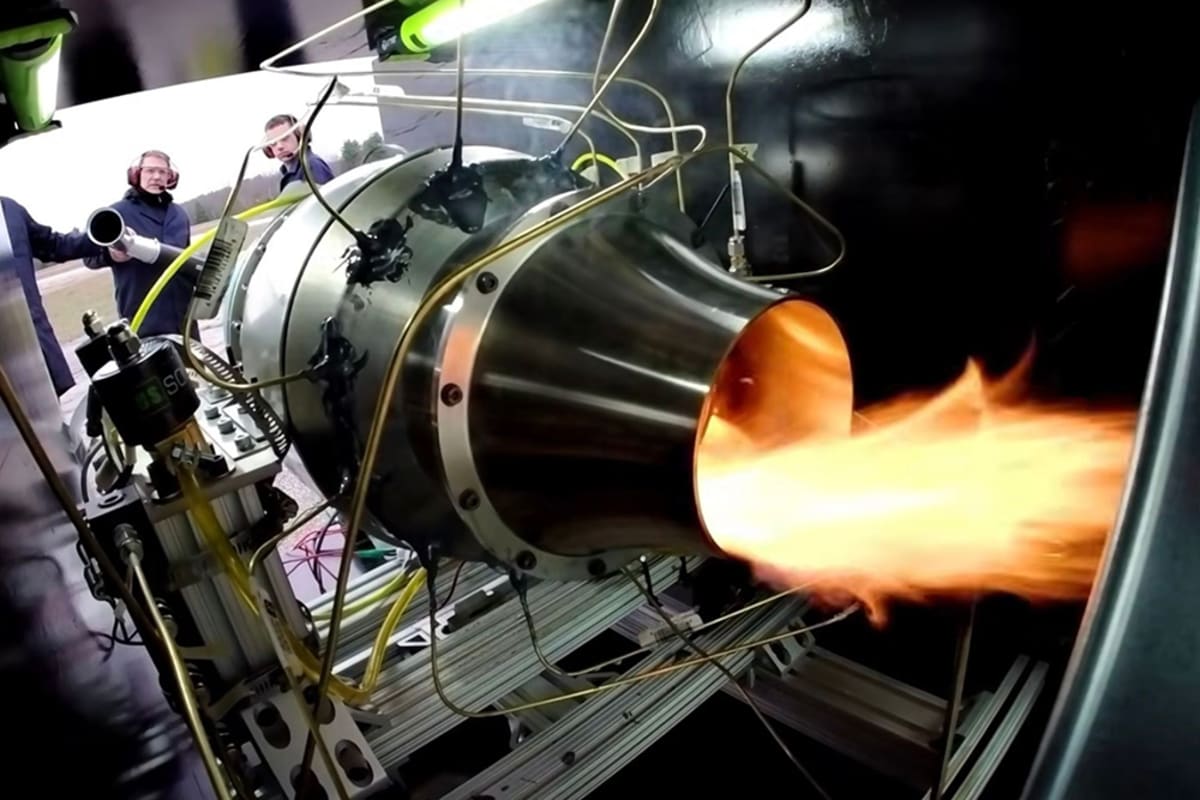
Seven teams of MIT undergrads designed, built, and test-fired actual jet engines in just four weeks using AI as their engineering partner. The JARVIS Challenge proved AI can dramatically speed up hardware development, but human judgment still makes the difference.
Imagine building a working jet engine in a month with zero experience in turbomachinery. That's exactly what 31 MIT students just pulled off, and artificial intelligence helped them do it.
The JARVIS Challenge (Jet-engine AI Research and Validation Intensive Sprint) gave undergrads four weeks to design, fabricate, and test small jet engines producing 50 to 100 pounds of thrust. Most participants had never seen inside a gas turbine before signing up to build one.
Students from nearly every engineering department formed seven teams. They had unlimited access to cutting-edge AI tools through MIT Parley, a new platform aggregating large language models. They also got MIT's machine shops, commercial software, and corporate sponsors eager to see if AI could reshape engineering.
The winning team, 811 Crew, successfully test-fired their engine and completed the required five 60-second runs on jet fuel. Other teams made remarkable progress despite having minimal thermodynamics experience. First-year students competed alongside seniors, all learning to partner with AI on safety-critical hardware.
Professor Zolti Spakovszky, director of the MIT Gas Turbine Laboratory, found something surprising. AI dramatically accelerated the design and analysis phases, but manufacturing remained the bottleneck. The real skill wasn't using AI but leading it.
"An AI-native engineer is not defined by using AI, but by leading it," Spakovskky says. Students had to know when to trust their AI copilot and when to challenge it, then translate those outputs into working hardware.
Why This Inspires
Vincent Garnier from sponsor Safran Tech watched students evolve throughout the competition. They started enthusiastic about AI's possibilities, then developed a realistic understanding of its limits, and quickly adapted their approach.
"It makes me confident that this generation of leading engineers will probably not fall prey to easy and shortsighted use of AI," Garnier says. These students stayed grounded in physical experimentation while leveraging computational power.
The challenge received support from MIT Lincoln Laboratory, the Department of Mechanical Engineering, and companies including Safran, Voyager Technologies, and Beehive Industries. Sponsors see JARVIS participants developing skills that will become baseline requirements for future engineers.
Professor Masha Folk celebrated what the compressed timeline revealed. "The pace required tremendous leadership, trust, and teamwork from our instructional staff, postdocs, graduate students, and undergraduates," she says.
Faculty deliberately avoided giving easy answers during weekly progress reviews. They ensured safety while pushing students to solve problems independently, with AI as a tool rather than a crutch.
The next generation of engineers just proved they can build the impossible in weeks, not years, by knowing exactly when to listen to the machines and when to trust themselves.
Based on reporting by MIT News
This story was written by BrightWire based on verified news reports.
Spread the positivity!
Share this good news with someone who needs it