30+ Nations Build New Model for Global Cooperation
Leaders from more than 30 countries in the Global South are redesigning how nations work together on shared challenges like pandemics and climate change. Their new Coalition of Governments on Global Public Investment replaces outdated aid models with equal partnerships where all countries contribute and benefit.
While others debate managed decline or private sector takeovers, leaders from Senegal to Colombia are busy building something better for global cooperation.
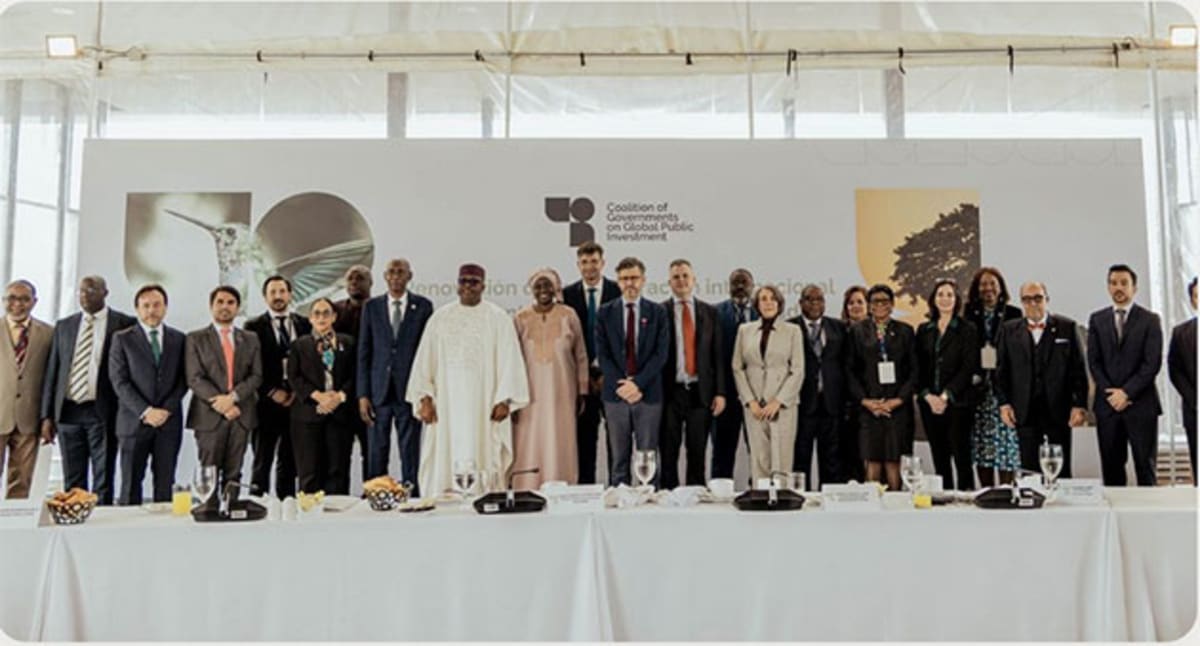
More than 30 countries have joined the Coalition of Governments on Global Public Investment, launched in July 2025 to transform how nations fund solutions to shared challenges. Co-chaired by the foreign ministers of Senegal and Colombia, the coalition brings together governments as equals rather than donors and recipients.
"Our challenges are shared, our risks are shared, and increasingly, our solutions must also be shared," says Martín Clavijo, Director of Uruguay's Agency for International Cooperation. The new model means all countries contribute according to their capacities, benefit according to their needs, and participate equally in decisions.
The timing matters. The old international aid system collapsed suddenly, leaving the world more vulnerable to pandemics, natural disasters, and other global threats. Some experts suggested restoring the old donor-recipient model, but coalition members know that paternalistic structure was already failing.
"We are not looking for sympathy. What we want is an equal partnership," emphasizes Samuel Okudzeto Ablakwa, Ghana's Minister of Foreign Affairs.
The coalition has already met four times since September 2025, gathering in Bogota, Nairobi, and New York. They're working closely with civil society organizations and reaching out to Global North countries willing to participate as equals.
Why This Inspires
These leaders refuse to accept three failed ideas dominating discussions in wealthy nations: restoring colonial-era aid structures, doing less with shrinking budgets, or handing global challenges to private companies and billionaires. Instead, they're designing public financing systems that pool resources democratically.
"We can't rely on philanthropy alone, and we can't just look to the private sector to save us," explains Cheikh Niang, Senegal's Foreign Minister and coalition co-chair. "We need more and better public money to solve our collective challenges."
María Elena Agüero, Secretary General of Club de Madrid, calls the coalition leaders "pioneers renewing and remaking multilateralism." Their approach will be fairer by ensuring all countries have voice and stake, and more effective at improving lives worldwide.
Kenya's Principal Secretary Korir Singoei frames the moment clearly: "There is an urgent need for a renewed international financial architecture that is more inclusive, more representative and better aligned with contemporary global realities."
Panama's Foreign Minister Javier Eduardo Martínez-Acha Vásquez asks the question that defines their work: "Do we want to be the generation that managed a crisis, or the generation that transformed the course of global cooperation?"
Thirty-plus nations are choosing transformation.
Based on reporting by Google: cooperation international
This story was written by BrightWire based on verified news reports.
Spread the positivity!
Share this good news with someone who needs it
%2Ffile%2Fattachments%2F2997%2F14300024_667918.jpg)