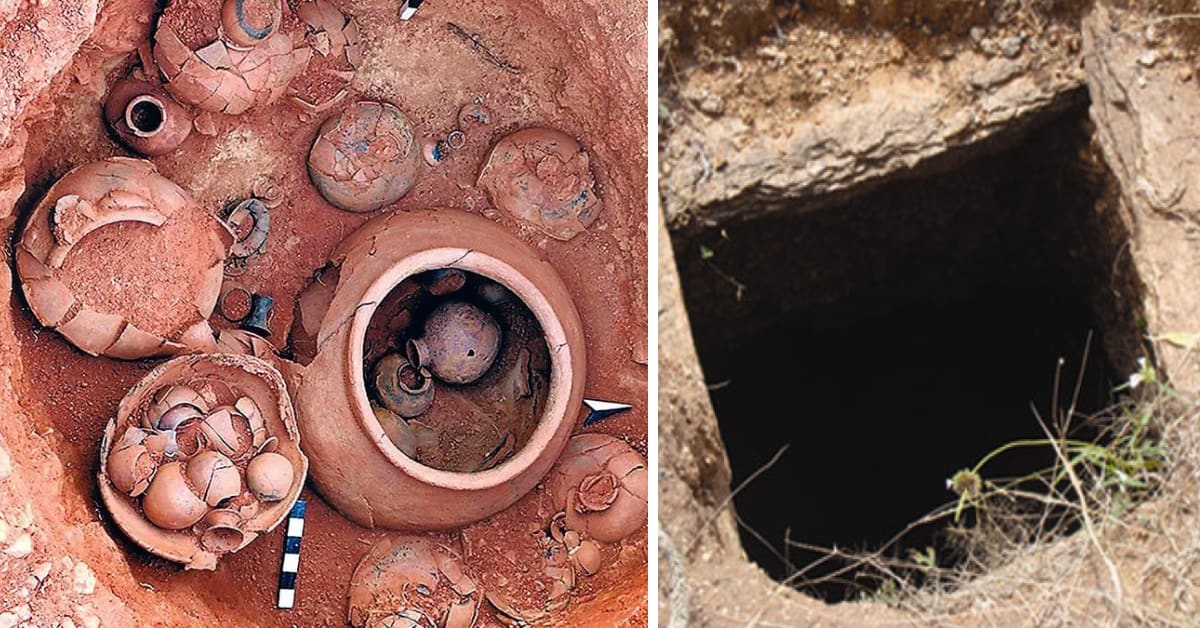
3,500-Year-Old Tamil Nadu Homes Had Natural "Fridges
Ancient communities in Tamil Nadu engineered underground storage pits that kept grain fresh for months without electricity. Archaeologists just discovered these 3,500-year-old "refrigerators" near Coimbatore, revealing sophisticated food preservation science.
Imagine storing your entire year's food supply without a single watt of electricity, in scorching 40°C heat, and having it stay fresh for months.
Ancient communities in Tamil Nadu figured out exactly how to do that 3,500 years ago. Archaeologists from Tamil University just unearthed their secret at Molapalayam, near Coimbatore on the foothills of the Western Ghats.
The discovery reveals a series of underground pit houses built by Neolithic farmers. These weren't simple holes in the ground. They were engineered food preservation systems that rivaled anything we had until the modern refrigerator arrived.
The science behind these ancient "fridges" is brilliant. Below a certain depth, earth maintains a stable, cool temperature regardless of what's happening at the surface. In a region where summer heat and humidity can destroy harvests in days, this underground consistency was life-changing.
The pits served multiple purposes beyond storage. Some contained grinding stones and functioned as kitchens. Others were large enough to shelter people during natural disasters. The community built them directly inside their homes, making food preservation central to daily life.
What really sets these structures apart is the engineering detail. Farmers lined the interiors with a poultice made from tank bed silt, rice bran, and paddy straw to absorb moisture. They coated walls with cow dung slurry, which acted as a natural antiseptic. Lime wash on outer surfaces added another layer of protection.
The structures even included outlet holes at the base so families could draw grain gradually without exposing the entire store to heat and pests each time. Stone slabs and woven mats sealed the openings while allowing just enough airflow to prevent fermentation.
Archaeologist V Selvakumar confirmed this wasn't an isolated innovation. Underground pit houses appear across Tamil Nadu's Neolithic sites, from Paiyampalli in Tirupattur district to multiple locations around the Western Ghats. This was a regional tradition passed down through generations.
The Ripple Effect
The wisdom of these ancient builders didn't disappear immediately. As recently as the 20th century, Tamil Nadu farmers still used variations called kulumai, kudhir, and kodambae. Studies estimate that up to 70% of India's food grain was historically preserved using these indigenous systems.
The Green Revolution brought industrial warehouses and chemical preservatives, and many assumed older meant inferior. Within a single generation, thousands of years of tested knowledge quietly vanished from villages across Coimbatore, Salem, Erode, and Dindigul districts.
Today's discovery reminds us that sustainable solutions often already exist in our past. These ancient engineers understood heat, humidity, and harvest in ways that modern climate-controlled storage is only beginning to replicate. Their designs used zero electricity, created zero waste, and worked perfectly for millennia.
The Molapalayam pits prove that innovation isn't always about inventing something new—sometimes it's about remembering what worked all along.
More Images
%2Fenglish-betterindia%2Fmedia%2Fmedia_files%2F2026%2F05%2F22%2F1-2026-05-22-17-41-48.png)


%2Ffilters%3Aformat(webp)%2Fenglish-betterindia%2Fmedia%2Fmedia_files%2F2026%2F05%2F22%2F3-2026-05-22-17-42-51.png)
Based on reporting by The Better India
This story was written by BrightWire based on verified news reports.
Spread the positivity!
Share this good news with someone who needs it
%2Fhttps%3A%2F%2Ftf-cmsv2-smithsonianmag-media.s3.amazonaws.com%2Ffiler_public%2F4e%2F9f%2F4e9f0fe8-aa48-438a-b88f-3a29cd71107e%2Fhttps___wwwfrontiersinorg_files_articles_1758862_xml-images_fmats-13-1758862-g001.jpeg)
%2Fhttps%3A%2F%2Ftf-cmsv2-smithsonianmag-media.s3.amazonaws.com%2Ffiler_public%2F8e%2F83%2F8e837bc6-e2b3-4bb6-bb1c-4f1287b45a6f%2Fcastillo-39-rincon_de_los_signos.jpg)