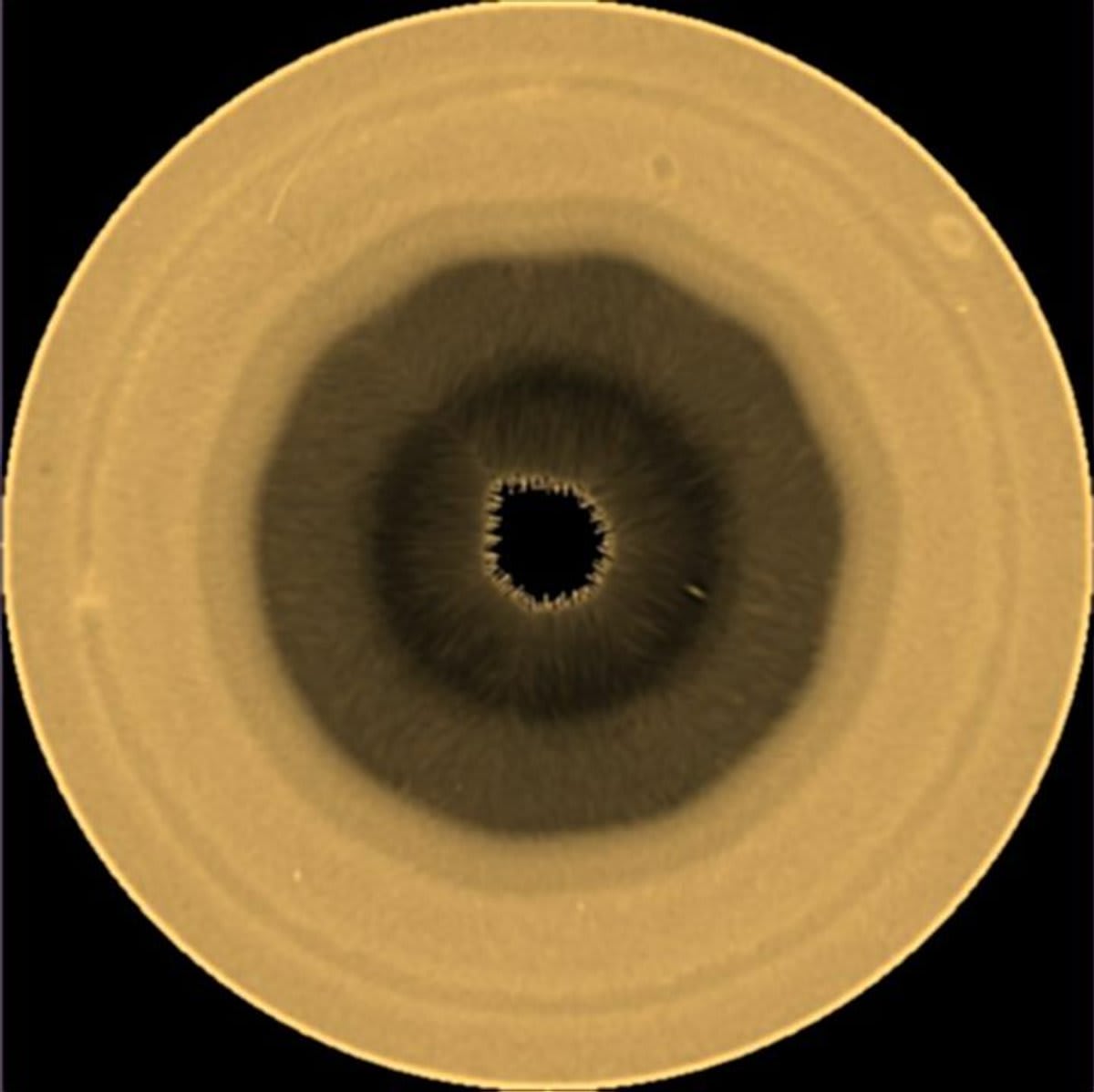
3,800-Year-Old Bronze Disc Shows Oldest Star Map Ever Found
A decorated bronze disc discovered in Germany turned out to be humanity's oldest known map of the night sky, created up to 3,800 years ago. The ancient artifact depicts the moon, sun, stars including the Pleiades cluster, and may have helped Bronze Age people track the seasons.
Imagine holding a 3,800-year-old treasure that shows how ancient people gazed at the same stars we see today. The Nebra Sky Disc, a stunning bronze plate decorated with gold, is the world's oldest known depiction of astronomical phenomena.
The 12.6-inch disc was discovered in 1999 near Nebra, Germany, though its journey to scientists was complicated. Treasure hunters illegally dug it up from an ancient hilltop site, but police recovered it in 2002 and experts have been studying it ever since.
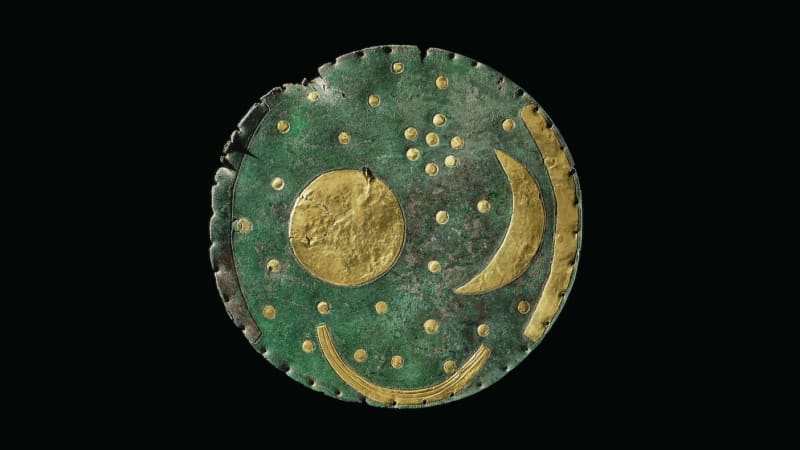
What makes this artifact so special is what it reveals about Bronze Age knowledge. The disc features gold inlays showing a crescent moon, a full moon or sun, and 32 stars, with several forming the Pleiades constellation that still shines in our night sky.
Scientists discovered the disc was created in at least five phases over time. Bronze Age people added decorative elements in stages, including golden arcs on the sides that may represent horizons marking summer and winter solstices, and a boat possibly symbolizing mythical sun travel across the sky.
The disc wasn't just art. When aligned with its discovery location on Mittelberg Hill, the western arc points directly to where the sun sets behind Brocken mountain during the summer solstice, suggesting ancient people used it as an astronomical calendar.
Researchers believe the disc was made between 1800 and 1600 B.C., making it 300 years older than the next oldest star map found in an Egyptian tomb. The 8.8 pounds of bronze and gold required significant resources, suggesting it belonged to someone important, possibly a Bronze Age chieftain.
Why This Inspires
This ancient sky disc bridges millennia of human curiosity. Bronze Age people looked up at the night sky with the same wonder we feel today, but they lacked telescopes, computers, or modern science. Yet they observed celestial patterns carefully enough to create sophisticated tools for tracking seasons and important dates.
Their dedication to understanding the cosmos shows that humanity's drive to explore, learn, and make sense of our universe isn't new. It's been part of who we are for thousands of years, connecting us across time through shared curiosity and ingenuity.
The disc now lives at the State Museum of Prehistory in Halle, Germany, where visitors can see this testament to ancient innovation. It reminds us that every generation builds on the observations and wisdom of those who came before, advancing human knowledge one discovery at a time.
These Bronze Age stargazers didn't just survive—they thrived, creating beauty and tools that still inspire us nearly four millennia later.
More Images


Based on reporting by Live Science
This story was written by BrightWire based on verified news reports.
Spread the positivity!
Share this good news with someone who needs it