50 College Teams Build Moon Robots for NASA Competition
College students across America are designing robots that could protect future Moon bases, competing in NASA's 2026 Lunabotics Challenge this May. Their self-driving rovers will build protective barriers from simulated lunar soil.
Fifty college teams are bringing their robot creations to Florida this month to help solve a real problem NASA faces on the Moon.
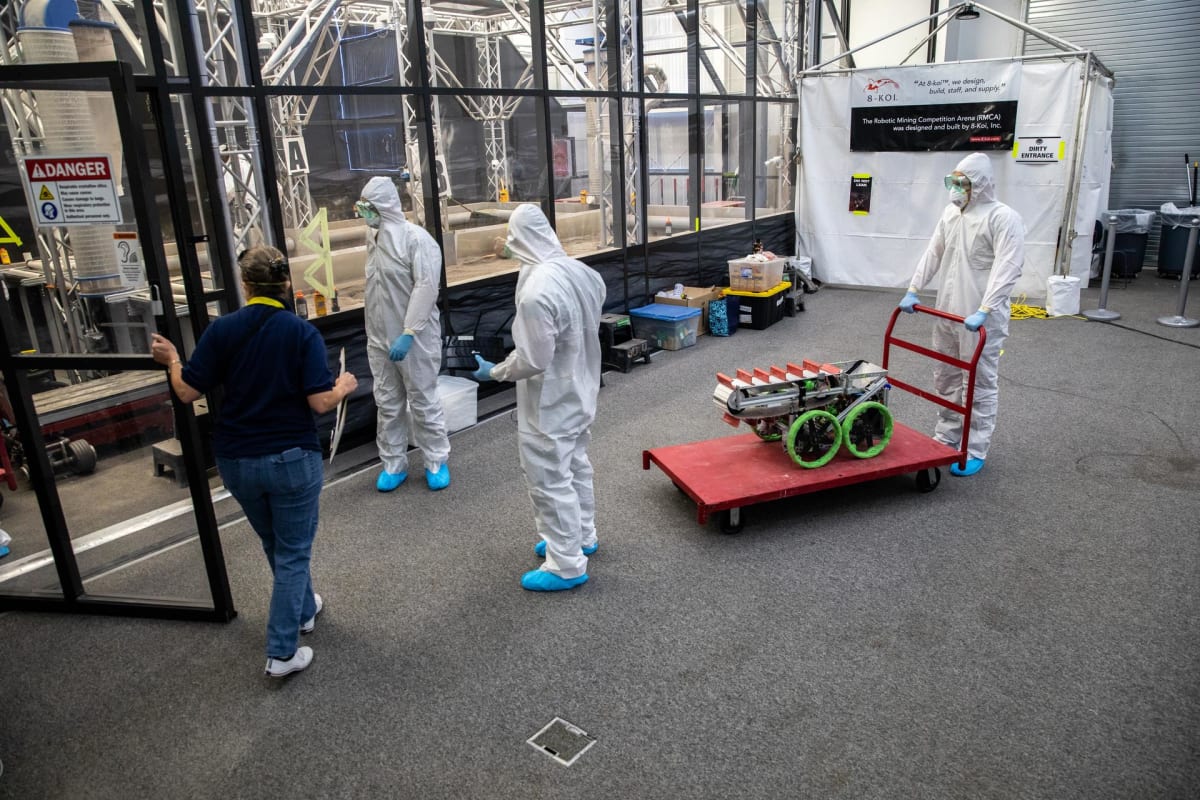
The 2026 Lunabotics Challenge runs May 19 to 21 at Kennedy Space Center, where students will demonstrate rovers they designed and built from scratch. These aren't just classroom projects. They're testing technology NASA actually needs for its Artemis missions.
The challenge is straightforward but tough. Each team's self-driving robot must scoop up material that mimics Moon dust and pile it into a protective barrier called a berm. On the actual lunar surface, these barriers would shield equipment from flying debris when spacecraft land or take off.
The applications go even further. Future berms could shade tanks storing rocket fuel, protect nuclear power plants from space radiation, and safeguard other critical infrastructure as humans establish a lasting presence on the Moon.
"The task of robotically building berm structures will be important for preparation and support of crewed lunar missions," said Kurt Leucht, a NASA software developer and researcher at Kennedy. The students aren't just learning. They're literally contributing to NASA's Moon plans.
Teams from universities and military academies across the country have spent months preparing. Some are returning competitors who've refined designs from previous years. Others are rookie teams taking their first shot at solving this lunar construction puzzle.
The competition runs from 8 a.m. to 6 p.m. each day, and anyone can watch the rovers in action through NASA's livestream.
The Ripple Effect
NASA launched Lunabotics in 2010 as part of its Artemis Student Challenges, and it's become a pipeline for future aerospace engineers. Students gain hands-on robotics experience while working on genuine mission needs. Many participants go on to careers at NASA or in the space industry, bringing the skills they developed during these intense competitions.
The challenge represents something bigger than robots pushing dirt around. It's proof that the next generation is ready to tackle the complex problems of space exploration. These college students are designing solutions today that astronauts will depend on tomorrow.
When humans return to the Moon, student innovations like these will help keep them safe.
More Images
Based on reporting by NASA
This story was written by BrightWire based on verified news reports.
Spread the positivity!
Share this good news with someone who needs it