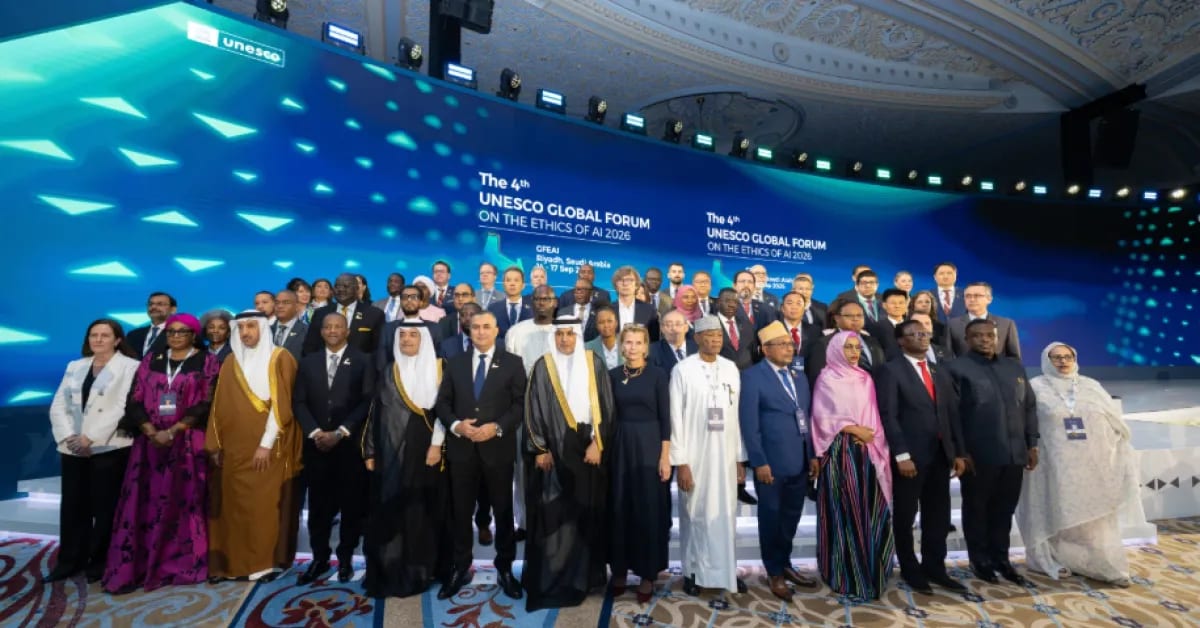
52 Nations Unite on Ethical AI at UNESCO Forum
Countries worldwide just agreed to strengthen cooperation on AI ethics, putting people at the center of technology development. The historic gathering tackled everything from AI safety to its environmental impact.
Representatives from 52 countries met in Saudi Arabia this week with one shared mission: making sure artificial intelligence serves humanity, not the other way around.
UNESCO's 4th Global Forum on the Ethics of AI brought together global leaders to tackle the tough questions about how AI should develop. The ministerial meeting reinforced commitments to ensure AI advances human well-being and sustainable development above all else.
The forum went beyond abstract principles. Delegates dove into practical challenges including gender equality in AI, education, healthcare, culture, and linguistic diversity. They also examined AI supervision, public administration systems, and safety protocols.
One critical topic dominated conversations: AI's environmental footprint. Participants discussed the technology's growing demands for energy, water, and natural resources. As AI expands globally, understanding and managing these environmental costs becomes essential.
The gathering emphasized connecting global knowledge with practical tools that countries can actually implement. Theory matters little without action, and delegates focused on translating ethical principles into national policies.
The Ripple Effect
This forum represents more than diplomatic meetings and policy papers. When nations coordinate on AI ethics, they create guardrails that protect billions of people from potential harms while maximizing benefits.
The emphasis on inclusion means AI development won't just serve wealthy nations or powerful corporations. By prioritizing accessibility, education, and cultural diversity, these agreements help ensure communities worldwide can shape and benefit from AI technologies.
The environmental discussions mark a turning point too. Acknowledging AI's resource demands early in its development allows countries to pursue sustainable innovation rather than racing ahead blindly.
International cooperation on emerging technology has historically been difficult, with nations competing for advantage. This forum shows a different path is possible when countries recognize shared stakes in getting AI right.
The closed-door ministerial track allowed frank conversations about challenges and concerns. That candid dialogue builds the trust necessary for meaningful collaboration on implementation.
By connecting ethical frameworks to real-world issues like healthcare, education, and environmental sustainability, the forum created actionable pathways forward. Countries left with more than agreements; they left with practical strategies.
When 52 nations agree that AI development must put people first, that collective commitment creates momentum that individual countries or companies can't easily ignore.
Based on reporting by Google: cooperation international
This story was written by BrightWire based on verified news reports.
Spread the positivity!
Share this good news with someone who needs it