
5,300-Year-Old Drill Rewrites History of Ancient Technology
A tiny copper tool collecting dust in a museum for nearly a century just changed everything we thought we knew about ancient Egyptian innovation. What researchers once dismissed as a simple awl turned out to be the world's oldest known mechanical drill, pushing back the timeline of advanced toolmaking by 2,000 years.
A small copper artifact forgotten in storage since 1922 has just rewritten the history of ancient technology.
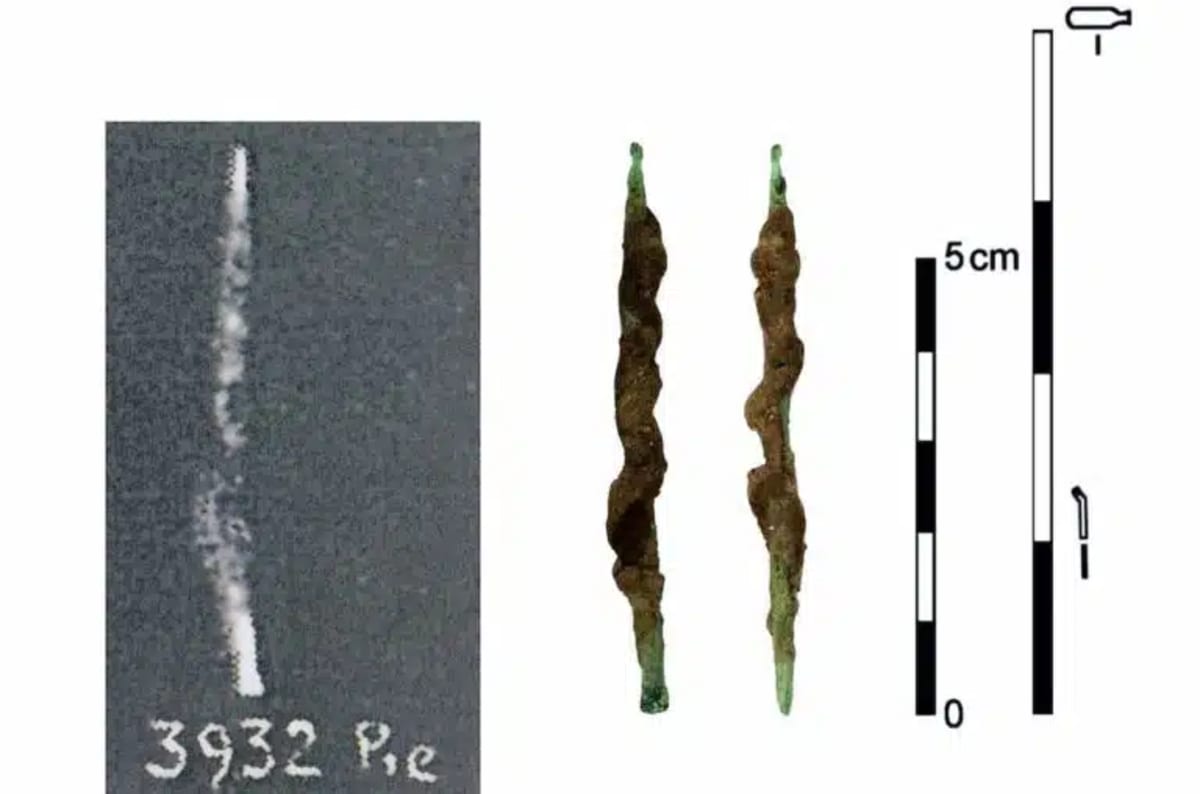
Researchers from Newcastle University recently took another look at what everyone assumed was a basic puncturing tool from ancient Egypt. Using modern magnification techniques, they discovered something remarkable: wear patterns that could only come from rotary motion. The tiny device, just two inches long and weighing barely more than a paper clip, is actually a sophisticated drill dating back 5,300 years.
The artifact was first unearthed at Badari in Upper Egypt and quickly catalogued as a simple copper awl. For nearly 100 years, it sat in obscurity. But when Martin Odler and his team examined it closely, they found evidence of a leather wrap system that allowed craftspeople to spin the drill faster and more precisely than hand tools alone.
"The re-examination of this object has revealed something far more advanced than initially thought," Odler said. The discovery, published in Egypt and the Levant, shows that Egyptians mastered mechanical rotary drilling more than two millennia before similar tools appeared anywhere else in the world.
The drill's composition tells an equally fascinating story. Analysis revealed the copper was mixed with arsenic, nickel, lead, and silver. These additions weren't random. The ancient Egyptians were deliberately creating a harder, more durable metal long before they started building pyramids.
"The presence of silver and lead may hint at deliberate alloying choices and, potentially, broader connections with other ancient civilizations," noted co-author Jiri Kmosek. This suggests Egyptian metallurgists were experimenting with advanced techniques thousands of years earlier than historians believed possible.
The Ripple Effect spreads across millennia. This single tiny tool represents a leap in human capability that transformed daily life. Egyptian craftspeople used rotary drills like this one for nearly 2,000 years to create intricate jewelry, detailed furniture, and precision crafts that defined their culture. The innovation that made fine beadwork and woodworking possible came from understanding physics and materials science at a level that challenges our assumptions about ancient knowledge.
Sometimes the biggest discoveries hide in plain sight, waiting for someone to look closer and see what's really there.
More Images


Based on reporting by Google News - Scientists Discover
This story was written by BrightWire based on verified news reports.
Spread the positivity!
Share this good news with someone who needs it
%2Fhttps%3A%2F%2Ftf-cmsv2-smithsonianmag-media.s3.amazonaws.com%2Ffiler_public%2Fcb%2Ff0%2Fcbf09863-7b51-4a6e-9146-18afe0ba8b81%2Ftomb2.png)
%2Fhttps%3A%2F%2Ftf-cmsv2-smithsonianmag-media.s3.amazonaws.com%2Ffiler_public%2F75%2F34%2F75342ac4-0f4b-4563-a63d-3012f0feae31%2Fgettyimages-2293659629.jpg)