5,300-Year-Old Iceman Still Hosts Living Microbes
Scientists discovered that Ötzi the Iceman isn't just a frozen relic—he's hosting living microorganisms that survived thousands of years in the glacier alongside him. The finding reveals ancient gut bacteria from his lifetime and cold-loving yeasts that could help power future green technology.
A 5,300-year-old mummy is teaching scientists that death doesn't mean the end of biological activity.
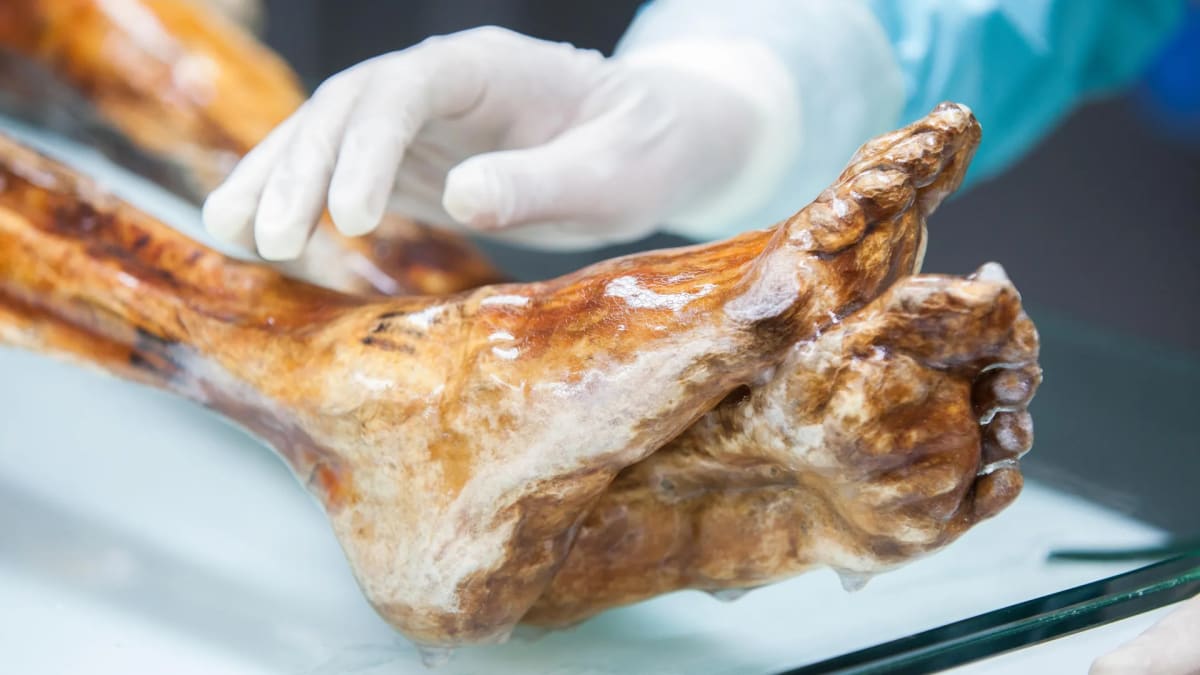
Researchers at Eurac Research discovered that Ötzi the Iceman, the famous mummy discovered frozen in an Alpine glacier, still hosts a mix of ancient and modern microorganisms. Some of these microscopic hitchhikers have been with him for over five millennia.
The team carefully separated microbes that lived inside Ötzi during his lifetime from those that arrived after his death. Inside his intestinal tract and stomach, they found genetic evidence of his original gut bacteria, offering a rare glimpse into the microbial communities that once inhabited early human bodies.
These ancient bacteria look nothing like what you'd find in most people today. Many of them are rarely found in modern industrialized societies, making Ötzi an invaluable window into our microbial past.
But the real surprise came from the mummy's skin and internal meltwater samples. Scientists identified cold-adapted yeast species genetically related to organisms found in Antarctica and other extreme environments.
"We see continuity here," explains Frank Maixner, director of the Institute for Mummy Studies. "These yeasts have accompanied Ötzi on his long journey through the millennia."
The yeasts appear to be alive, not just ancient genetic material. Some survive in a dormant state under the mummy's current storage conditions: minus six degrees Celsius and high humidity.
Why This Inspires
This discovery transforms how we think about ancient remains. Ötzi isn't a static artifact gathering dust in a museum—he's a dynamic biological system that has supported life for thousands of years.
The finding could lead to practical benefits beyond archaeology. Cold-adapted microorganisms can function at temperatures that would stop most other species, meaning they could support industrial processes that require far less energy.
Low-temperature fermentation powered by these ancient yeasts could reduce the carbon footprint of manufacturing. Scientists accidentally preserved life across millennia, and now that life might help us build a more sustainable future.
The South Tyrol Museum of Archaeology continues monitoring Ötzi's condition closely to preserve him for many more generations. Meanwhile, researchers are still unraveling the mysteries of how glacial mummies remain preserved for such extraordinary lengths of time.
Sometimes the most important discoveries are the ones we didn't know we were looking for, frozen in ice and waiting thousands of years to share their secrets.
Based on reporting by Science Daily
This story was written by BrightWire based on verified news reports.
Spread the positivity!
Share this good news with someone who needs it