54 Rhinos Now Thrive in Manas After Total Extinction
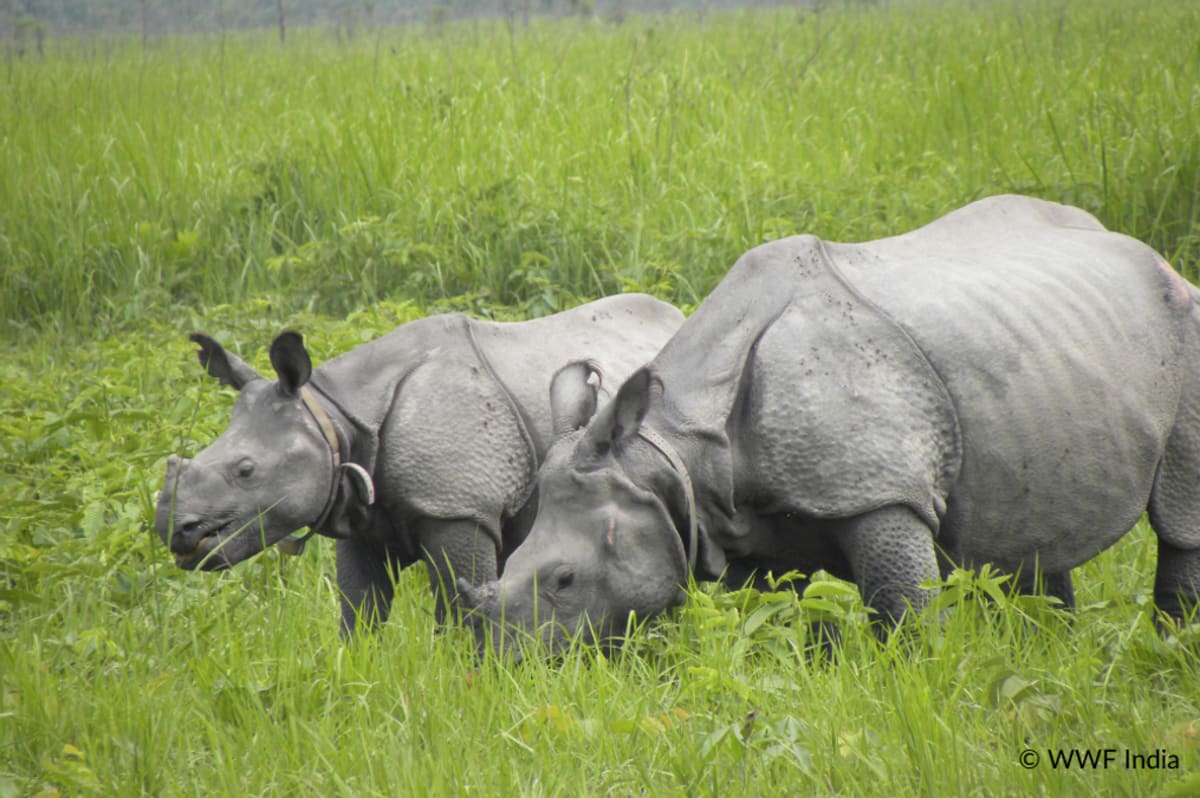
Once completely wiped out by poaching, rhinos are breeding again in India's Manas National Park with 54 animals now roaming free. But their comeback faces a new challenge: the grasslands they need to survive have shrunk by 44% since 1990.
For decades, not a single rhino walked through Manas National Park in Assam, India. Civil unrest and poaching in the 1990s had killed every last one of more than 80 animals that once called this reserve home.
Today, 54 rhinos roam Manas again, and they're having babies. Between 2012 and 2021 alone, 35 calves were born in the park, proof that these reintroduced giants aren't just surviving but truly thriving in their ancestral home.
The comeback started with Indian Rhino Vision 2020, a partnership between the Assam Forest Department, WWF-India, and the International Rhino Foundation. Wildlife teams carefully moved rhinos from healthy populations in Kaziranga National Park and Pobitora Wildlife Sanctuary to rebuild what had been lost.
The real victory came when rhinos born in Manas started having their own calves. That's when conservationists knew the population wasn't just transplanted but genuinely reestablished.
But Manas now faces a quieter crisis. The grasslands these rhinos depend on have shrunk dramatically, dropping from 53.61% of the reserve in 1990 to just 30.24% in 2019. That's nearly half the grassland gone in three decades.
The culprits include invasive plants like Chromolaena odorata spreading through open areas, plus changes in natural fire and flood patterns that once kept grasslands healthy. Years of civil unrest also disrupted conservation work, allowing forests to overtake grassland areas.
These aren't just rhino pastures. The grasslands support pygmy hogs, hispid hares, Bengal floricans, and wild water buffalo, all species that need open spaces to survive.
Why This Inspires
Dharanidhar Boro, a retired forest official who worked in Manas during its recovery, remembers when healthy grasslands stretched across the park. His generation of conservationists brought rhinos back from extinction in this landscape.
Now a new generation faces a different challenge: growing the habitat as fast as the rhino population grows. Park managers are working to control invasive plants and restore grassland patches, involving local communities who remember what Manas looked like before.
The rhinos of Manas proved that even total extinction in an area can be reversed with dedication and science. Their calves represent hope that damaged ecosystems can heal when people commit to making it happen.
More Images
%2Fenglish-betterindia%2Fmedia%2Fmedia_files%2F2026%2F09%2F21%2Fimage-11-2026-09-21-18-36-30.png)
%2Fenglish-betterindia%2Fmedia%2Fmedia_files%2F2025%2F11%2F20%2Fwild-at-heart-banner-image-microsite-banner-2025-11-20-16-17-04.jpg)
%2Ffilters%3Aformat(webp)%2Fenglish-betterindia%2Fmedia%2Fmedia_files%2F2026%2F09%2F21%2Frhino-1-2026-09-21-18-40-26.png)
Based on reporting by The Better India
This story was written by BrightWire based on verified news reports.
Spread the positivity!
Share this good news with someone who needs it