60 Years of Handwritten Rain Records Guide India's Farms
Coffee-growing families in India's Kodagu district have kept daily rainfall notebooks for over 60 years, creating an invaluable record that still guides planting, harvesting, and estate management today. What started as a simple farming habit has become generational knowledge written in ink.
In the coffee-growing hills of Kodagu, India, families have been writing down the same number every single day for more than 60 years. It's not a ritual or superstition. It's rainfall, measured and recorded by hand, one day at a time.
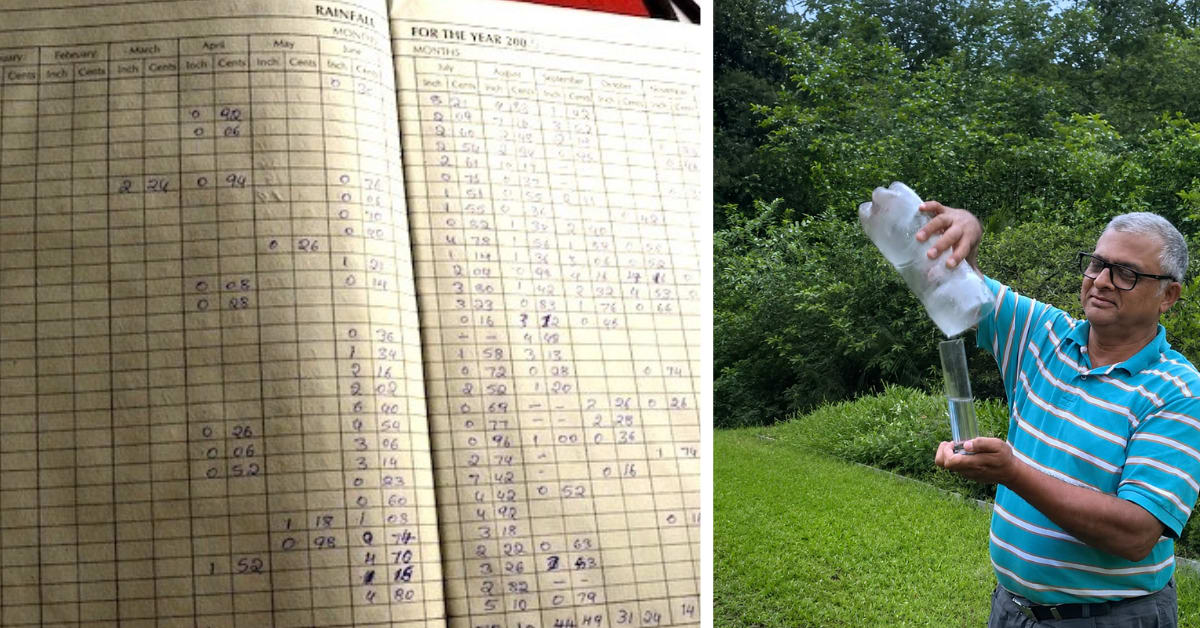
Every morning, someone checks the rain gauge, notes the reading, and enters it into a notebook. Over decades, these small entries have built into something remarkable: a living archive of weather patterns that helps farmers navigate an increasingly unpredictable climate.
Pandanda Vijai Deviah's family started their records in 1965. His father began the practice, and Deviah continues it today at their estate in Garvale near Madapur. The family hasn't missed a single day in nearly six decades.
At Palace Estate in Kakkabe, the Kushalappa family's records stretch back to 1963. Apparanda Prasad Kushalappa is the third generation to maintain the notebooks his grandmother started. The pages sit quietly in the estate home, but they hold years of careful attention.
These aren't just nostalgic keepsakes. The records shape real decisions about when to spray, when to harvest, and how to manage coffee drying. In Kodagu, rain isn't just weather. It determines how a season unfolds, how soil retains moisture, when flowers bloom, and how pests behave.
"There is a difference between getting four inches of rain and three-and-a-half inches," says Dinesh, an agriculturist from Ponnampet. That half-inch gap can change the timing of fieldwork and affect the entire crop.
The records have become so trusted that even the Coffee Board of India has referred to them. When estates change hands, rainfall charts are often among the first documents buyers request. The notebooks tell the story of the land itself.
The Ripple Effect
In an era when most weather data comes from apps and satellites, Kodagu's handwritten records offer something digital forecasts can't: decades of context. They show how rainfall patterns have shifted over time, helping farmers make sense of change rather than simply reacting to it.
The practice is quietly spreading awareness about the value of long-term observation. It demonstrates that paying attention, consistently and patiently, creates knowledge that technology alone cannot replace.
These families aren't scientists or climatologists. They're farmers who understood, generations ago, that the land speaks through patterns. They just needed to write them down.
Each entry is small: a date, a number, maybe a note about the rain. But together, they tell a longer story of coffee estates shaped by weather, families paying attention to the land, and knowledge passed silently across generations. In Kodagu, rain is memory written in ink, and it's still shaping how coffee grows in these hills.
More Images
%2Fenglish-betterindia%2Fmedia%2Fmedia_files%2F2026%2F06%2F19%2Fkodagu-rain-records-2026-06-19-18-40-57.png)
%2Ffilters%3Aformat(webp)%2Fenglish-betterindia%2Fmedia%2Fmedia_files%2F2026%2F06%2F19%2Fkodagu-rain-records-2026-06-19-19-24-10.png)


Based on reporting by The Better India
This story was written by BrightWire based on verified news reports.
Spread the positivity!
Share this good news with someone who needs it