6,000 Ancient Stone Traps Invisible From Ground
RAF pilots in the 1920s spotted massive stone structures across the Middle East that people on foot had walked past for millennia without noticing. These "desert kites" turned out to be some of humanity's oldest and most ingenious hunting technology.
Imagine flying over the desert and suddenly seeing thousands of enormous patterns that no one walking below could detect. That's exactly what happened when RAF pilots soared over the Middle East in 1920s skies.
Group Captain Lionel Rees looked down and saw huge stone walls arranged in shapes that reminded him of toy kites. Two long walls converged into an enclosure with a tail stretching behind. The nickname stuck, and archaeologists still call them desert kites today.
Here's the remarkable part: more than 6,000 of these structures now dot the landscape from Uzbekistan to Libya. Some run for several kilometers. In parts of Syria, there's roughly one every two square kilometers. Yet people had been walking across them for thousands of years without realizing what they were.
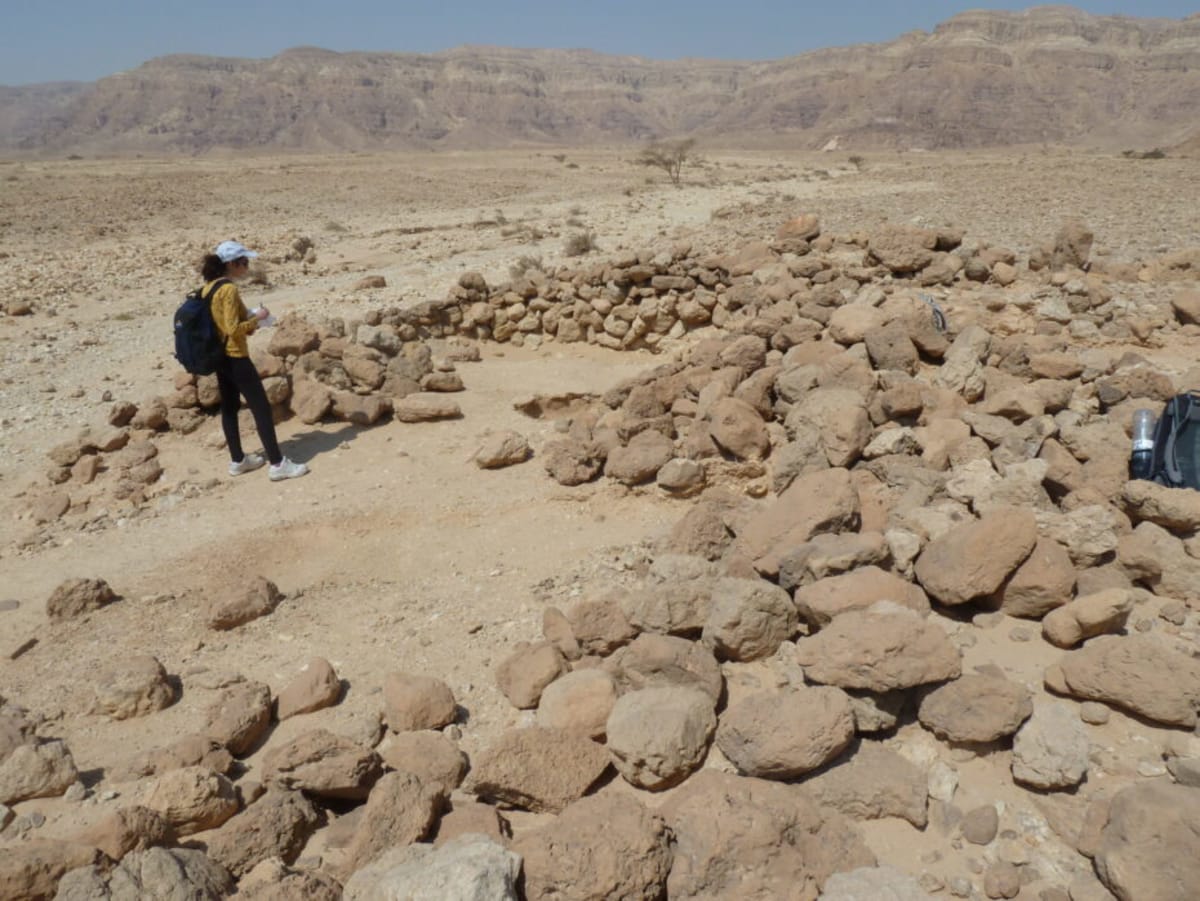
The secret lies in their design. The walls stand less than a meter high, built from dry stone that blends into the landscape. From ground level, they're nearly invisible. From a plane, they're unmistakable.
Ancient hunters built these elaborate traps to capture wild animals like gazelles. The genius was in understanding animal behavior. Even a low stone wall acts as a psychological barrier. Animals follow it looking for a gap instead of simply stepping over.
The builders placed the walls along breaks in the slope so animals couldn't see where they were being led. Research published in 2022 revealed pits several meters deep at the far end, hidden by low walls. A running gazelle wouldn't spot the danger until too close to turn back.
The oldest dated kites reach back to the early Holocene period, making them the most complex structures humans were building at that time. Think about that: while our ancestors were just figuring out agriculture, they were already engineering sophisticated hunting systems that covered square kilometers.
Why This Inspires
This discovery reminds us that ancient people were far more clever than we often give them credit for. They understood physics, animal psychology, and landscape engineering without textbooks or technology. They worked with what they had and created something so effective it lasted for millennia.
The structures also show how new perspectives can reveal hidden wonders. Sometimes we need to change our vantage point to see what's been right beneath our feet all along.
Archaeologists continue studying these remarkable traps, with some debating whether certain kites managed livestock rather than caught wild game. Either way, they represent a stunning achievement of human ingenuity that literally took flight to discover.
More Images


Based on reporting by Google News - Science
This story was written by BrightWire based on verified news reports.
Spread the positivity!
Share this good news with someone who needs it