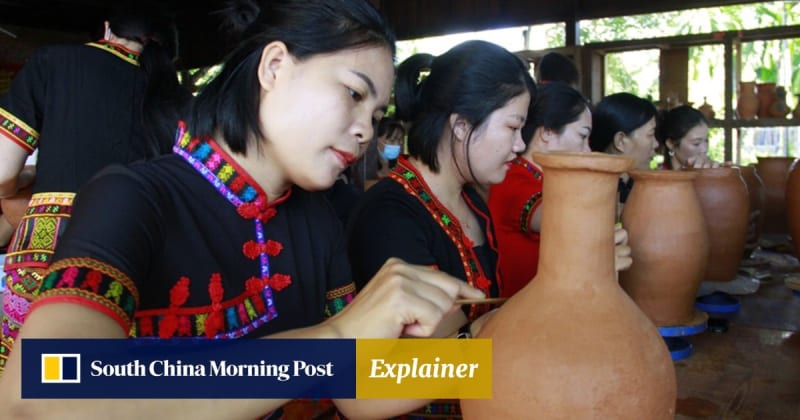
6,000-Year Women-Only Pottery Tradition Thrives in China
For 6,000 years, Li ethnic women in China have guarded an ancient pottery-making technique passed exclusively from mothers to daughters. Now recognized as cultural heritage, this tradition once ensured women's economic independence.
In the villages of Hainan Island, women are the keepers of fire and clay in a tradition that has survived 60 centuries.
The Li people, China's largest indigenous group on the southern island, maintain a pottery-making technique that only women can practice. Men aren't just excluded from the craft; they're forbidden from even watching the pottery fire.
The tradition reflects the Li's matriarchal heritage that lasted until the mid-20th century. While many cultures have lost their ancient crafts to modernity, the Li women have kept their primitive bonfire technique alive.
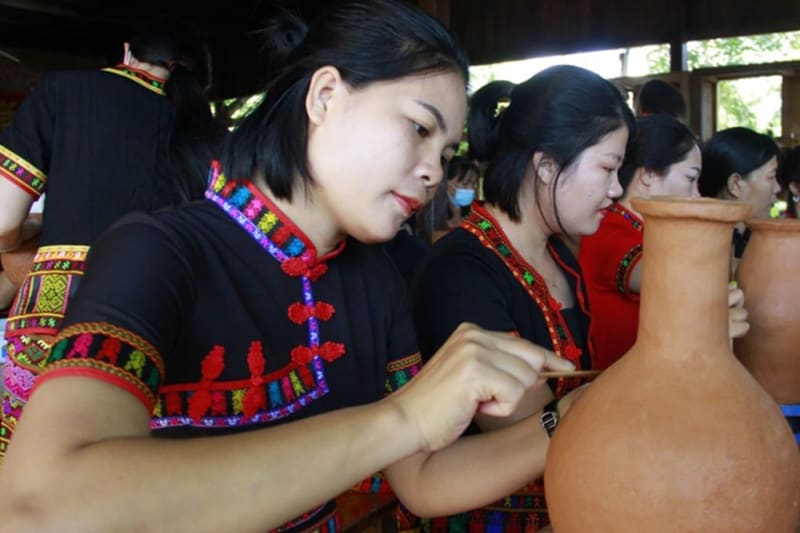
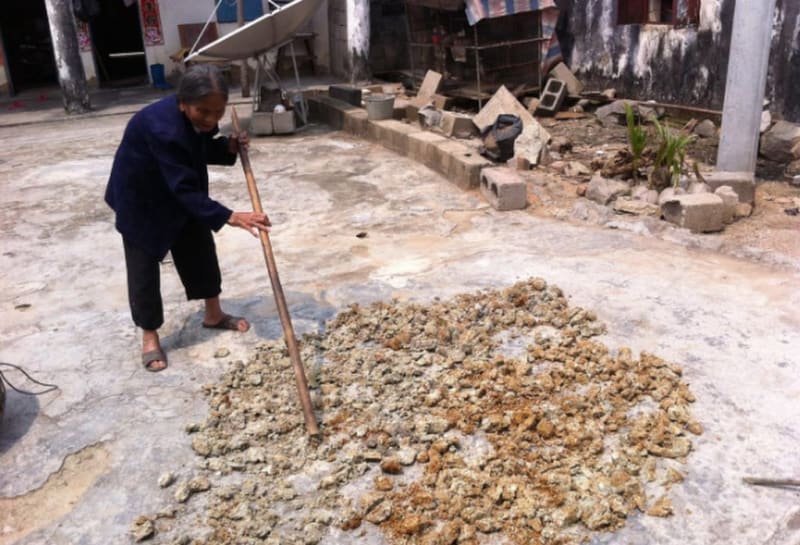
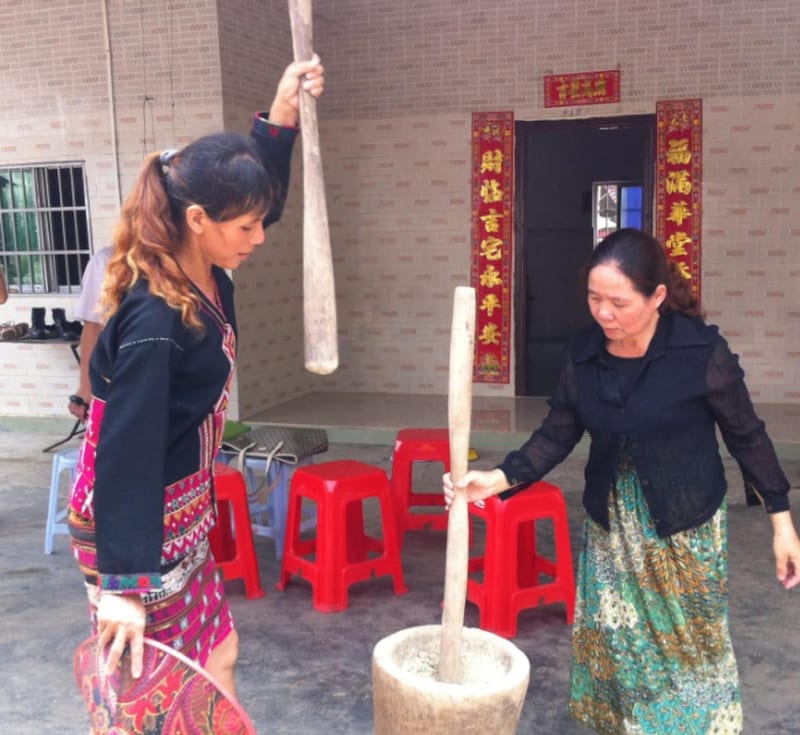
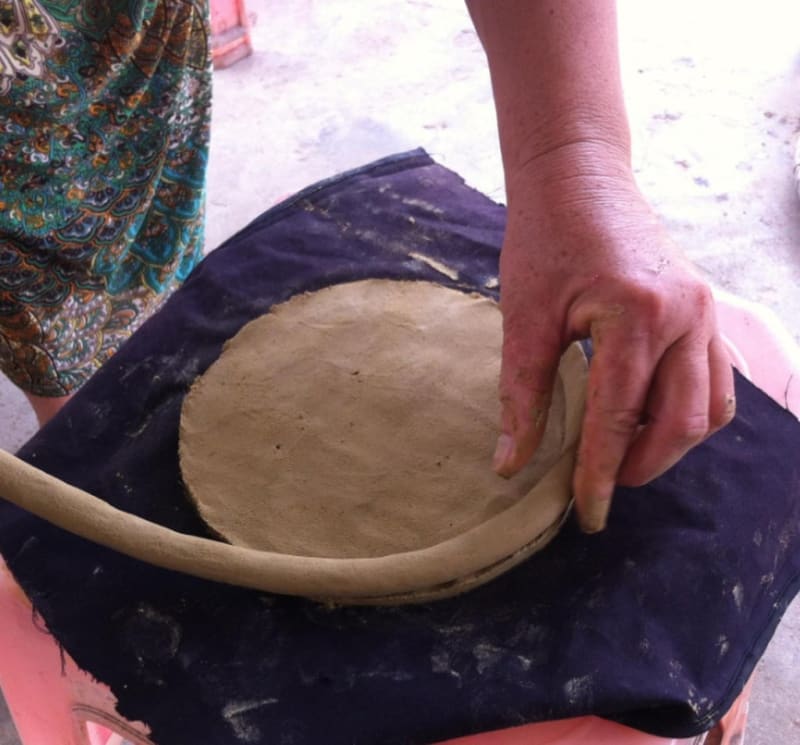
Their process starts with harvesting soil and hand-coiling clay into pots without a wheel. After sun-drying for days, they select a lucky date for firing and place the pottery on open bonfires while the most skilled women perform prayers.
The reason men can't observe? The Li believe males carry yang spirit that would cause the pottery to crack from overfiring. But there's a more practical reason too: the craft guaranteed women could always earn their own living.
When firing completes, the women spray crimson pigment made from local tree bark, creating distinctive red and black dot patterns. For centuries, families measured their wealth by how many wine vessels they owned, all made by women's hands.
Why This Inspires
Yang Bailiang learned this ancient art from her mother at age 13. Now 90, she spent decades trading her pottery for food using the traditional barter system, always crafting the biggest vessels she could.
Today, fewer women practice the craft daily since metal utensils have become common. But after China recognized the technique as national intangible cultural heritage in 2006, something beautiful happened: Yang's pottery transformed from everyday tools into art collected worldwide.
Young Li women now learn the skills specifically to preserve their culture. They're not just keeping clay traditions alive; they're honoring generations of women who shaped both pottery and their own economic freedom with their hands.
The 1.4 million Li people, 90 percent living on Hainan Island, call this technique a "living fossil" of their history. As long as daughters learn from mothers, the fires will keep burning.
More Images
Based on reporting by South China Morning Post
This story was written by BrightWire based on verified news reports.
Spread the positivity!
Share this good news with someone who needs it
%2Fhttps%3A%2F%2Ftf-cmsv2-smithsonianmag-media.s3.amazonaws.com%2Ffiler_public%2F15%2F3b%2F153b5427-10f9-4ad6-b039-8823a36efc6f%2Fhd100065orig.jpg)