62-Foot Octopus Fossil Reveals Ancient Ocean's Apex Predator
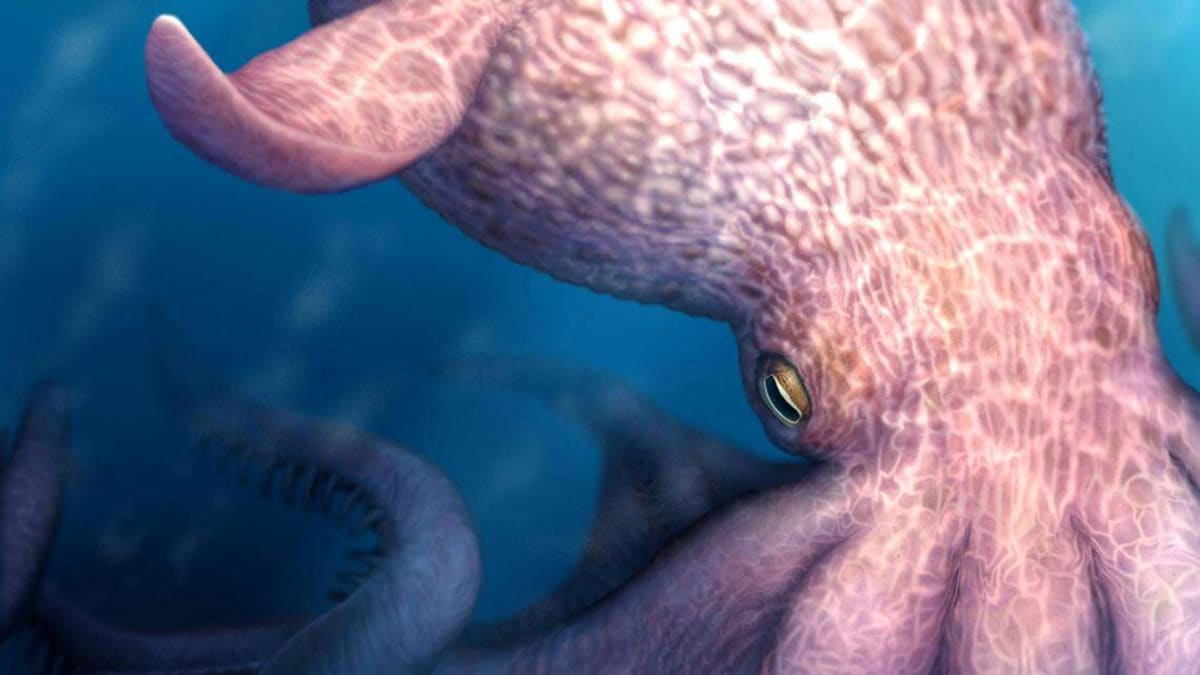
Scientists discovered a massive prehistoric octopus species that grew up to 62 feet long and hunted alongside dinosaurs. This "Cretaceous Kraken" is rewriting what we know about who ruled ancient seas.
A giant octopus the size of a bus once ruled the oceans alongside dinosaurs, and scientists just figured out it was there.
Researchers discovered two new species of massive finned octopus that lived between 100 and 72 million years ago. The findings, published Thursday in the journal Science, reveal a completely unexpected apex predator from the age of dinosaurs.
The larger species, Nanaimoteuthis haggarti, reached lengths up to 62 feet. That makes it bigger than modern giant squid and one of the largest invertebrates ever discovered.
Scientists pieced together this underwater giant from fossilized beaks found in Japan and Canada. Those jaws are the only hard parts of an octopus body, making them the only pieces that survive millions of years.
What those beaks revealed shocked researchers. About 10% of the jaw length had been worn down from crushing hard prey like shells and bone. That's far more wear than modern octopuses show, even those that regularly hunt armored prey.
Lead researcher Yasuhiro Iba told Reuters these animals represented "a real Cretaceous Kraken." They weren't just surviving in dangerous waters. They were dominating them.
These giant octopuses shared the seas with mosasaurs, plesiosaurs, and massive sharks. Until now, scientists believed vertebrate predators like these ruled prehistoric oceans completely.
This discovery changes that picture entirely. The octopuses weren't just present. They occupied the very top of the food web, competing directly with the ocean's most feared hunters.
Why This Inspires
Advanced 3D imaging and AI helped unlock secrets from 27 fossilized jaws, some newly discovered and others reanalyzed after sitting in collections for years. The team calls this approach "digital fossil mining."
The jaws showed uneven wear patterns, suggesting these ancient giants had lateralized behavior similar to right-handedness in humans. Combined with their size and flexible arms, this points to highly intelligent hunting strategies, not just brute strength.
"We were surprised," Iba told CNN. "The fossil record of octopuses is extremely limited, so finding animals this large was beyond our expectations."
Octopus fossils are notoriously rare because their bodies are almost entirely soft tissue. That makes this window into the past especially precious.
For decades, the story of prehistoric oceans centered on massive vertebrates as sole rulers. Now we know giant, intelligent invertebrates also held power at the ocean's summit.
If one Cretaceous kraken has been hiding in plain sight, there may be more waiting to be found.
More Images


Based on reporting by Google: fossil discovery
This story was written by BrightWire based on verified news reports.
Spread the positivity!
Share this good news with someone who needs it