Scientists Discover 60-Foot 'Kraken' Ruled Ancient Oceans
The legendary kraken wasn't just a myth. Scientists found evidence of bus-sized octopuses that hunted alongside dinosaurs 100 million years ago.
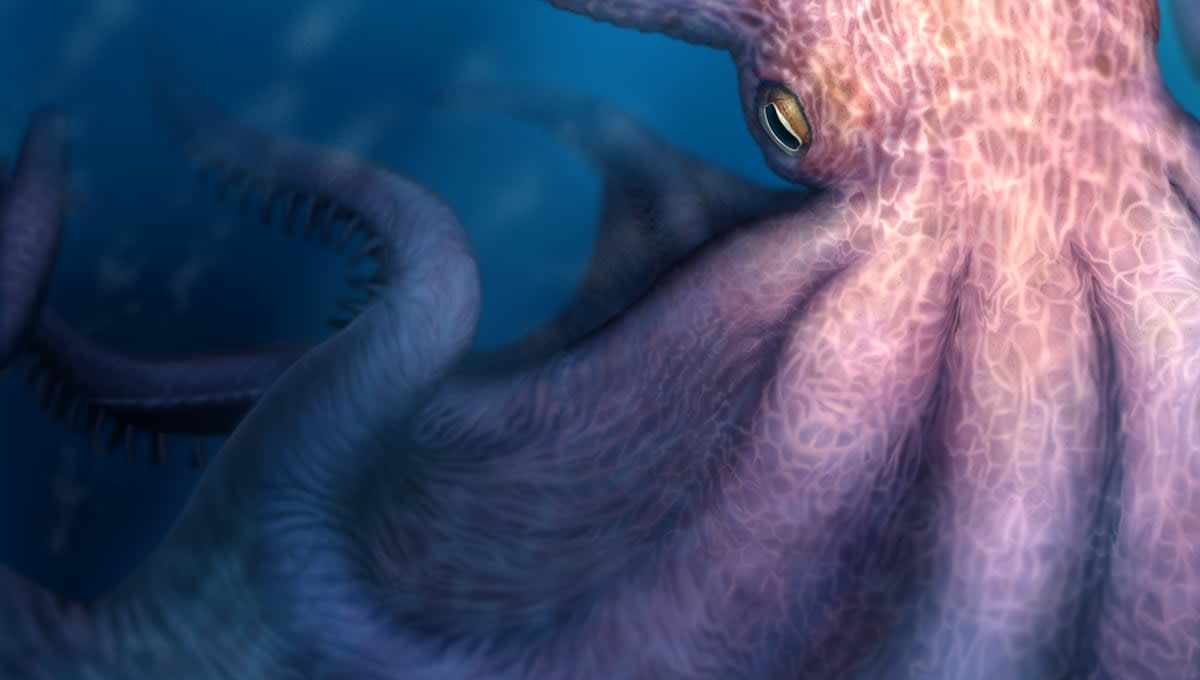
Legend spoke of giant octopuses dragging ships to the ocean floor, but researchers just proved the kraken had a real-life ancestor. Scientists in Japan and Canada discovered fossils of carnivorous octopuses that stretched up to 60 feet long and ruled the seas during the age of dinosaurs.
The team, led by Shin Ikegami from Hokkaido University, identified two extinct species by studying 27 fossilized beaks found in Japan and Vancouver Island. These beaks, the only hard parts octopuses leave behind, revealed creatures as massive as the fearsome marine reptiles they shared the ocean with.
The larger species, Nanaimoteuthis haggarti, reached lengths between 23 and 60 feet. That puts these ancient cephalopods among the largest invertebrates ever discovered, competing directly with mosasaurs and plesiosaurs at the top of the food chain.
The beaks told an even more fascinating story. Heavy wear patterns showed these octopuses crushed hard-shelled prey throughout their lives, grinding down up to 10% of their jaw length. No modern octopus comes close to that level of wear, suggesting these ancient hunters were incredibly active predators.
Here's where it gets really interesting: the wear wasn't symmetrical. The right side of the jaw showed more damage than the left in both species, indicating these creatures favored one side over the other.
Why This Inspires
This discovery rewrites what scientists thought they knew about ancient ocean life. For decades, experts believed only large vertebrates ruled Cretaceous seas while invertebrates cowered in thick shells for protection.
These giant octopuses flip that story completely. They weren't victims hiding from predators. They were the predators, using intelligence, powerful beaks, and flexible arms to hunt fish, ammonites, and possibly even marine reptiles.
The lopsided jaw wear hints at something profound: these creatures likely had advanced brains and complex behaviors 100 million years ago. Modern octopuses show this same trait, and their intelligence rivals many vertebrates in problem-solving and learning.
Both vertebrates and cephalopods evolved into large, intelligent ocean predators, but they got there by completely different paths. Vertebrates shed their armor for speed while octopuses dropped their shells for flexibility and bigger brains.
Ikegami remains cautious but confident in the findings. The size estimates are robust, and the evidence points to creatures that hunted in open ocean environments, using mobility and intelligence to catch diverse prey.
The possibility of a bus-sized octopus hunting in prehistoric seas isn't science fiction anymore. It's a reminder that Earth's oceans have always held wonders beyond our imagination, and some legends carry more truth than we ever expected.
More Images


Based on reporting by Google News - Scientists Discover
This story was written by BrightWire based on verified news reports.
Spread the positivity!
Share this good news with someone who needs it