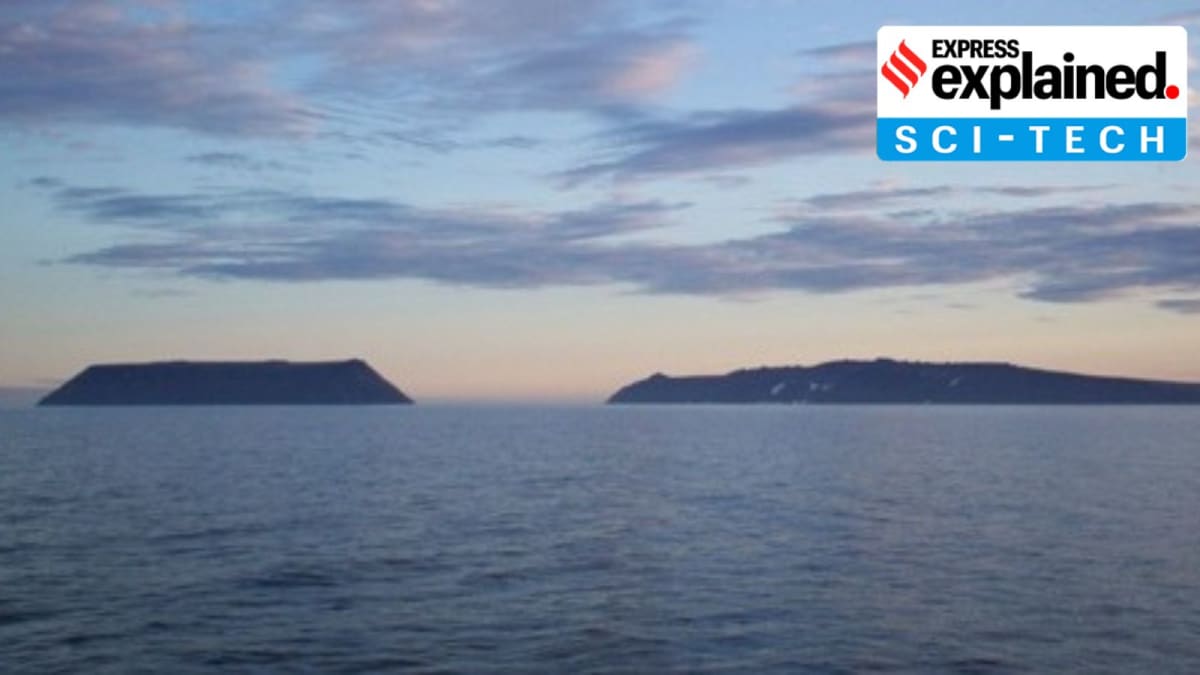
Scientists Propose 50-Mile Dam to Protect Ocean Currents
Dutch researchers have identified a bold new option that could help prevent climate catastrophe. A dam across the Bering Strait between Russia and Alaska might stabilize the ocean currents that regulate weather across multiple continents.
Scientists just added a surprising tool to humanity's climate toolkit: a 50-mile dam that could save the ocean currents keeping our planet stable.
Researchers at Utrecht University in the Netherlands published a study showing how a barrier across the Bering Strait between Russia and Alaska could prevent the collapse of critical Atlantic ocean currents. These currents, called the AMOC, help regulate weather patterns from Europe to Africa to South America.
The AMOC works like a giant conveyor belt, carrying warm water north and cold water south through the Atlantic. But climate change is weakening it by adding fresh water from melting ice, and scientists worry it could shut down entirely this century.
That's where the Bering Strait comes in. This shallow waterway between the Pacific and Arctic oceans is a gateway for massive amounts of fresh water. Damming it would change the balance of salt and fresh water flowing into the Atlantic.
Doctoral candidate Jelle Soons and his colleague used computer models to test the idea. They found that closing the strait at the right time could keep the North Atlantic salty enough to maintain the AMOC's flow.
The dam would be comparable in size to existing structures like South Korea's Saemangeum Seawall. While building it would be an enormous engineering challenge, the researchers say it's physically possible with today's technology.
Why This Inspires
This study represents a shift in how scientists approach climate solutions. Instead of just cutting emissions or accepting worst-case scenarios, researchers are mapping out backup plans that seemed impossible just years ago.
The team emphasizes this is a "proof of concept," not an immediate action plan. Much more research is needed to confirm it would work and assess environmental impacts. Timing matters too: the dam would only help if built while the AMOC is still relatively strong.
Aixue Hu, a climate scientist at the National Center for Atmospheric Research who wasn't involved in the study, calls the idea worth exploring despite uncertainties. Given the catastrophic effects an AMOC collapse would bring, having options matters.
The biggest question isn't whether we can build it. It's whether humanity can cooperate on solutions this ambitious when the planet needs it most.
Based on reporting by Indian Express
This story was written by BrightWire based on verified news reports.
Spread the positivity!
Share this good news with someone who needs it