70 Ancient Galaxies Challenge What We Know About the Universe
Scientists using powerful telescopes discovered 70 ancient galaxies that formed earlier than our models say should be possible. These cosmic time capsules could rewrite the story of how stars and galaxies came to be.
Astronomers just found 70 galaxies that shouldn't exist yet, and they're rewriting our understanding of the early universe.
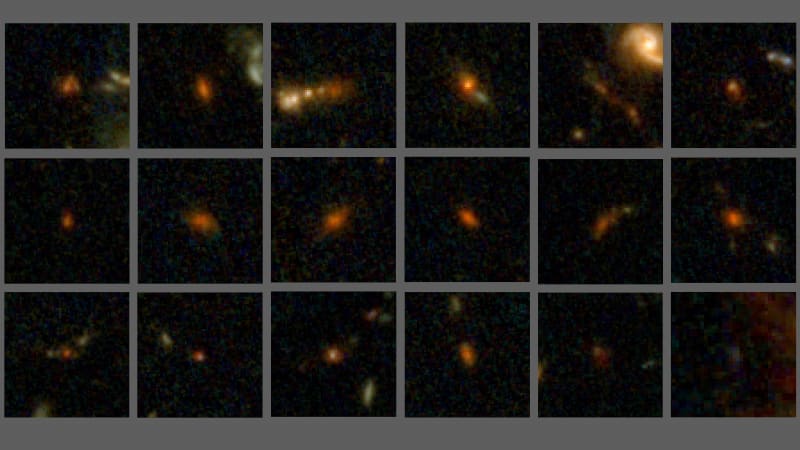
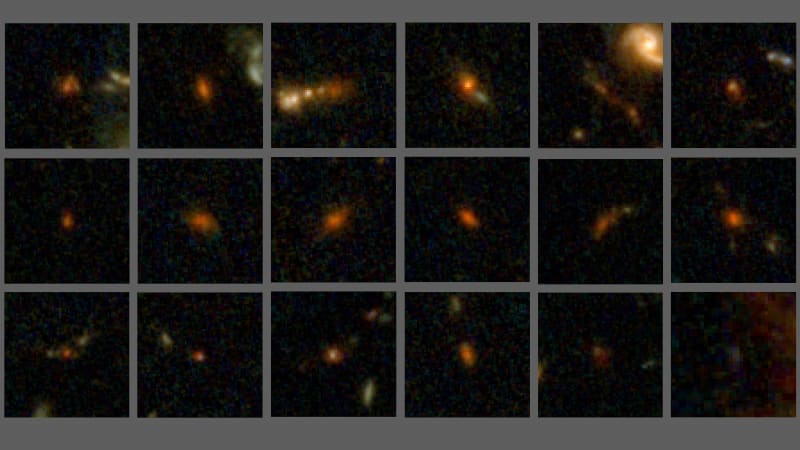
Using the James Webb Space Telescope and the Atacama Large Millimeter Array in Chile, scientists spotted these dusty, star-packed galaxies shining from when the universe was less than 1 billion years old. Some formed just 500 million years after the Big Bang, making them cosmic babies caught acting way older than their age.
Here's what has researchers excited: these galaxies were already loaded with metals and cosmic dust. In astronomy, metals mean any element heavier than hydrogen and helium, the building blocks of early stars. Current models say stars needed much more time to forge these heavy elements and scatter them across space.
"Dusty galaxies are massive galaxies with large amounts of metals and cosmic dust," explained Jorge Zavala from the University of Massachusetts Amherst, who led the research. "And these galaxies are very old, which means stars were being formed in the early universe, earlier than our current models predict."
The discovery started when the team identified 400 bright candidates using ALMA's array of 66 radio antennas. The James Webb Space Telescope then helped narrow the list to 70 confirmed ancient galaxies, most never seen before.
Why This Inspires
This discovery does more than challenge textbooks. It connects three puzzle pieces scientists had been studying separately: super bright young galaxies birthing stars at incredible rates, ancient "dead" galaxies that stopped forming stars, and now these middle-aged galaxies in between.
"It's as if we now have snapshots of the lifecycle of these rare galaxies," Zavala said. "The ultrabright ones are young galaxies, the quiescent ones are in their old age, and the ones we found are young adults."
If these three galaxy families are connected, something fundamental is missing from our understanding of how the cosmos grew up. Stars and galaxies likely started their grand story earlier and faster than we imagined.
The research, published this week in The Astrophysical Journal Letters, opens doors for more investigation into how the universe built itself from simple elements into the complex cosmic neighborhood we see today.
Sometimes the best discoveries are the ones that prove we still have so much to learn.
More Images
Based on reporting by Space.com
This story was written by BrightWire based on verified news reports.
Spread the positivity!
Share this good news with someone who needs it