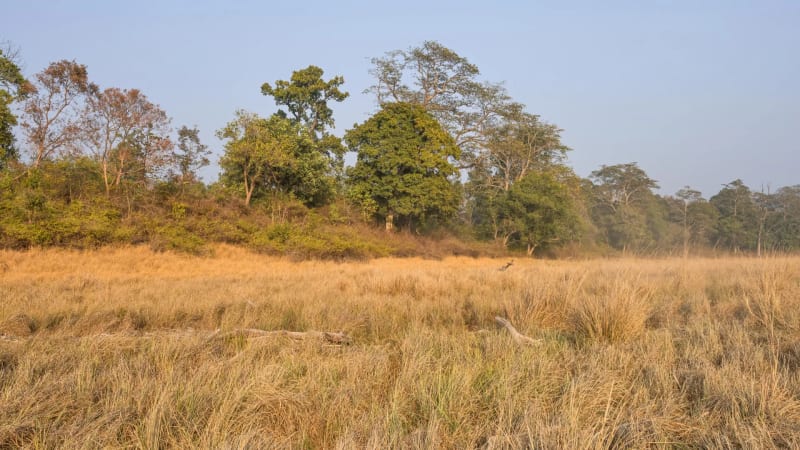
750-Year-Old Poems Prove India's Grasslands Are Ancient
Scientists discovered that centuries-old Indian poetry describes the same savanna landscapes we see today, proving these grasslands aren't damaged forests but natural ecosystems. The finding could transform how we approach conservation and tree-planting worldwide.
Ancient poems and folk songs are rewriting what scientists thought they knew about India's grasslands, and the discovery could change conservation efforts across the planet.
Researchers at Michigan State University made an unexpected breakthrough when they started reading centuries-old texts written in Marathi, a language spoken by millions in India. The poems, some dating back to the 1200s, kept describing thorny trees and open grasslands in western India.
Plant scientist Ashish Nerlekar realized something remarkable: these ancient descriptions matched today's savannas almost perfectly. For decades, scientists and policymakers had assumed these open landscapes were once forests that humans destroyed.
The research team examined 44 wild plant species mentioned in historical narratives, poems, and sacred stories. Nearly two thirds of them are typical savanna plants, not forest species.
One 16th-century epic poem describes cowherders drawn to the "empty" and "thorny" Nira River valley because of its rich grass. Another account mentions a specific thorny tree species growing at a pilgrimage site in the 15th century. That same tree still grows in the region today.
The evidence suggests India's savannas have existed for at least 750 years, long before widespread deforestation during British rule. Fossil records hint these ecosystems may be tens of thousands of years old.
This matters because savannas and grasslands cover more than one third of Earth's land surface. In India alone, these ecosystems support over 200 plant species found nowhere else on the planet.
Why This Inspires
The discovery shows how easily we can misunderstand nature when we don't look at the full picture. For years, well-meaning conservation groups labeled savannas as "wastelands" and targeted them for tree planting projects.
Now we know these grasslands are irreplaceable ecosystems with deep cultural and ecological value. They store carbon, provide grazing land for hundreds of millions of livestock across Asia, Africa, Australia, and South America, and support species that can't survive anywhere else.
The research also reveals an unexpected bridge between art and science. Poetry and folk songs, never intended as scientific records, became crucial evidence for understanding our planet's history.
"It's fascinating that something hundreds of years old could so closely match what is around today," Nerlekar said. The work emerged from casual conversations between researchers from different fields, proving that the best discoveries sometimes come from unexpected collaborations.
Ancient wisdom is helping modern science protect the landscapes that have sustained life for centuries.
Based on reporting by Science Daily
This story was written by BrightWire based on verified news reports.
Spread the positivity!
Share this good news with someone who needs it