8 Indian Spring Festivals Beyond Holi Celebrate Harvests
While Holi gets global attention, eight stunning regional festivals across India welcome spring with flower offerings, bamboo dances, and centuries-old harvest rituals. These vibrant celebrations prove that India's cultural tapestry runs far deeper than most travelers ever see.
Spring blooms differently across India, and while Holi paints the world in color, communities from Gujarat to Mizoram celebrate the season with traditions that stretch back thousands of years.
In Gujarat's villages, the Rathwa tribe transforms the Kavant Gher fair into living art. Days after Holi ends, tribal members paint their bodies with rice paste, don peacock feather headgear, and dance to thundering drums while trading goods and strengthening community bonds through ancient harvest rituals.
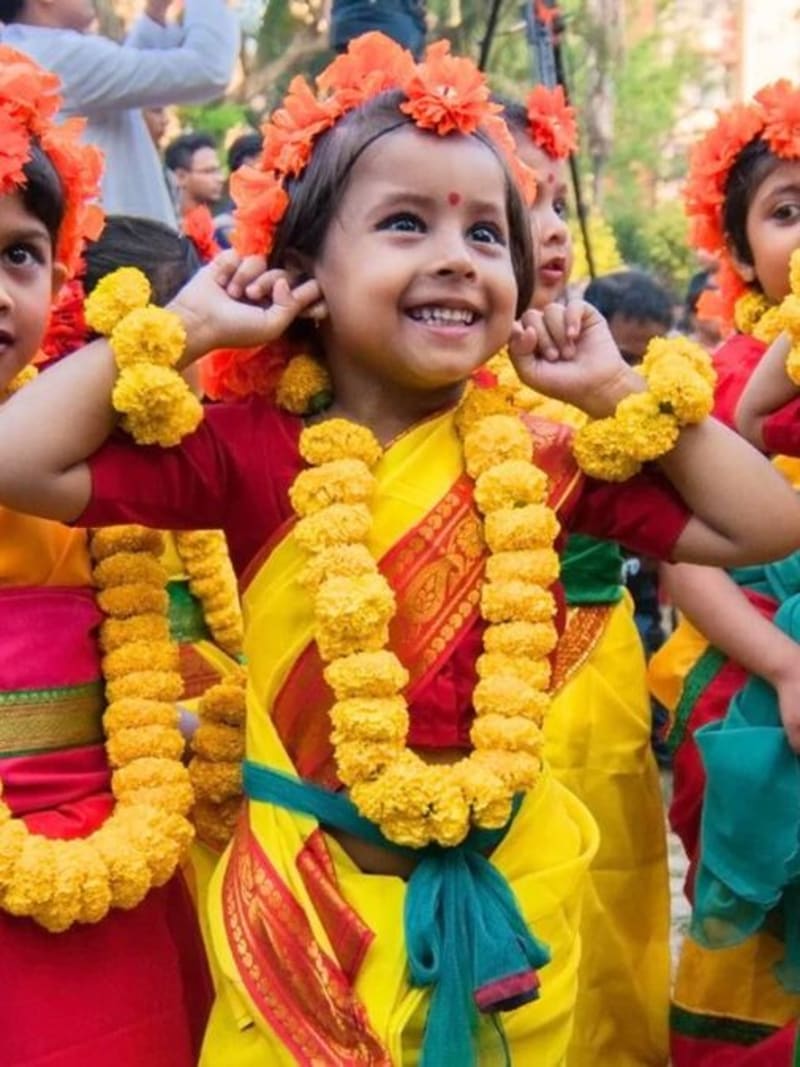
Up in Uttarakhand's mountain villages, children become spring's official messengers during Phool Deyi. On Chaitra Sankranti in mid-March, young Phulari kids place bright red Buransh flowers on every doorstep, sing blessings for prosperity, and collect sweets as they thank nature for another year of abundance.
Kinnaur takes winter's farewell seriously with the 5,000-year-old Raulane Festival. Villagers dressed as masked bride and groom characters roam between February and March, singing and dancing to bid goodbye to the cold and welcome warmer days ahead.
Rajasthan's Gangaur festival lets women take center stage during Chaitra month. They craft clay idols of Goddess Gauri, dress in their most vibrant traditional attire, and pray for marital happiness or the chance to find a loving partner.
In Jharkhand's tribal heartland, Sarhul marks the New Year with deep earth gratitude. The village Pahan priest offers the season's first Sal tree flowers while drums echo through the forests, and communities thank the land before planting new crops.
Kerala's Attuvela Mahotsavam turns rivers into floating temples. For two days during Meenam month, illuminated canoes glide across Kottayam's waters, carrying Kodungalloor's goddess to Elankavu temple in a spectacular water carnival.
Madhya Pradesh's Bhagoriya festival pulses with possibility. A week before Holi, tribal haats in Jhabua fill with Bheeli dances, drum rhythms, and colorful gulal as young people choose life partners and celebrate spring's promise of new beginnings.
Mizoram closes the season with Chapchar Kut in March. After clearing jhum fields, communities gather for the famous Cheraw bamboo dances, sharing music, games, and feasts that honor both unity and Mizo heritage.
Why This Inspires
These festivals remind us that celebration doesn't need global recognition to hold profound meaning. Each ritual connects people to land, community, and seasons in ways that have survived millennia. While modern life pulls us toward screens and cities, these spring traditions prove that humanity's deepest joys still come from gathering together, honoring nature, and keeping cultural memories alive through song, dance, and shared gratitude.
India's regional spring festivals aren't just tourist attractions—they're living proof that culture thrives when communities protect their roots while welcoming each new season.
Based on reporting by The Better India
This story was written by BrightWire based on verified news reports.
Spread the positivity!
Share this good news with someone who needs it